



கம்பராமாயணம் 6866 · யுத்த 9.13
பாடல் · The poem
Tap a word to see its gloss in the commentary and where else it occurs.
பொருள் · Meaning in Tamil
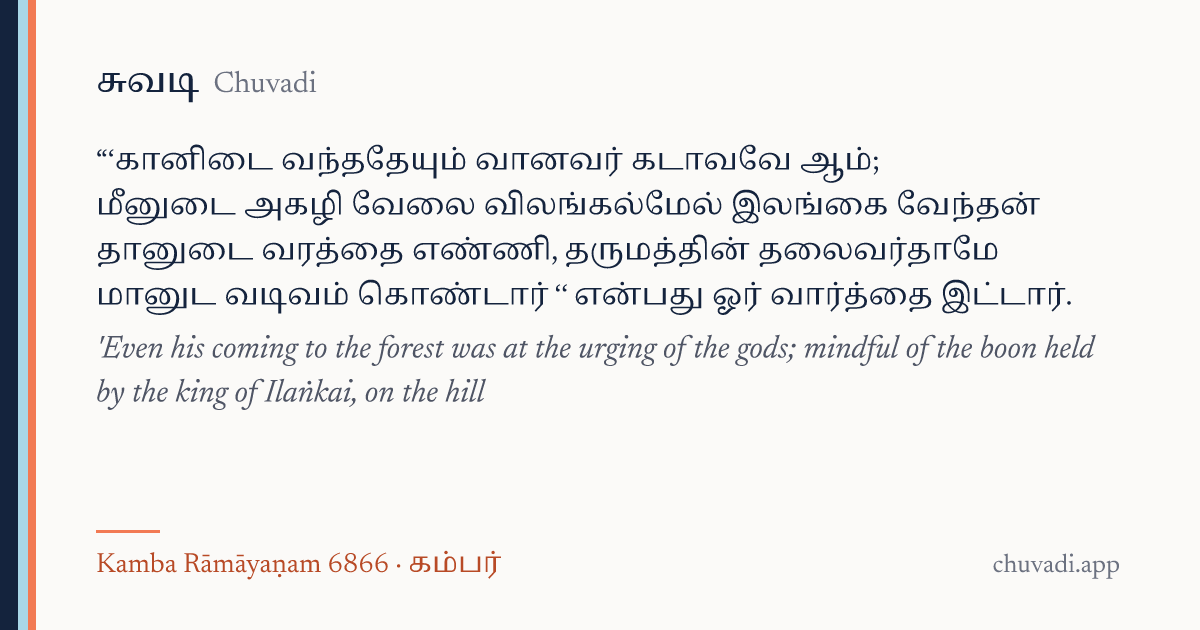
கான் இடை வந்தவாறும் - (அந்த இராமபிரான்) வனத்திற்கு வந்த விதமும்; வானவர் கடாவவே ஆம் - தேவர்களின் உந்துதலினாலே யாம்; மீன் உடை வேலை விலங்கல் மேல் அகழி - மீன்களையுடைய கடலை அகழியாகக் கொண்ட திரிகோண மலையின் மேல் அமைந்த; இலங்கை வேந்தன் - இலங்கை நகரின் வேந்தனாகிய இராவணன்; தான் உடை வரத்தையெண்ணி - தான் அடைந்துள்ள வரத்தினைக் கருதி; தருமத்தின் தலைவர் தாமே - அறத்தின் நாயகனான பரம் பொருளே; மானுட வடிவம் கொண்டார் - மானிட வடிவத்தை ஏற்று (இராமனாக) வந்துள்ளார்; என்பது ஓர் வார்த்தை இட்டார் - என்பதான ஒரு மொழியையும் சொன்னார்கள்.
விலங்கல்-மலை.
ஆங்கிலம் · English translationAI
Translation
- 'Even his coming to the forest was at the urging of the gods;
- mindful of the boon held by the king of Ilaṅkai, on the hill
- whose moat is the fish-filled sea, the Lord of Dharma himself
- has taken human form' — such is a word they have spread.
What the poem says
Māliyavāṉ adds that people believe even Irāmaṉ's exile to the forest was arranged by the gods. Irāvaṇaṉ's boon protects him from gods and many other beings, but not from men. So the Lord of righteousness took human form, and the exile brought him toward Ilaṅkai.
Ilaṅkai is pictured on its mountain with the ocean, full of fish, serving as its moat.