



கம்பராமாயணம் 6871 · யுத்த 9.18
பாடல் · The poem
Tap a word to see its gloss in the commentary and where else it occurs.
பொருள் · Meaning in Tamil
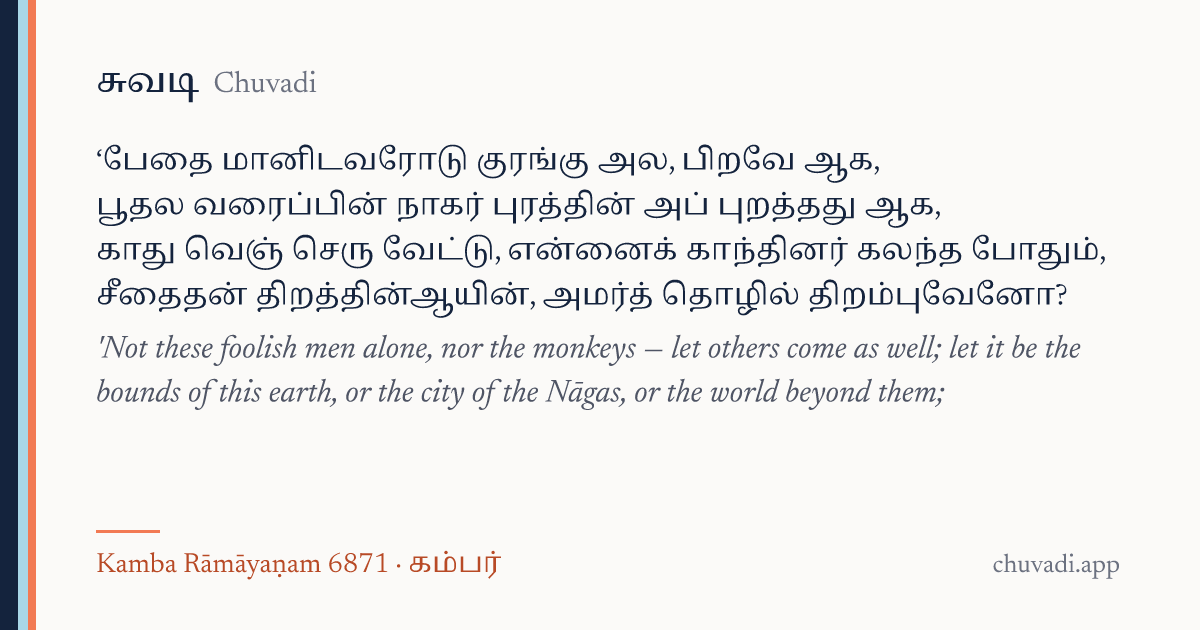
பேதை மானிடவரோடு - அறிவற்ற மனிதர்களுடனே; குரங்கு அல - குரங்கினங்கள் மட்டும் அல்ல; பிறவே ஆக - வேறு உயிர்கள் எல்லாம் (ஒன்று கூடினும்) கூடட்டும்; பூதல வரைப்பின் - இம்மண்ணுலக எல்லை; நாகர் புரத்தின் - (ஆகட்டும்) நாகர் உலகம் (ஆகட்டும்) இவற்றிற்கு; அப்புறத்தது ஆக - அப்பாற்பட்ட வானுலகமே தான் ஆகட்டும்; காது வெம் செருவேட்டு - அழிக்கும் கடும்போரினை விரும்பி; காந்தினர் - மனக்கொதிப்புடையவராய்; என்னைக் கலந்தபோதும் - என்னை என் பகைவர்கள் நெருங்கின போதும்; சீதை தன் திறத்தின் - (அப்போற் சீதையைப் பெறும் பொருட்டாக என்றால்; அமர்த் தொழில் திறம்புவேனோ? - போர் இடுவதிலிருந்தும் பின் வாங்குவேனோ? (வாங்கேன்!).
தன் திறம் உணராது என்னை எதிர்க்க வந்துளர் ஆதலின் இராமலக்குவரைப் "பேதை மானிடவர்” என்றான். திறம்புதல் - பின்னிடுதல். காந்துதல்-நெஞ்சு கொதித்தல்.
ஆங்கிலம் · English translationAI
Translation
- 'Not these foolish men alone, nor the monkeys — let others come as well;
- let it be the bounds of this earth, or the city of the Nāgas, or the world beyond them;
- even if, burning with rage and craving deadly war, they closed in on me,
- if it is for Cītai's sake, shall I turn back from the work of war?'
What the poem says
Irāvaṇaṉ answers Māliyavāṉ with defiance. He calls Irāmaṉ and Ilakkuvaṉ foolish men because they have come against him without knowing his strength.
Let every creature of earth, the serpent world below and the heavens above join them, he says. As long as the fight is over Cītai, he will never back down. His desire for her outweighs every other consideration.