



கம்பராமாயணம் 6875 · யுத்த 9.22
பாடல் · The poem
Tap a word to see its gloss in the commentary and where else it occurs.
பாட வேறுபாடு · Project Madurai reads
பொருள் · Meaning in Tamil
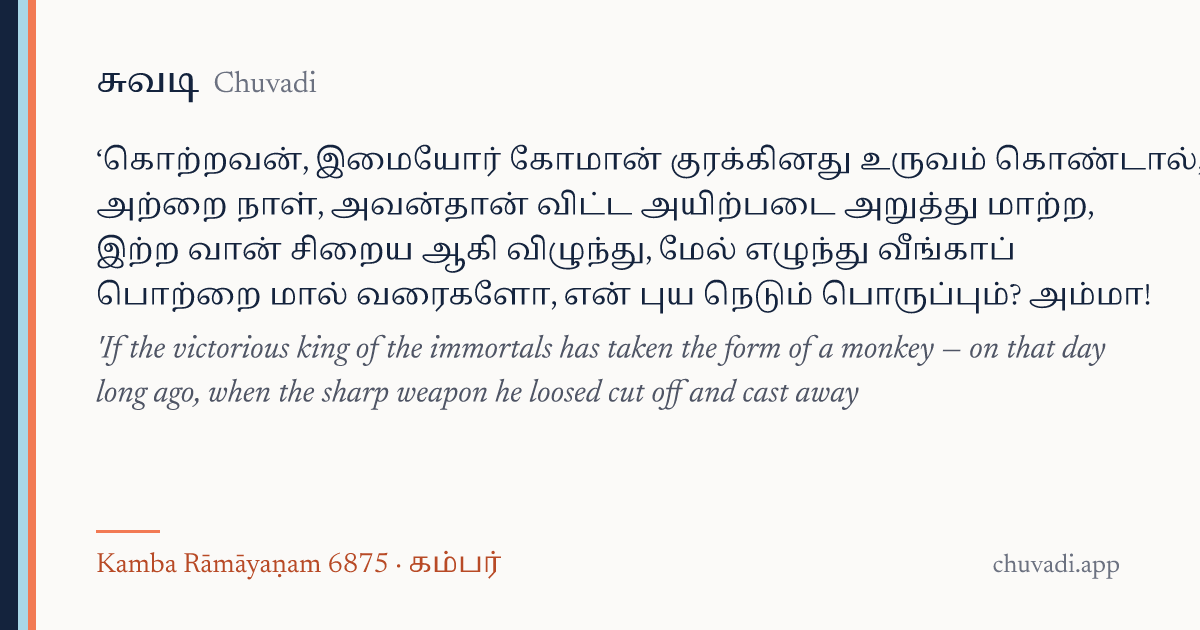
கொற்ற வாள் இமையோர் கோமான் - வெற்றியைக் கொண்ட வாள் ஏந்தும் தேவர்தலைவனான இந்திரன்; குரக்கினது உருவம் கொண்டால் - குரங்கினுடைய வடிவம் கொண்டுள்ளான் என்றால்; அற்றை நாள்- (மலைகளின் சிறகுகளை அரியத் தொடங்கிய) அக்காலத்தில்; அவன் விட்ட- அவ் இந்திரன் விடுத்த; அயிற் படை - கூரிய வச்சிராயுதம், அறுத்து மாற்ற - அறுத்து வேறாக்கியதால்; வான் இற்ற சிறைய ஆகி - வானில் (பறப்பதற்கு இயலாத) ஒடிந்த சிறகுகளையுடையனவாகி, விழுந்து - கீழே வீழ்ந்து; மேல் எழுந்து வீங்கா- மேல் கிளம்பிப் பறக்க இயலாத; மால் பொற்றை வரைகளோ - பெருமைக்குரிய சிறு குன்றுகளோ; என்புய நெடும் பொருப்பும்? - என்னுடைய தோள்களாகிய பெருமலைகளும்?
மலைகளுக்கெல்லாம் இருந்த சிறகுகளை இந்திரன் தன் வச்சிராயுதத்தால் அடித்து அழித்தான் என்பது புராணச் செய்தி. பொற்றை - சிறுகுன்றுகள். மால்வரை - பெருமைக்குரிய மலைகள். பெருமை இகழ்ச்சிக் குறிப்பாயிற்று. இந்திரன் வச்சிரத்தால் அடித்து வீழ்த்த என் புயமலைகள் அன்றைய பொற்றைக் கற்கள் அல்ல; பெருமலைகள் என்பான். "புயநெடும் பொருப்பும்” என்றான். மாலியவான் கூறிய கருத்துக்களின் சாரத்தை யெல்லாம் வாங்கி ஒன்று விடாமல் ஆணித்தரமாக, நெற்றியில் அறைந்தாற்போல் ஆணவ உச்சியில் அமைந்துள்ள இராவணனை விடைதர வைத்துள்ள கவிஞர் பிரானின் உரையாட்டுத் திறம் வியக்க வைப்பது.
அடித்தவுடன் வீழ, என் தோள்கள் என்ன பொத்தை மலைகளா?" எனக் கேட்டு, இராவணன் தோள்கள் மலையினும் வலியன என உணர்த்தியவாறு
ஆங்கிலம் · English translationAI
Translation
- 'If the victorious king of the immortals has taken the form of a monkey —
- on that day long ago, when the sharp weapon he loosed cut off and cast away
- their wings, so that they broke and fell from the sky, never to rise and swell again,
- were those stony hills like the long mountains of my arms? Ah!'
What the poem says
Irāvaṇaṉ ends his reply with a boast against Intiraṉ, king of the gods. According to legend, mountains once had wings and flew about, until Intiraṉ cut their wings off with his thunderbolt and they fell to earth for good.
Irāvaṇaṉ says his arms are not some small hills that a thunderbolt can bring down; they are great mountains. Point by point he has thrown back everything Māliyavāṉ said, and the poet lets his arrogance speak for itself.