



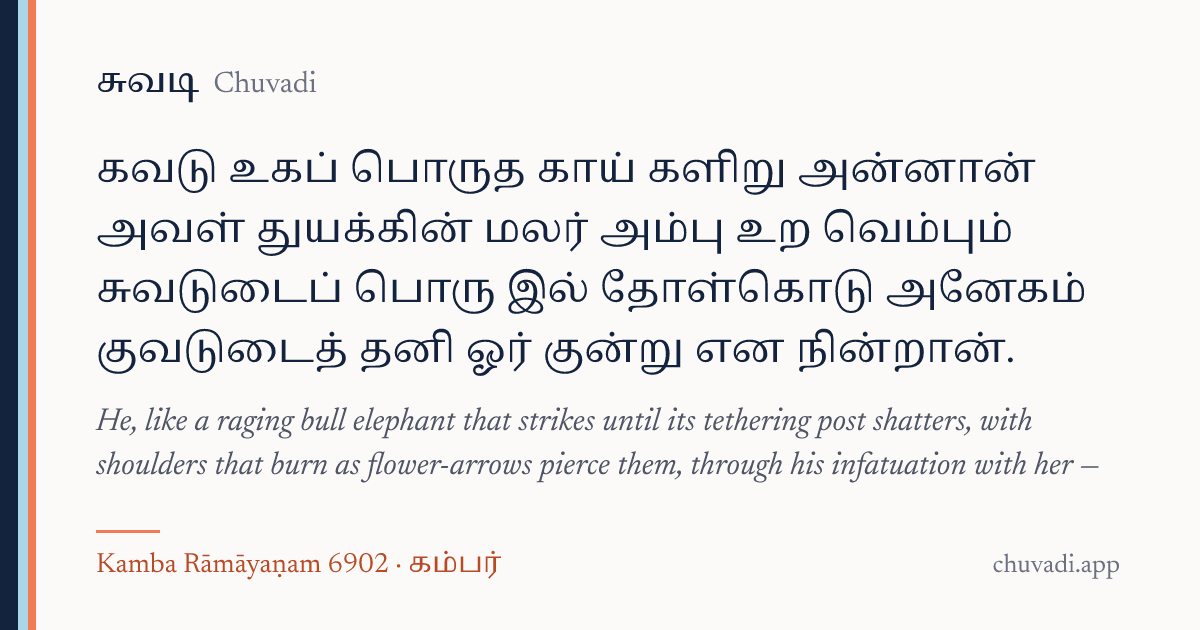
கம்பராமாயணம் 6902 · யுத்த 10.1
பாடல் · The poem
Tap a word to see its gloss in the commentary and where else it occurs.
பாட வேறுபாடு · Project Madurai reads
பொருள் · Meaning in Tamil
கவடு உகப் பொருத - (தன்னைக்) கட்டியிருக்கும் கட்டுத்தறி முறியும்படி மோதித் தாக்கும்; காய் களிறு அன்னான் - சினமுடைய ஆண் யானை போன்ற இராவணன்; அவள் துயக்கின் - சீதா தேவியின்பால் கொண்ட மையலால்; அம்புற - மன்மதன் மலர்க்கணைகள் தைத்ததால்; வெம்பும் - வருந்துகின்ற, சுவடு உடை - தழும்புகளைப் பெற்ற; பொருஇல் தோள் கொடு - ஒப்பற்ற தன் தோள்களோடு; அனேகம் குவடுஉடை - பல சிகரங்களையுடைய தனி ஓர்குன்றென நின்றான் - ஒப்பற்ற ஒரு மலை போல (கோபுரம் ஏறி) நின்றான்.
முன்பு ஒழுக்க பலம் இருந்த காலை, திக்குயானைகளின் கொம்பொடிந்தது. இன்று, அது குறைந்த காலை மலர்க்கணைகள் துளைக்க முடிந்தது. அன்றொரு சுவடு, இன்றொரு சுவடு! என அவனை நுட்பமாகப் பரிகசித்தவாறுமாம்.
ஆங்கிலம் · English translationAI
Translation
- He, like a raging bull elephant that strikes until its tethering post shatters,
- with shoulders that burn as flower-arrows pierce them, through his infatuation with her —
- with those scarred and matchless shoulders, like a lone hill with many
- peaks, so he stood.
What the poem says
Irāvaṇaṉ stands on the tower. He is like a furious bull elephant that has broken its post, and with his many arms and heads he looks like a single mountain with many peaks.
His shoulders carry scars. Long ago they came from the tusks of the elephants that guard the directions, which broke against him. Now the love-god's flower arrows wound him through his passion for Cītai. The commentary sees a quiet mockery here: when his virtue was intact, tusks shattered on him; now that it is gone, even flowers can pierce him.