



கம்பராமாயணம் 6910 · யுத்த 10.9
பாடல் · The poem
Tap a word to see its gloss in the commentary and where else it occurs.
பாட வேறுபாடு · Project Madurai reads
பொருள் · Meaning in Tamil
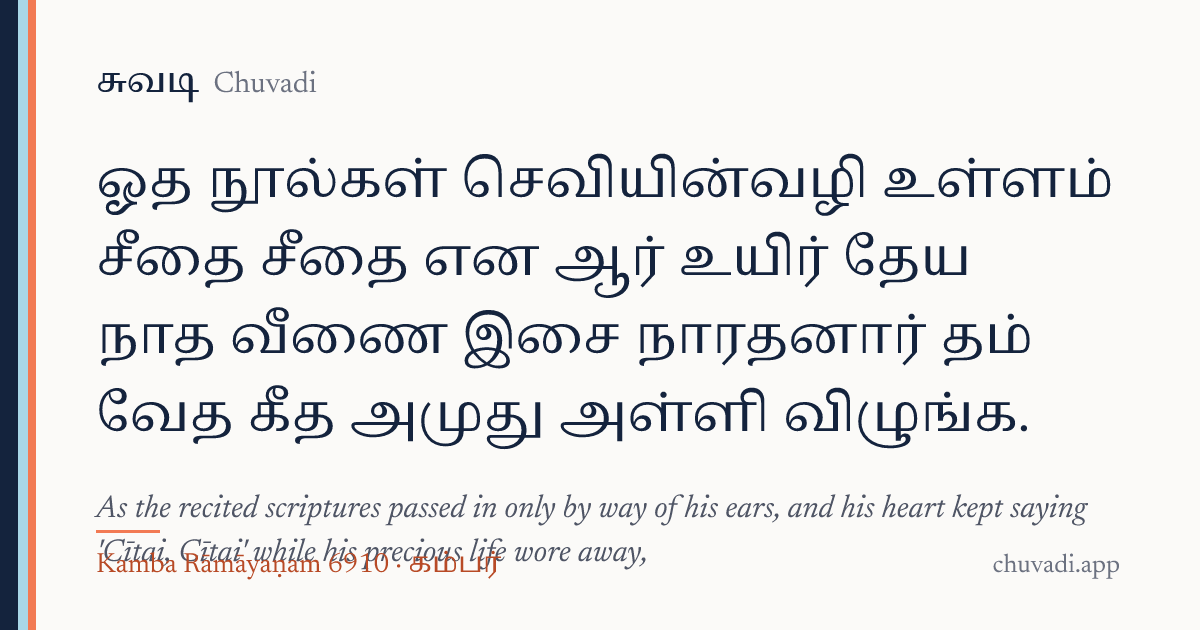
நாத வீணை இசை நாரதனார்தம்- இனிய நாதம் எழுப்பவல்ல வீணையுடைய நாரதமாமுனிவர் தம்முடைய; வேத கீத அமுது - சாம வேதத்தின் இசையெனும் அமுதத்தை (இசைக்க); அள்ளி விழுங்க - அள்ளி அள்ளி (செவிவாயால்) விழுங்கியும்; நூல்கள் ஓத - (அறிஞர்கள்) (உயர்ந்த) நூல்களை ஓத(க்கேட்டும்); செவியின் வழி - (இவை யாவும் உள்ளத்துள்ளே நுழையாமல் செவி வழியாகவே (சென்று கொண்டிருக்க); உள்ளம் சீதை சீதையென்று - இராவணனது உள்ளமோ சீதை சீதை என்று (ஓயாமல்) செபித்துக் கொண்டிருப்பதால்; ஆருயிர் தேய - அவனது உயிரோ (காம ஆசையால்) தேய்ந்து கொண்டிருக்கவும்...
"சீதை, சீதை" எனும் அடுக்கு இராவணன் பிராட்டியிடம் கொண்ட பேராசையின் தவிப்பினை உணர்த்தி நின்றது.
ஆங்கிலம் · English translationAI
Translation
- As the recited scriptures passed in only by way of his ears, and his heart
- kept saying 'Cītai, Cītai' while his precious life wore away,
- he scooped up and swallowed the nectar of Vedic song
- from Nāratar with his resonant vīṇā.
What the poem says
The sage Nāratar plays the vīṇā and sings Vedic hymns for Irāvaṇaṉ, and scholars recite sacred texts. Irāvaṇaṉ drinks in the music with his ears, but none of it reaches his heart.
His heart keeps repeating 'Cītai, Cītai', and his life is being worn away by desire. The repetition of her name conveys the restless craving he cannot escape.