



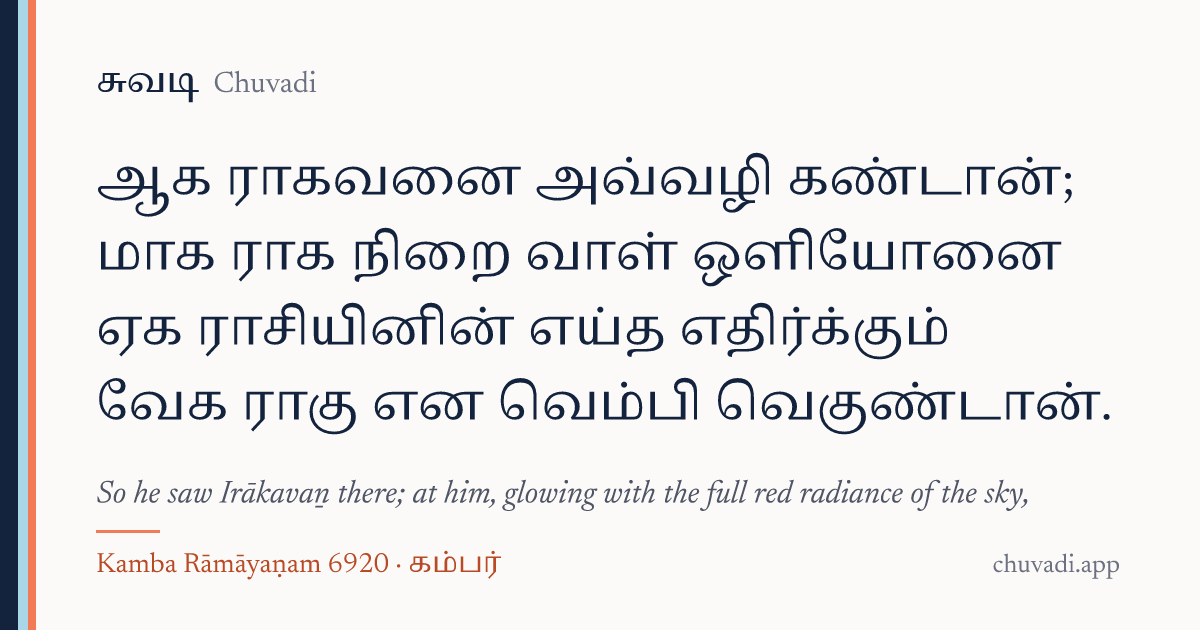
கம்பராமாயணம் 6920 · யுத்த 10.19
பாடல் · The poem
Tap a word to see its gloss in the commentary and where else it occurs.
பொருள் · Meaning in Tamil
ஆக - இவ்வாறாக; இராகவனை அவ்வழி கண்டான் - இராமபிரானை அப்போது கண்ட இராவணன்; மாக ராகம் நிறைவாள் ஒளியோனை - ஆகாயத்திலே சிவந்த நிறமுடைய பேர் ஒளியுடையவனான சூரியனை; ஏக ராசியினின் - அமாவாசையில், எய்த எதிர்க்கும் - நெருங்கிச் சென்று எதிர்க்கின்ற, வேகராகு என - வேகம் மிக்க ராகு என்னும் கிரகத்தைப் போல; வெம்பி வெகுண்டான் - மனம் வெதும்பி சீறினான்.
மாகம்-ஆகாயம். ராகம்-சிவப்பு. ஏகராசி - அமாவாசை. சூரியனும் சந்திரனும் ஒன்றாய்க்கூடும் நாள். எதுகை நோக்கி நான்கடியிலும் "ரா" இகரம் பெறாமலேயே வந்தது. இராவணனை இராகு என்றும், இராமபிரானைக் கதிரவன் என்றும் உவமித்தார் இராகு, சூரியனை மறைக்க முயன்று தோல்வியைத் தழுவுவது போல் இராமனை எதிர்க்க முனையும் இராவணன் தோல்வியையே தழுவ உள்ளான் என்பதை உவமையால் பெற வைத்தார்
ஆங்கிலம் · English translationAI
Translation
- So he saw Irākavaṉ there;
- at him, glowing with the full red radiance of the sky,
- like swift Rāhu, who closes in to confront the sun when they share one sign,
- he seethed and raged.
What the poem says
Irāvaṇaṉ looks at Irāmaṉ (Irākavaṉ, descendant of Raghu) with burning hatred, like the eclipse-demon Rāhu moving in to attack the red sun at the new moon, when sun and moon stand in the same sign.
The comparison carries a prediction. Rāhu tries to swallow the sun and always fails, and Irāvaṇaṉ, attacking Irāmaṉ, is headed for the same defeat. The poet drops a syllable from 'Irākavaṉ' and 'Irāku' so that all four lines begin with the same sound.