



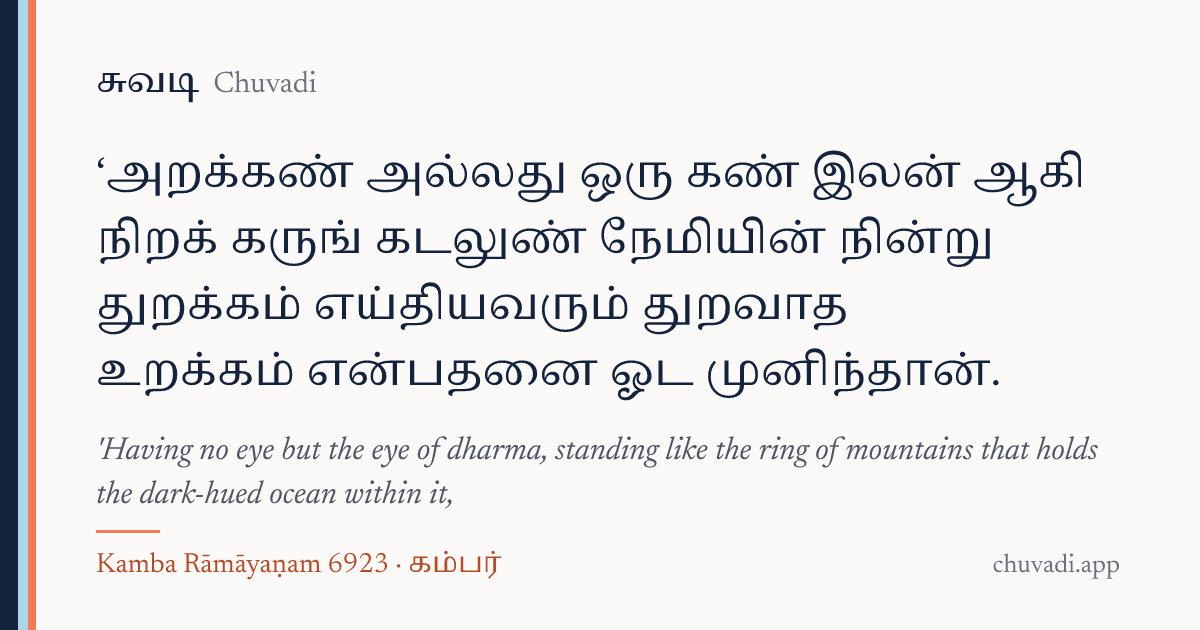
கம்பராமாயணம் 6923 · யுத்த 10.22
பாடல் · The poem
Tap a word to see its gloss in the commentary and where else it occurs.
பொருள் · Meaning in Tamil
அறக்கண் அல்லது ஒரு கண் இலன் ஆகி - (இந்த இலக்குவன்) தரும நெறியை நோக்குவதல்லாமல் வேறொரு நெறியை நோக்காதவன் ஆக; நிறக் கருங்கடல் உண் - நிறத்தால் கருமையுடைய கடலைத் தன்னுள் கொண்ட, நேமியின் நின்று - சக்கரவாள மலைபோல் அமைந்து; துறக்கம் எய்தியவரும் - சொர்க்கத்தைச் சென்றடைந்தவர்களும்; துறவாத உறக்கம் என்பதனை - நீக்க இயலாத நித்திரை என்று சிறப்பித்துச் சொல்லப்படுவதனை; ஓட முனிந்தான் - வெருண்டோடுமாறு சினந்தவன் ஆவான்.
கடலுக்குக் காவலாக அமைந்து அதனைச் சூழ்ந்துள்ளது சக்கரவாள மலை. அதுபோல், இராமனைக் காத்து அவனுக்குரிய சூழலாக அமைந்தவன் இலக்குவன். அறக்கண்-அறமே கண்ணாகக் கொள்ளல். கண் ஆகு பெயராக நெறியைக் குறித்தது. இச்செய்யுளில் கம்பன் கழகப் பாடம் திருத்தப்பட்டது. முன்னைய பாடம் 'கடலுள் நேமி' என்பதாகும். சக்கரவாளம் கடலைத் தன்னுள் கொண்டதே. அன்றித்தான் கடலுள் இருப்பதன்று ஆதலின் 'கடல் உண் நேமி' என்று பாடம் கொண்டு பொருள் உரைத்தல் சிறந்தது. இச்சிறந்த பாட அமைப்பு டாக்டர் மா.ரா. போ. குருசாமி அவர்கள் தந்ததாகும்.
ஆங்கிலம் · English translationAI
Translation
- 'Having no eye but the eye of dharma,
- standing like the ring of mountains that holds the dark-hued ocean within it,
- he drove off in his anger that sleep
- which even those who have reached heaven never give up.'
What the poem says
Cāraṉ goes on about Ilakkuvaṉ. He looks at nothing except the path of righteousness. He surrounds and protects Irāmaṉ the way the Cakravāḷa range, the ring of mountains at the edge of the world in Indian cosmology, encloses the ocean.
During the whole exile he has driven away sleep, which even the gods in heaven cannot do without, so that he could keep watch over his brother. The commentary notes that the reading 'the ring that holds the ocean within it', rather than 'the ring within the ocean', is a corrected reading proposed by a modern scholar.