



கம்பராமாயணம் 6925 · யுத்த 10.24
பாடல் · The poem
Tap a word to see its gloss in the commentary and where else it occurs.
பாட வேறுபாடு · Project Madurai reads
பொருள் · Meaning in Tamil
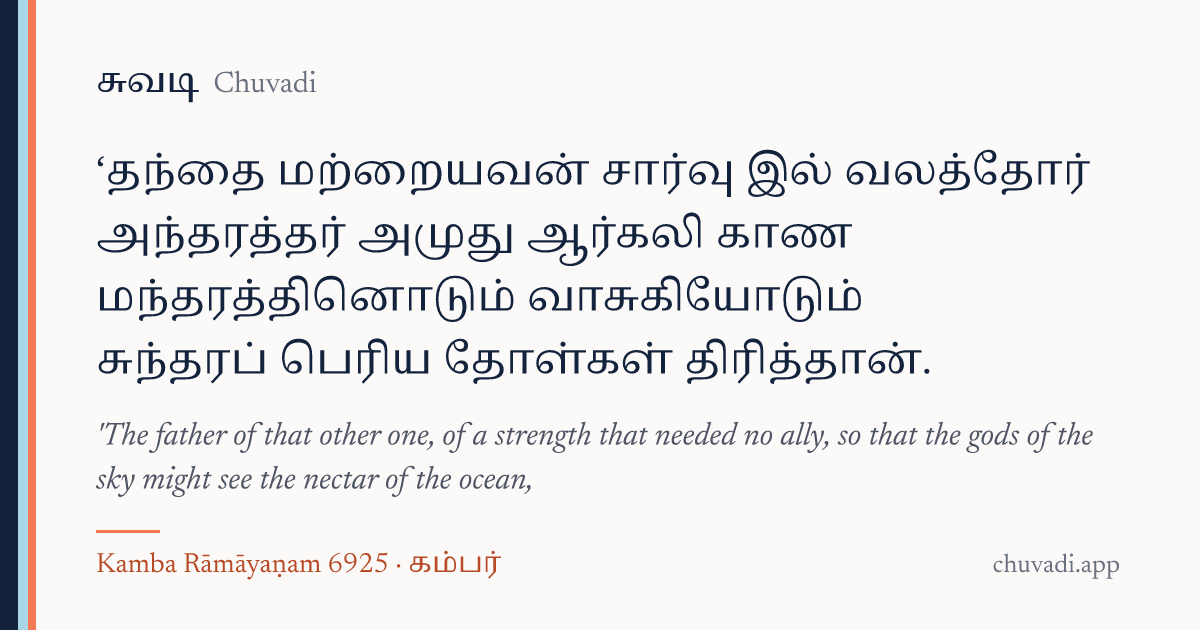
மற்றையவன் தந்தை - (அந்தச் சுக்கிரீவனுக்கு அருகில் இருக்கும்) மற்றொருவன் ஆகிய அங்கதன் அவனுடைய தந்தையாகிய வாலி; சார்வுஇல் வலத்தோன் - கூட்டு ஒருவரையும் வேண்டாத வலிமையையுடையவன்; அந்தரத்தர் ஆர்கலி அமுது காண - வான் உலகத் தேவர்கள் கடலிலிருந்து அமுது பெறுமாறு; மந்தரத்தினொடும் வாசுகி யோடும் - மந்தர மலையோடும் வாசுகி எனும் பாம்போடும் (சேர்த்து); சுந்தரப் பெரிய தோள்கள் திரித்தான் - அழகுமிக்க பெரிய தோள்களால் (கடலைக்) கடைந்தவன் ஆவான்.
அங்கதனை, தந்தையின் பேராற்றலால் அறிமுகப்படுத்தியவாறு.
ஆங்கிலம் · English translationAI
Translation
- 'The father of that other one, of a strength that needed no ally,
- so that the gods of the sky might see the nectar of the ocean,
- together with Mantara and with Vācuki
- churned it with his great and handsome arms.'
What the poem says
Cāraṉ introduces Aṅkataṉ by way of his father. Aṅkataṉ's father was Vālī, who was so strong he needed no help from anyone. At the churning of the ocean, when the gods used Mount Mantara as the churning rod and the serpent Vācuki as the rope, Vālī turned it with his own arms so that they could get the nectar.
The son of such a father, the spy implies, is not to be taken lightly.