



கம்பராமாயணம் 6928 · யுத்த 10.27
பாடல் · The poem
Tap a word to see its gloss in the commentary and where else it occurs.
பொருள் · Meaning in Tamil
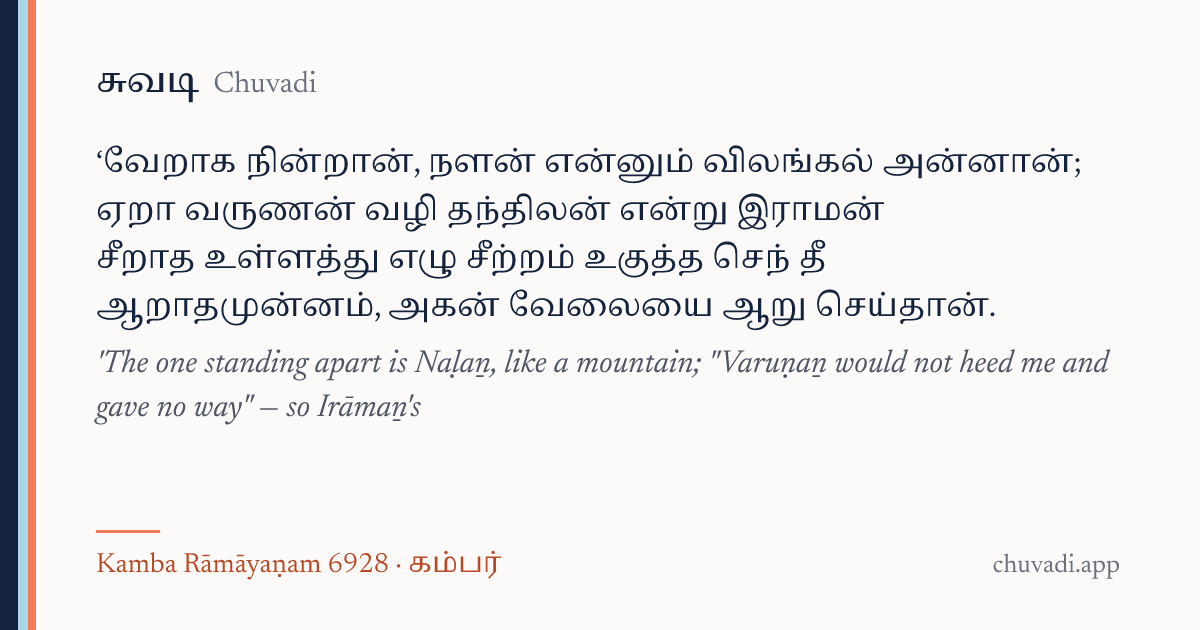
வேறாக நிற்பான் - (அதோ அங்கு) தனித்து நிற்பவன்; நளன் என்னும் விலங்கல் அன்னான் - நளன் என்னும் பெயர் கொண்ட மலையைப் போன்றவன்; ஏறா வருணன் - (இராமன் வழிவேண்டும் என வேண்டியும்) செவியில் ஏற்காத வருணன்; வழி தந்திலன் என்று - கடலைக்கடக்க வழிதரவில்லை யென்று; இராமன் சீறாத உள்ளத்து எழுசீற்றம் - சினவாத மனமுடைய இராமன் மனத்தே எழுந்த சினம்; உகுத்த செந்தீ - வெளியிட்ட செந்தீ - ஆறாத முன்னம் - தணிவதற்குள்; அகன் வேலையை ஆறு செய்தான் - அகன்ற கடலை அணையாக்கி வழி செய்தவன்.
"குணம் என்னும் குன்றேறி நின்றார் வெகுளி கணமேயும் காத்தல் அரிது" (திருக்கு. 29) ஆதலின் சீறாத உள்ளத்து இராமன் சீற்றச் செந்தீ ஆறாத முன்னம் கடலுக்கு ஆறு செய்தான் என்று நளன் பெருமையும் இராமன் பெருமையும் ஒருங்கு கூறியவாறு. அகன்ற கடலை ஆறு செய்தான் என்பது ஒரு நயம். ஆறு - நதி, வழி சிலேடை நளன் செயற்கரிய செய்தவன் என்பது தொனி.
ஆங்கிலம் · English translationAI
Translation
- 'The one standing apart is Naḷaṉ, like a mountain;
- "Varuṇaṉ would not heed me and gave no way" — so Irāmaṉ's
- heart, which never rages, rose in rage and let loose a red fire; and
- before it could cool, he made the wide sea into a road.'
What the poem says
Cāraṉ points out Naḷaṉ, the monkey engineer who built the causeway. When the sea-god Varuṇaṉ ignored Irāmaṉ's request for a path, Irāmaṉ, who is normally never angry, flared up in fury. Before that anger had even cooled, Naḷaṉ had turned the wide ocean into a road.
The Tirukkuṟaḷ says that the anger of the truly good does not last even a moment, so the speed of Naḷaṉ's work is all the more remarkable. There is a pun as well: āṟu means both 'river' and 'path', so he made the sea into a river-like road.