



கம்பராமாயணம் 6933 · யுத்த 10.32
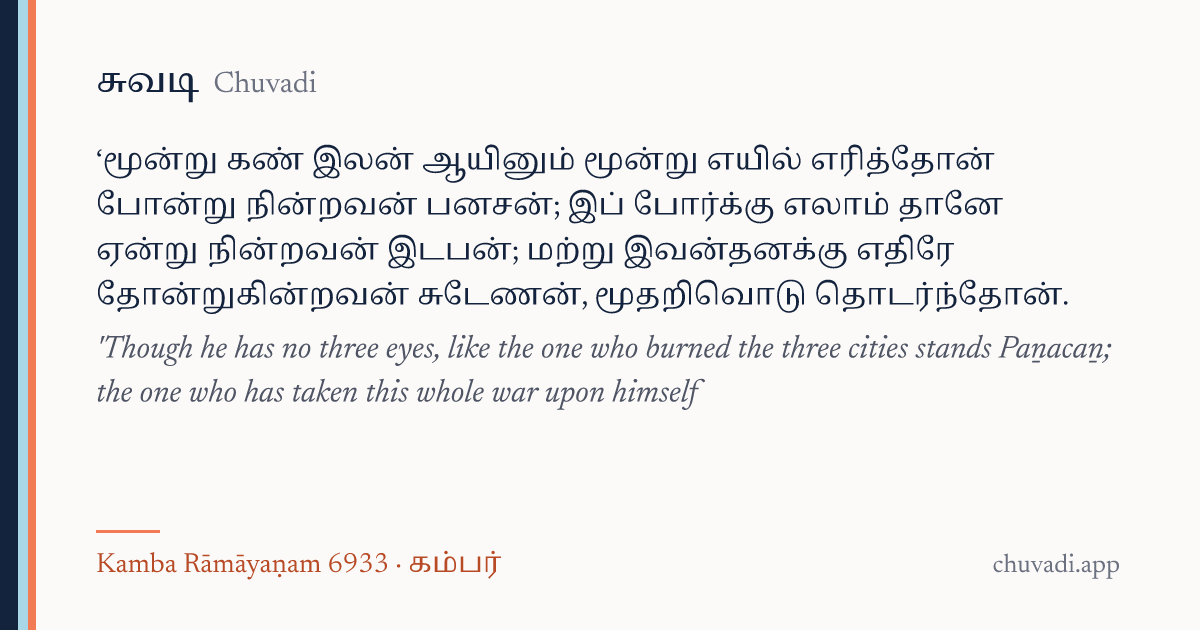
பாடல் · The poem
Tap a word to see its gloss in the commentary and where else it occurs.
பாட வேறுபாடு · Project Madurai reads
பொருள் · Meaning in Tamil
மூன்று கண் இலன் ஆயினும் - மூன்று கண்களையுடையவன் அல்லன் ஆயினும்; மூன்று எயில் எரித்தோன் - முப்புரம் எரித்த சிவபிரான் போல் நிற்பவன்; பனசன் - பனசன் எனப்படுவான்; இப்போர்க்கு எலாம் தானே ஏன்று நின்றவன் இடபன் - இந்தப் போர் அனைத்திற்கும் தானே (முதல் வரிசையில்) ஏற்று நிற்பவன் ஆகிய (இவண்) இடபன் ஆவான்; மற்று இவன் தனக்கு - வேறு இவனுக்கு; எதிரே தோன்றுகின்றவன் - எதிர்திசையில் தோன்றுகின்ற அவன்; சுடேணன் - சுடேணன் எனும் பெயரினன்; மூதறிவொடு தொடர்ந்தான் - முற்றிய அறிவோடு கூடியவன்.
மூன்று கண்ணில்லாமலும் முப்புரம் எரிக்கவல்ல ஆற்றல் உடையவன் பனசன் என்றவாறு. போர் நடக்கும் போதெல்லாம் இரண்டாம் வரிசையை விரும்பாது முதல் வரிசையைத் தானாகவே விரும்பி வந்து நிற்பவன் இடபன் ஆதலின், "தானே ஏன்று நின்றவன்” என்றார் உடல் வலிவோடு அறிவு வலியும் தொடர்வது வீரர்க்குப் பெருஞ் சிறப்பு நல்குமாதலின், மூதறிவொடு தொடர்ந்தான் சுடேணன் என்றார்.
ஆங்கிலம் · English translationAI
Translation
- 'Though he has no three eyes, like the one who burned the three cities
- stands Paṉacaṉ; the one who has taken this whole war upon himself
- is Iṭapaṉ; and the one who appears facing this one
- is Cuṭēṇaṉ, joined with ripe wisdom.'
What the poem says
Cāraṉ names three more. Paṉacaṉ is like Śiva, who burned the three flying cities of the demons, though Paṉacaṉ lacks Śiva's third eye. Iṭapaṉ always pushes to the front line of every battle of his own accord. Cuṭēṇaṉ (Suṣeṇa) has deep wisdom as well as strength, a rare and valuable combination in a warrior.