



கம்பராமாயணம் 6934 · யுத்த 10.33
பாடல் · The poem
Tap a word to see its gloss in the commentary and where else it occurs.
பாட வேறுபாடு · Project Madurai reads
பொருள் · Meaning in Tamil
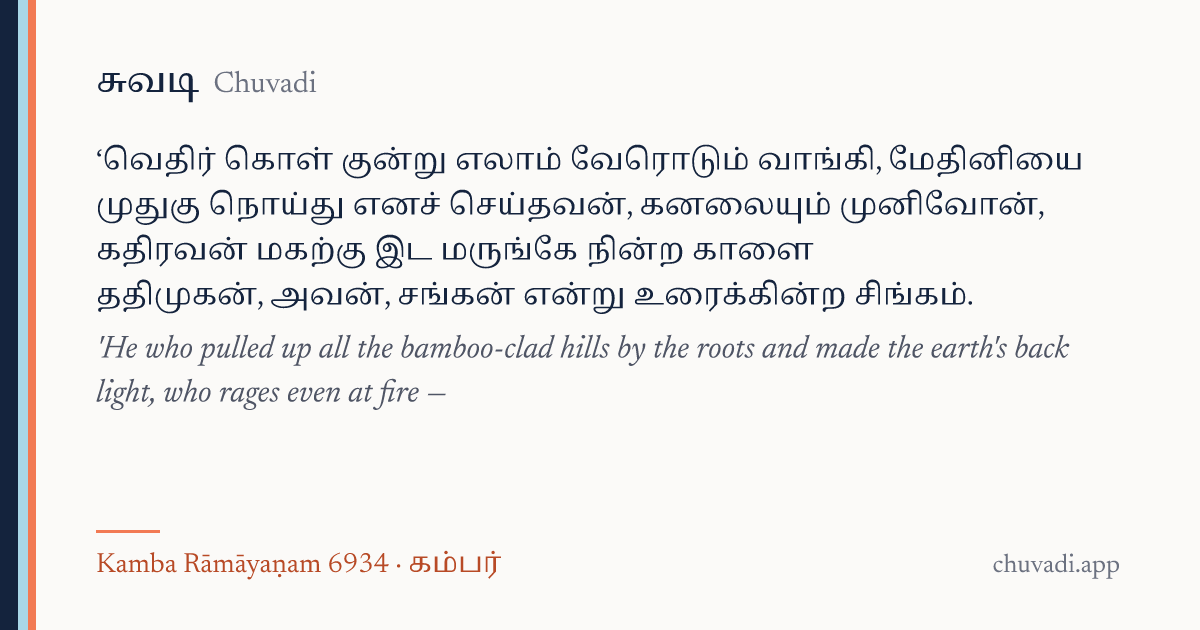
கதிரவன் மகற்கு - சூரியன் மகனாகிய சுக்கிரீவனுக்கு; இடமருங்கே நின்ற காளை - இடப்பக்கமாய் நிற்கின்ற காளை போன்ற வீரன்; வெதிர்கொள் குன்று எலாம் வேரொடும் வாங்கி - மூங்கில்களைத் தன்னிடம் கொண்ட மலைகளை யெல்லாம் அடியோடே பெயர்த்து; மேதினியை முதுகு - பூமியின் முதுகினை; நொய்தெனச் செய்தவன் - கனஞ்சுமக்காதிருக்கச் செய்தவனும், கனலையும் முனிவோன் - தீயையும் சீறுகின்ற சினமுடையோனும் ஆகிய; ததிமுகன் - ததிமுகன் எனும் பெயர் உடையோன்; அவன் - அதோ அங்கிருப்பவன்; சங்கன் என்று உரைக்கின்ற சிங்கம் - சங்கன் என்று உரைக்கப்படுகின்ற சிங்கம் போன்றவன்.
வெதிர் மூங்கில். அது குறிஞ்சிக் கருப் பொருள்களுள் ஒன்று ஆதலால் "வெதிர் கொள் குன்று” என்றார் மலைகளைப் பிடுங்கி, பூமியின் முதுகு சுமக்கும் பாரத்தைக் குறைத்தவன் ஆதலின், "மேதினியை முதுகு நொய்தெனச் செய்தவன்” என்று ததிமுகன் பெருமை சாற்றினார்.
ஆங்கிலம் · English translationAI
Translation
- 'He who pulled up all the bamboo-clad hills by the roots and made
- the earth's back light, who rages even at fire —
- the bull of a warrior standing at the left side of the Sun's son —
- is Tatimukaṉ; that one is the lion they call Caṅkaṉ.'
What the poem says
Beside Cukkirīvaṉ, son of the Sun, stands Tatimukaṉ. He tore up so many mountains, roots and bamboo thickets and all, that he lightened the load on the earth's back. His temper is hotter than fire. Nearby is Caṅkaṉ, a warrior like a lion.
Bamboo is the typical plant of the hill country in classical Tamil poetics, so 'bamboo-clad hills' simply means mountains.