



கம்பராமாயணம் 6936 · யுத்த 10.35
பாடல் · The poem
Tap a word to see its gloss in the commentary and where else it occurs.
பொருள் · Meaning in Tamil
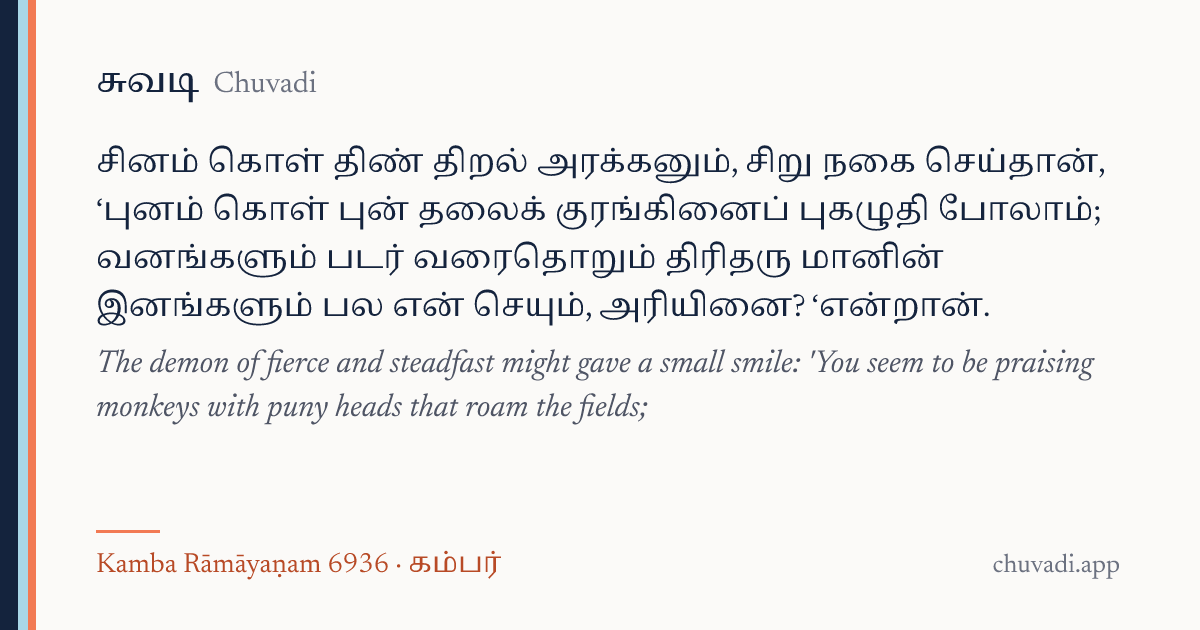
சினம் கொள் திண்திறல் அரக்கனும் - (சாரன் இவ்வாறு புகழ்ந்ததைக் கேட்டு) சினம் கொண்ட பேர்ஆற்றல் வாய்ந்த இராவணனும்; சிறு நகை செய்தான் - புன்முறுவல் பூத்தவனாய் (அச்சாரனை நோக்கி); புனம் கொள் புன்தலைக் குரங்கினைப் புகழுதி போலாம் - கொல்லைகளில் அலைந்து திரிகின்ற சிறிய தலையினைக் கொண்ட குரங்குகளைப் புகழ்கின்றாய் போலும்! வனங்களும் படர் வரைதொறும்- வனங்களோடு கூடியுள்ள மலைகள் தோறும்; திரிதரும் - திரிகின்ற; மானின் பல இனங்களும் - மான்களின் பற்பல வகைக் கூட்டங்களும் (சேர்ந்து எதிர்த்தால்); அரியினை என் செயும் - ஒரு சிங்கத்தை என்ன செய்துவிடமுடியும்? என்றான்... - என்று (ஏளனமாய்க்) கூறினான்.
இராவணனுக்கு இப்போதெழுந்த சிறுநகை, எள்ளல் அடியாகப் பிறந்தது. போலாம்-ஒப்பில் போலி.
ஆங்கிலம் · English translationAI
Translation
- The demon of fierce and steadfast might gave a small smile:
- 'You seem to be praising monkeys with puny heads that roam the fields;
- what can many herds of deer that wander every hill
- thick with forests do to a lion?' he said.
What the poem says
Irāvaṇaṉ answers his spy with a scornful smile. Cāraṉ is praising mere monkeys, small-headed creatures that raid fields and orchards. However many herds of deer roam the forests, they can do nothing against a lion.
The commentary notes that his smile comes from contempt. This closes the episode of Irāvaṇaṉ viewing the monkey army.