



கம்பராமாயணம் 6941 · யுத்த 11.5
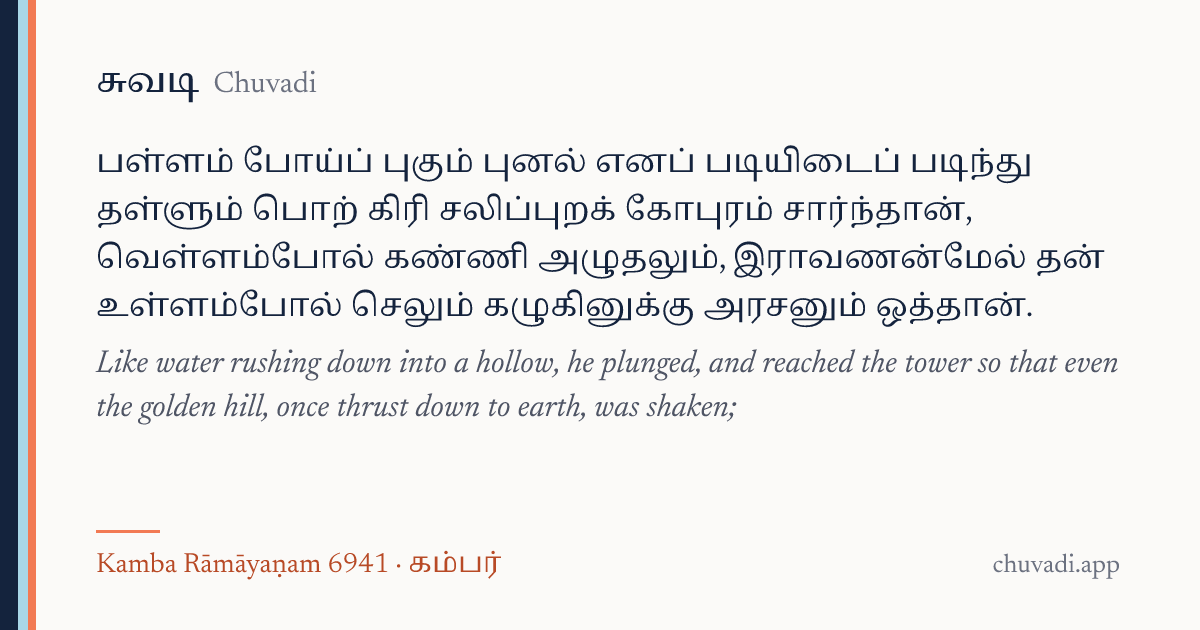
பாடல் · The poem
Tap a word to see its gloss in the commentary and where else it occurs.
பொருள் · Meaning in Tamil
பள்ளம் போய்ப் புகும் புனல் என - பள்ளமான இடத்திற்குப் பாய்ந்தோடும் நீரே போல; படியிடைப் படிந்து தள்ளும் பொற்கிரி - பூமியிலே சாயுமாறு சாய்த்துத் தள்ளப்பட்ட திரிகூட மலையும்; சலிப்புறக் கோபுரம் சார்ந்தான் - சலிப்படையுமாறு இராவணனிருந்த கோபுரத்தைச் சார்ந்தவனான சுக்கிரீவன்; வெள்ளம் போற் கண்ணி அழுதலும் - வெள்ளம் போலக் கண்ணீர் பெருக்கும் கண்களையுடைய சீதை (விம்மி) அழுதவுடன்; உள்ளம் போல் - தன் மனம் சென்ற வேகத்திலேயே; இராவணன் மேல் செலும் - இராவணன் மேல் பாய்ந்து சென்ற; கழுகினுக்கு அரசனும் ஒத்தான் - கழுகின் வேந்தனாகிய சடாயுவையும் ஒத்தவன் ஆனான்.
சுக்கிரீவன் இராவணன் மேல் பாய்ந்த வேகத்திற்குப் பள்ளம் பாயும் வெள்ளத்தை உவமையாக்கினார் மேருவுக்கும் வாயுவுக்கும் நிகழ்ந்த பலப் போட்டியில் வந்து வீழ்ந்த மேருவின் ஒரு துண்டாதலின் திரிகூடமலை "தள்ளும் பொற்கிரி” எனப்பட்டது.
ஆங்கிலம் · English translationAI
Translation
- Like water rushing down into a hollow, he plunged,
- and reached the tower so that even the golden hill, once thrust down to earth, was shaken;
- he was like the king of the vultures too, who, when she whose eyes poured floods of tears wept,
- went for Irāvaṇaṉ as swiftly as his own heart.
What the poem says
Cukkirīvaṉ lands on the tower like water rushing into a pit, and he shakes Mount Tirikūṭa on which Ilaṅkai stands. Tradition says that hill is a fragment of Mount Mēru, broken off in a contest of strength between Mēru and the Wind-god.
He is also compared to Caṭāyu, king of the vultures. When Cītai was being carried off and weeping, Caṭāyu flew at Irāvaṇaṉ as fast as thought. This attack echoes that earlier one.