



கம்பராமாயணம் 6966 · யுத்த 11.30
பாடல் · The poem
Tap a word to see its gloss in the commentary and where else it occurs.
பாட வேறுபாடு · Project Madurai reads
பொருள் · Meaning in Tamil
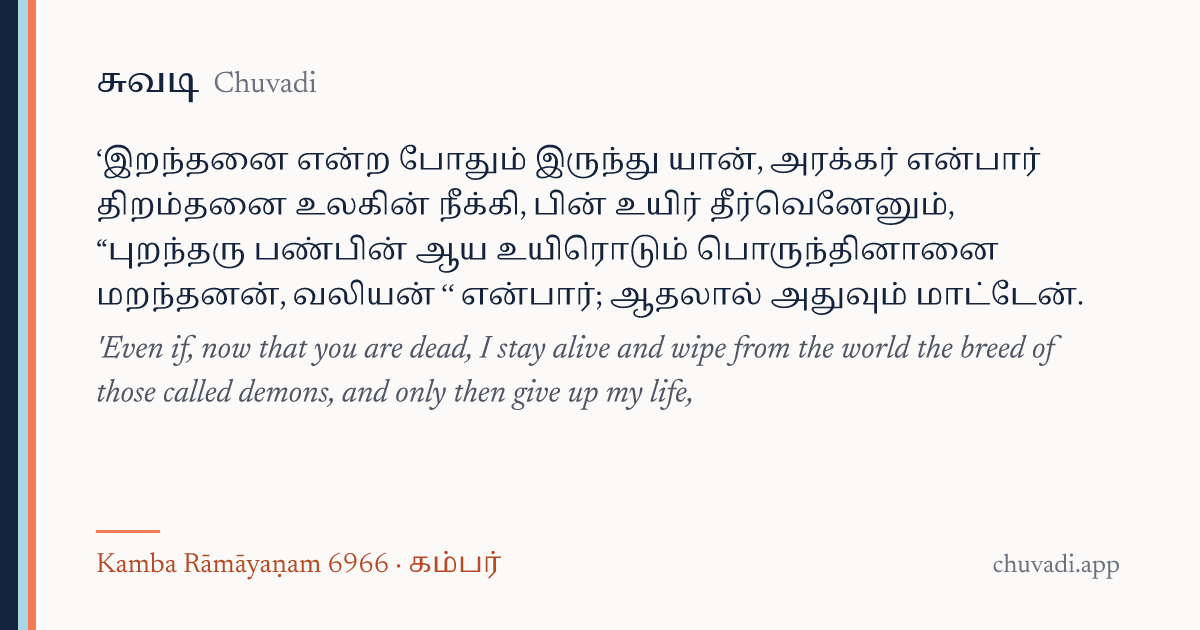
இறந்தனை என்ற போதும் - நீ இறந்து போனாய் என்ற போதிலும்; யான் இருந்து - நான் (உடனே இறவாமல்) உயிர்தாங்கியிருந்து அரக்கர் என்பார் திறம்தனை - அரக்கர் எனப்படுவோரின் இனங்களையெல்லாம்; உலகின் நீக்கி - உலகத்தினின்றும் (அடியோடு) அகற்றி; பின் உயிர் தீர்வென் என்றால் - பிறகு உயிர் விடுவேன் என்றாலும்; புறந்தரு பண்பின் ஆய - (அல்லற்காலத்து) பாதுகாத்தற்குரிய பண்பினனாகி; உயிரொடும் பொருந்தினானை - உயிரோடு ஒன்றாய் இணைந்து விட்ட நண்பனை; மறந்தனன் - மறந்தவனாய்ப் போர்த்தொழிலில் இவனால் ஈடுபடமுடிந்ததே! வலியன் - எத்தகைய வலிய (கல்) மனம் கொண்டவன் இராமன்; என்பார் ஆதலால் - என்று உலகோர் கூறுவர் ஆதலால்; அதுவும் மாட்டேன் - (உயிர் வாழ்ந்து அரக்கரை அழிக்கவும் மாட்டேன்.
ஆங்கிலம் · English translationAI
Translation
- 'Even if, now that you are dead, I stay alive and wipe from the world the breed
- of those called demons, and only then give up my life,
- "He forgot the one who, with a protecting nature, had become one with his own life;
- how hard his heart is," they will say; and so I will not do even that.'
What the poem says
Irāmaṉ considers a way out: he could stay alive just long enough to wipe out the demons and then die. But people would say he was heartless, that he forgot the friend who was one with his own life and went calmly on with the war.
So he rejects even that. The lament shows how completely he regards Cukkirīvaṉ as part of himself.