



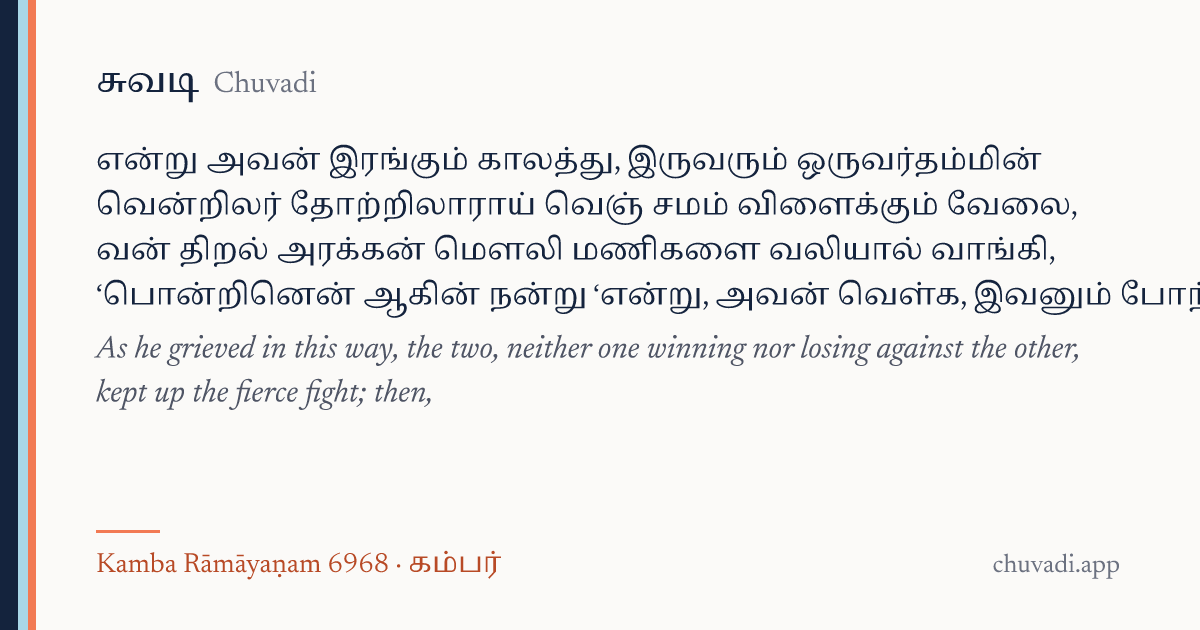
கம்பராமாயணம் 6968 · யுத்த 11.32
பாடல் · The poem
Tap a word to see its gloss in the commentary and where else it occurs.
பாட வேறுபாடு · Project Madurai reads
பொருள் · Meaning in Tamil
என்று அவன் இரங்கும் காலத்து - என்று அந்த இராமபிரான் இரங்கி வருந்தும் போது; இருவரும் - இராவணன், சுக்கிரீவன் ஆகிய இருவரும், ஒருவர் தம்மின் - ஒருவருக்கு ஒருவர்; வென்றிலர் தோற்றிலாராய் - வெற்றியோ தோல்வியோ அடைய இயலாதவராய்; வெஞ்சமம் விளைக்கும் காலை - கடும்போர் புரியுங் காலத்தே; வன்திறல் அரக்கன் மெளலி - வலிய வல்லமை வாய்ந்த இராவணனின் மகுடத்தில் உள்ள; மணிகளை வலிய வாங்கி - மாணிக்க மணிகளைத் தன் வலிமையினால் பிடுங்கிக் கொண்டு; அவன் - அந்த இராவணன்; 'பொன்றினென் ஆயின் நன்று - 'நான் இனி இறந்து போதலே நல்லது”; என்று வெள்க - என்று நாணமுறுமாறு; இவனும் போந்தான் - சுக்கிரீவனும் இராமனை வந்து அடைந்தான்.
மணி மகுடத்திலிருந்து, மணிகளை இழத்தல் மானக்கேடு. ஆதலின், 'இறந்து போதலே இனிச் சிறந்தது' என்று இராவணன் வெட்கமுற்றான். "மானம் இழந்தபின் வாழாமை முன் இனிது” (இனி.40) உயிர் நீப்பர் மானம் வரின்” (திருக்கு: 968); "இளிவரின் வாழாத மானம் உடையார்” (குறள். 970) என வருவன காண்க. "பொறிப்புண்டரீகம் போலும் ஒருவனால் புனைந்த மோலி பறிப் புண்டும்” (கம்ப:7008) என்றும் "மணிபறித்தெழுந்த வெந்தை” (கம்ப: 6891) என்றும், "இக்கிரி பத்தின் மெளலி இனமணி இமைப்பில் கொண்ட" (கம்ப. 6960) என்றும் சுக்கிரீவனின் இந்தச் செயற்கருஞ்செயல் மேலும் பல இடங்களில் நினைக்கப்படும். இருவரும் சம பலம் உள்ளவராதலின் "வென்றிலர் தோற்றிலாராய்ப்” போர் நீளுவதறிந்த சுக்கிரீவன், தான் போர் புரிந்ததற்கு அடையாளமாக மணிகளைப் பறித்து வந்து பெருமானிடம் வைத்தான் என்க.
ஆங்கிலம் · English translationAI
Translation
- As he grieved in this way, the two, neither one
- winning nor losing against the other, kept up the fierce fight; then,
- wrenching by force the gems from the crowns of the mighty demon,
- so that the other was shamed, thinking 'better if I had died,' this one came away.
What the poem says
While Irāmaṉ grieves, the fight goes on, and neither side can win. Cukkirīvaṉ ends it with a symbolic stroke. He tears the jewels out of Irāvaṇaṉ's crowns and comes back.
Losing the jewels from his crown is a deep disgrace for a king, and Irāvaṇaṉ wishes he were dead. The commentary cites Tamil sayings that for an honourable man death is better than dishonour. The feat is remembered several times later in the epic, which takes its title for this episode, the Breaking of the Crowns, from it.