



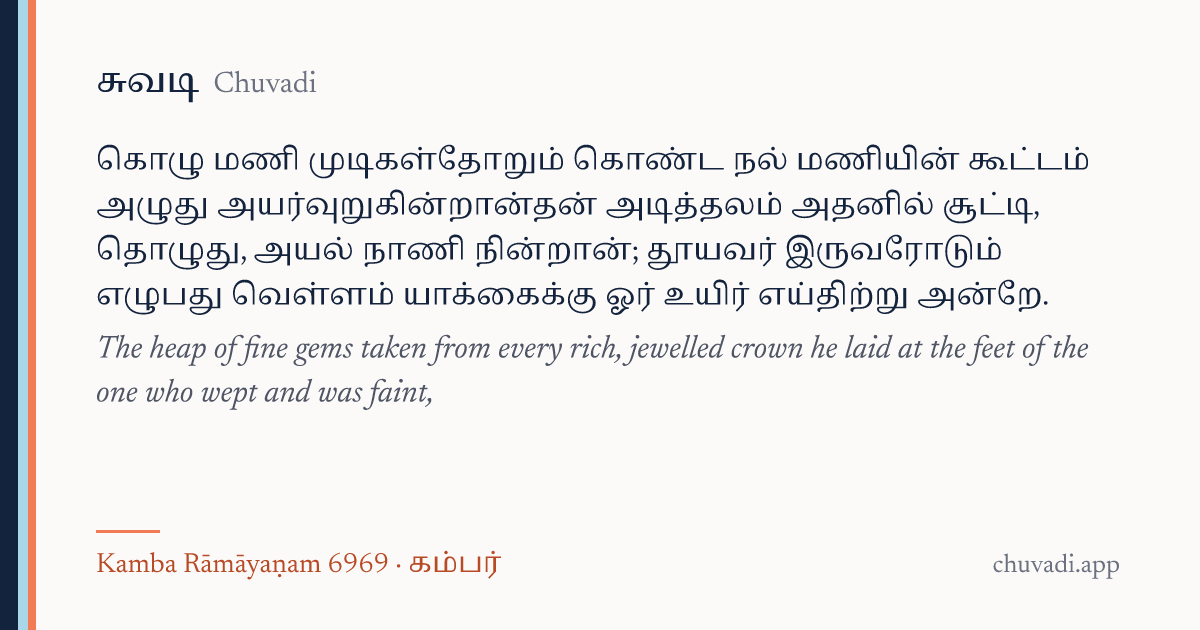
கம்பராமாயணம் 6969 · யுத்த 11.33
பாடல் · The poem
Tap a word to see its gloss in the commentary and where else it occurs.
பொருள் · Meaning in Tamil
கொழு மணி முடிகள் தோறும் - உயர்வான நவமணிகள் பதிக்கப்பெற்ற மகுடங்களிலிருந்து; கொண்ட நல் மணியின் கூட்டம் - பறித்துக் கொண்டு வரப்பட்ட நல்ல மாணிக்கங்களின் கூட்டத்தை, அழுது அயர்வு உறுகின்றான் தன் - தன்னைக் காணாது அழுது தளர்கின்ற இராமபிரானுடைய; அடித்தலம் அதனில் சூட்டி - திருவடிகளில் (அணியாகக் சூட்டி; தொழுது அயல் நாணி நின்றான் - வணங்கி, வெட்கமுற்று அயலே நின்றான் (சுக்கிரீவன்); தூயவர் இருவரோடும் - (அப்போது) தூய்மை மிகுகுணத்தவராகிய இராம இலக்குவரோடு கூடிய; எழுபது வெள்ளம் யாக்கைக்கு - எழுபது வெள்ளம் தொகை கொண்ட வானர சேனை என்னும் உடலுக்கு; ஓர் உயிர் எய்திற்று - ஒப்பற்றதோர் உயிர் வந்தடைந்தது. (எனலாம்).
இராவணனைக் கொன்று திரும்ப இயலாமையால் நாணினன் என்பதாம். "கருமத்தால் நாணுதல் நாணு” (திருக்கு. 1011) பையல் தலையை இடப்பெறாத நாம், என் சொல்லி முன்னே நிற்பது என்று பெருமான் அருகே வந்து நின்றார் என்ற பெரியவாச்சான் பிள்ளையின் கூற்று. "அயல் நாணி நின்றான்” எனும் கவிஞர் பிரானின் தொடர்க்கு அரிய விளக்கமாய் அமைவது கருதத் தக்கது.
ஆங்கிலம் · English translationAI
Translation
- The heap of fine gems taken from every rich, jewelled crown
- he laid at the feet of the one who wept and was faint,
- bowed, and stood to one side, ashamed; and with the two pure ones,
- the body of seventy veḷḷam regained its life.
What the poem says
Cukkirīvaṉ lays the jewels at Irāmaṉ's feet, bows, and stands aside, embarrassed that he could not bring back Irāvaṇaṉ's head itself. A medieval Vaiṣṇava commentator imagines him thinking: having failed to bring that fellow's head, how can I stand before the Lord?
His return brings the whole army back to life. The seventy veḷḷam of monkeys, with Irāmaṉ and Ilakkuvaṉ, are like a body whose life has just come back.