



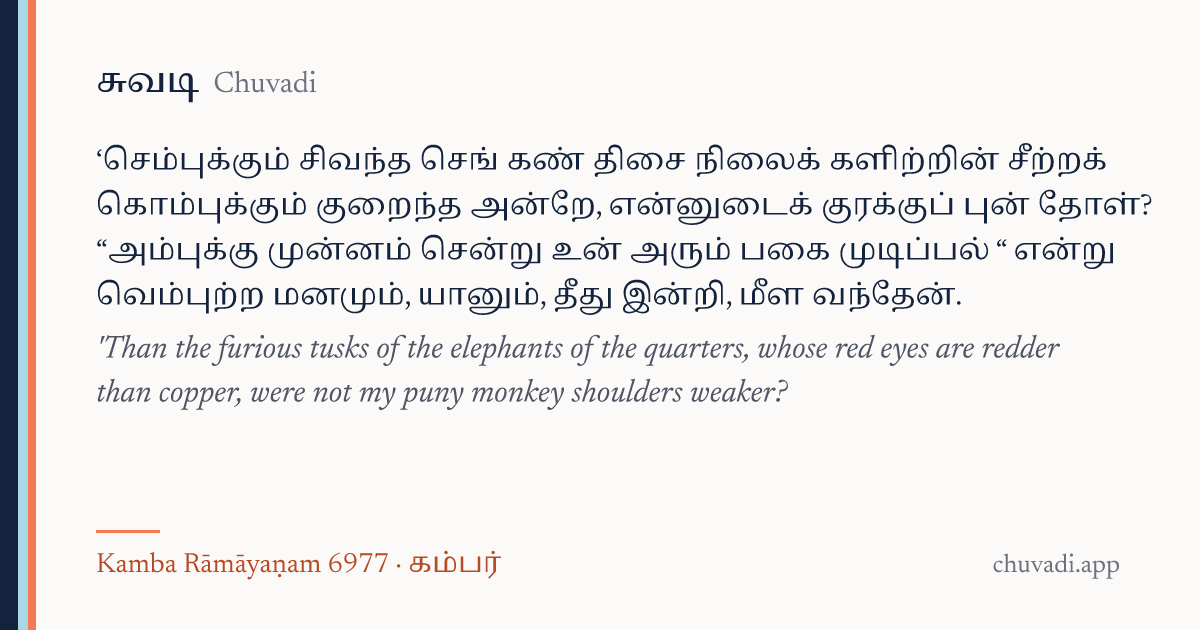
கம்பராமாயணம் 6977 · யுத்த 11.41
பாடல் · The poem
Tap a word to see its gloss in the commentary and where else it occurs.
பாட வேறுபாடு · Project Madurai reads
பொருள் · Meaning in Tamil
செம்புக்கும் சிவந்த - செம்பு எனும் உலோகத்தைக் காட்டிலும்; செங்கண் திசை நிலைக் களிற்றின் - சிவந்த கண்களையுடைய திக்குயானைகளின்; சீற்றக் கொம்புக்கும் - சினத்தோடு பாய்ந்த கொம்புகளுக்கும், என்னுடைய புன்குரங்குத்தோள் - என்னுடைய புல்லிய குரங்குத் தோள்கள்; குறைந்த அன்றே - வலி குறைந்து போயின அல்லவோ? அம்புக்கு முன்னம் சென்று - (உன்னுடைய) அம்புக்கு முன்னாகவே சென்று; உன் அரும் பகை முடிப்பல் என்று - உனது அரிய பகையை முடிப்பேன் என்று (கூறி), வெம்புற்ற மனமும் யானும் - புழுங்கிய உள்ளமும் நானுமாய்; தீங்கின்றி மீள வந்தேன்- எந்த வித இடையூறு மின்றி பத்திரமாக மீண்டு வந்து விட்டேன்
ஆங்கிலம் · English translationAI
Translation
- 'Than the furious tusks of the elephants of the quarters, whose red eyes are redder than copper,
- were not my puny monkey shoulders weaker?
- "I will go before your arrows and finish your hard foe," I said,
- and my burning heart and I have come back unharmed.'
What the poem says
Irāvaṇaṉ's chest once withstood the tusks of the great elephants that guard the directions. Cukkirīvaṉ says his own shoulders proved weaker than those tusks, so they could do Irāvaṇaṉ no real harm.
He had boasted that he would get there before Irāmaṉ's arrows and finish the enemy off. Instead he has come back safe and sound with nothing to show but frustration. The modesty is ironic, since he has just humiliated Irāvaṇaṉ.