



கம்பராமாயணம் 6983 · யுத்த 11.47
பாடல் · The poem
Tap a word to see its gloss in the commentary and where else it occurs.
பொருள் · Meaning in Tamil
அரிக்குலத்து அரச! - குரங்கினத்தின் தலைவனே! தொடிமணி இமைக்கும் தோளாய்! - தோள்வளையில் பதித்துள்ள மணிகள் ஒளிரும் தோள்களையுடையவனே! வடிமணி வயிரத்து ஒள்வாள் - தேர்ந்த மணிகளும் வயிரமும் பதிக்கப் பெற்ற 'சந்திரகாசம்' என்னும் வாளினை; சிவன் வயின் வாங்கிக் கொண்டான் - சிவபிரானிடமிருந்து பெற்றுக் கொண்டவனான இராவணனுடைய; முடிமணி பறித்திட்டாயோ? - மகுடத்தில் இருந்த மணிகளையா கைப்பற்றினாய் நீ?; இவன் - (இல்லை. இல்லை) இந்த இராமபிரான்; இனி முடிக்கும் வெற்றிக்கு - இனி அடைய இருக்கும் வெற்றி மாளிகைக்கு; அடி மணி இட்டாய்! - அடித்தளத்தில் இடும் மணியை யன்றோ இட்டாய்! சொல் இதின் வேறும் உண்டோ? - புகழ் விளைக்கும் செயல் இதை விடவும் வேறு எதுவும் உண்டோ? (இல்லையென்கு); என்றான் -
சிவனிடம் இராவணன் வரத்தால் பெற்ற வாள் "சந்திரகாசம்". முடிமணியைப் பறித்திட வில்லை; இராமன் வெற்றி மாளிகைக்கு அடித்தள மணியிட்டாய் என ஒன்றைச் சமத்காரமாக மறுத்து இன்னொன்றாகக் கூறுவதால் இது அவநுதியணி.
ஆங்கிலம் · English translationAI
Translation
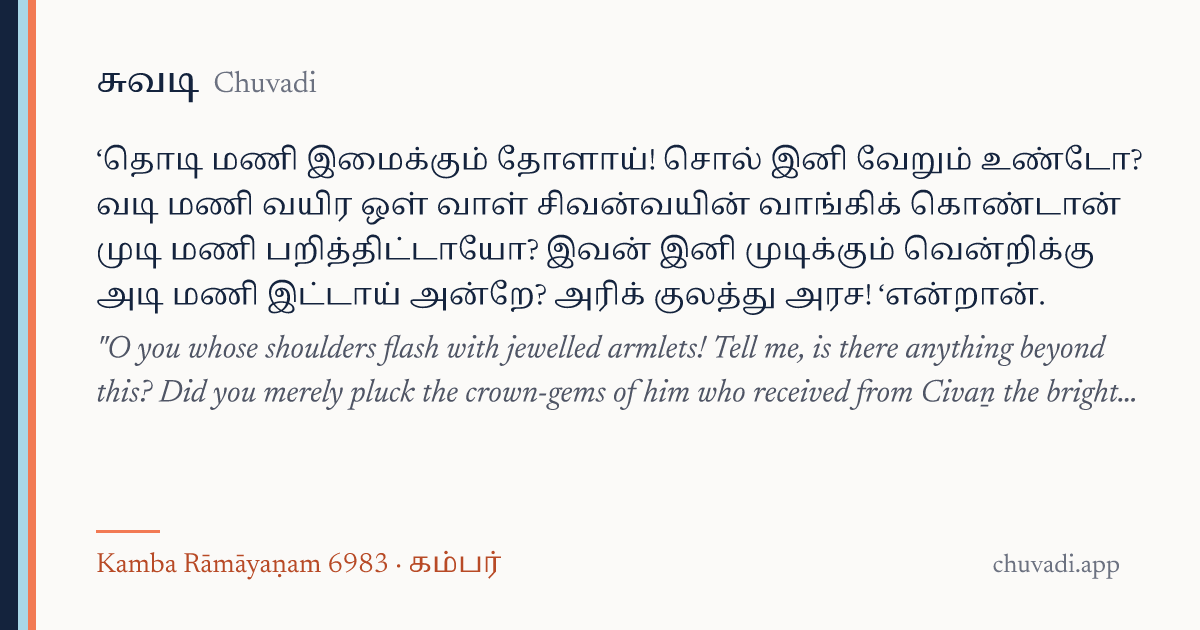
- "O you whose shoulders flash with jewelled armlets! Tell me, is there anything beyond this?
- Did you merely pluck the crown-gems of him who received from Civaṉ the bright sword of fine gems and diamond?
- No: for the victory this one will now accomplish,
- you have laid the foundation gem, have you not, O king of the monkey race!" he said.
What the poem says
Vīṭaṇaṉ ends his praise with a turn of wit. Irāvaṇaṉ got his sword Cantirakācam as a boon from Civaṉ. Vīṭaṇaṉ asks whether Cukkirīvaṉ has only taken that warrior's crown jewels, then answers himself: no, he has laid the foundation stone for the palace of victory that Irāmaṉ is about to build.
Denying the plain fact in order to state a grander one is the figure called apahnuti (denial).