



கம்பராமாயணம் 6985 · யுத்த 11.49
பாடல் · The poem
Tap a word to see its gloss in the commentary and where else it occurs.
பாட வேறுபாடு · Project Madurai reads
பொருள் · Meaning in Tamil
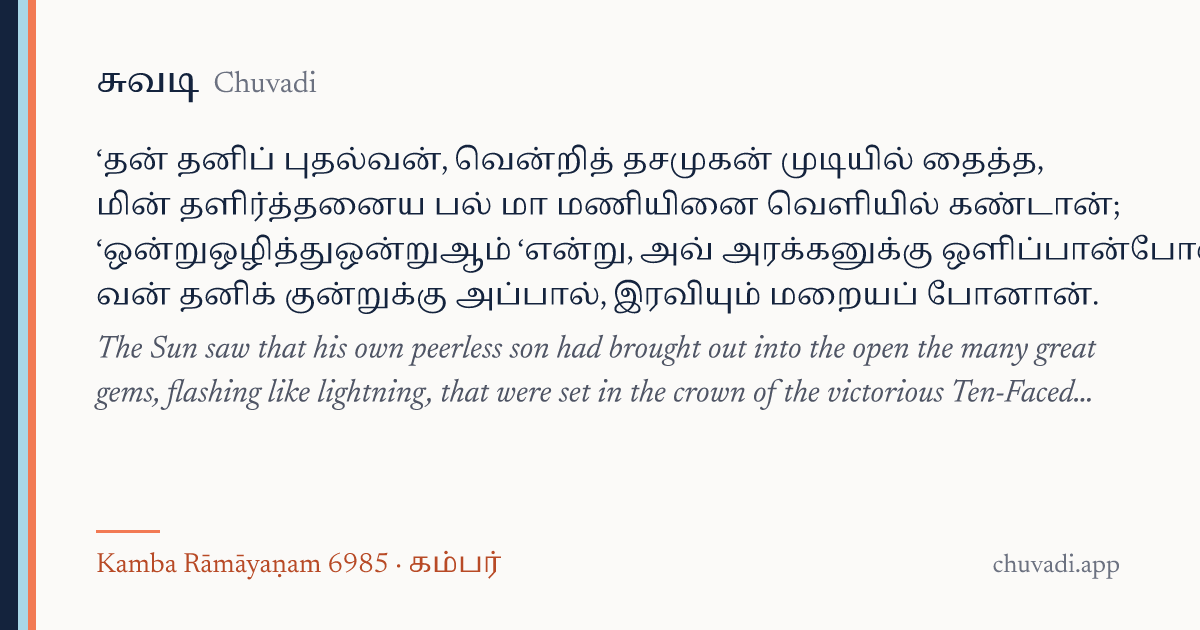
இரவியும் - சூரியனும்; தன் தனிப் புதல்வன் - தன்னுடைய ஒப்பற்ற மகன்; வென்றித் தசமுகன் - வெற்றி பொருந்திய இராவணனுடைய; முடியில் தைத்த - மகுடத்தில் பதித்திருந்த; மின் தளிர்த்து அனைய பல்மா மணியினை - மின்னல் போன்று (தன் ஒளிக்கதிர்கள் படுதலால்) ஒளிசிந்துகின்ற பலபெருமைக்குறிய மணிகளை; வெளியில் கண்டான் - உலகிலே கண்டான்; 'ஒன்று ஒழித்து ஒன்று ஆம்' - 'ஒன்று கிடக்க ஒன்று ஆகிவிடக்கூடும்' என்று; அவ் அரக்கனுக்கு - அந்த அரக்கனாகிய இராவணனுக்கு; ஒளிப்பான் போல - அஞ்சி ஒளிந்து கொள்பவனைப் போல; வன்தனிக் குன்றுக்கு அப்பால் - வலிய அத்தகிரி எனும் தனக்குரிய மலைக்குப் பின்புறமாக; மறையப் போனான் - மறைவதற்குச் சென்று விட்டான்.
சூரியன் மறைவு - தற்குறிப்பேற்ற அணி. ஒன்று ஒழித்து ஒன்றாதல் - இன்றும் வழங்கும் மரபுத் தொடர் "கோள் இரண்டையும் கொடுஞ்சிறை வைத்த அக்குமரன்" (கம்ப. 6568) என முன்பே சூரிய சந்திரர் சிறைப்பட்டுள்ளதனால் சூரியன் அஞ்சி மறைந்தான்.
ஆங்கிலம் · English translationAI
Translation
- The Sun saw that his own peerless son had brought out into the open
- the many great gems, flashing like lightning, that were set in the crown of the victorious Ten-Faced one;
- and thinking "one thing may lead to another," as if hiding from that demon,
- the Sun too went down to vanish behind his own mighty lone mountain.
What the poem says
Cukkirīvaṉ is the son of the Sun god. As evening falls, the poet imagines a reason for sunset: the Sun saw his son's daring theft and feared Irāvaṇaṉ might take revenge on him, so he hid behind the western mountain.
Giving a natural event an invented cause like this is a recognised figure of speech. The fear is plausible, since Irāvaṇaṉ's son had once imprisoned both the sun and the moon. "One thing may lead to another" is still a common Tamil idiom.