



கம்பராமாயணம் 6989 · யுத்த 12.2
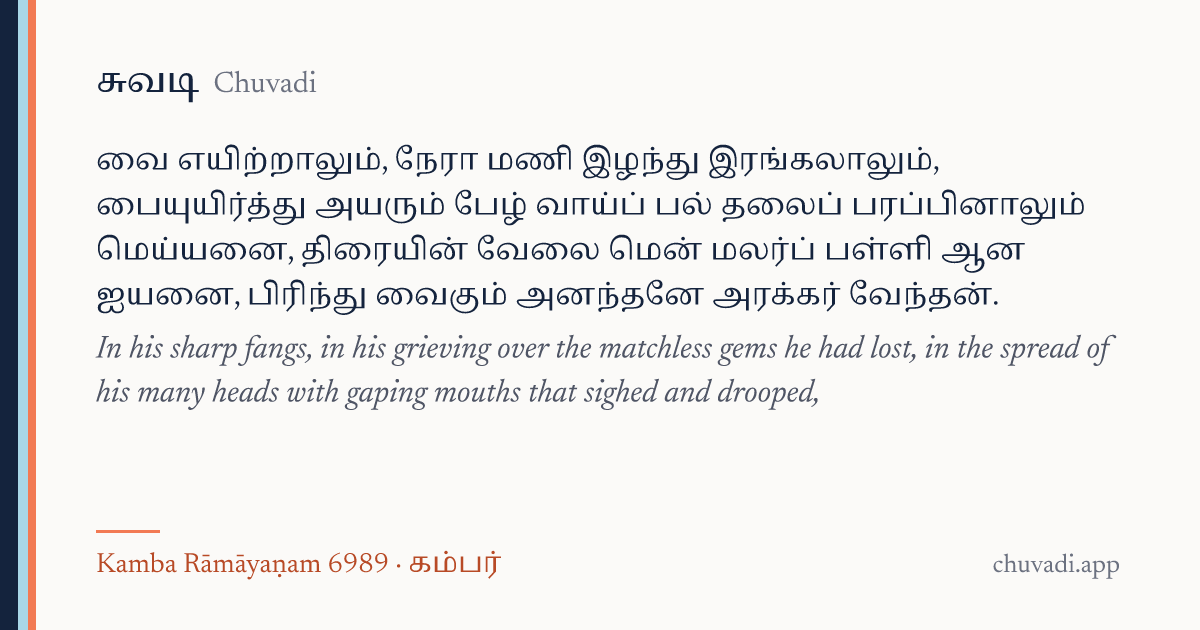
பாடல் · The poem
Tap a word to see its gloss in the commentary and where else it occurs.
பொருள் · Meaning in Tamil
அரக்கர் வேந்தன் - அரக்கர் கோமானாகிய இராவணன்; வை எயிற்றாலும் - கூரிய பற்கள் கொண்டுள்ளமையாலும்; நேரா மணியிழந்து இரங்கலாலும் - ஒப்பற்ற மணிகளை இழந்து மனம் இரங்குவதாலும்; பை உயிர்த்து அயரும் - படங்களுடன் கூடிப் பெருமூச்சு விட்டுத் தளரும்; பேழ்வாய்ப் பல்தலைப் பரப்பினாலும் - பிளந்த வாயை உடைய பல தலைகளின் பரப்பினையுடைமையாலும்; மெய்யனை - உண்மைப் பொருளாய் உறைபவனும்; ஐயனை - உயிர்க்கூட்டத்தின் தலைவனும் ஆகிய திருமாலை; பிரிந்து வைகும் - பிரிந்து வாழ்பவனும்; திரையில் மென்மலர் பள்ளி ஆன - அலை சூழும் பாற்கடலில் அமைந்துள்ள மெல்லிய மலர்ப் படுக்கையானவனும் ஆன; அனந்தனே - ஆதிசேடனே போன்றவன் ஆனான்.
அரக்கர் வேந்தன், வையெயிற்றாலும், மணியிழந்து இரங்கலாலும், பல்தலைப் பரப்பினாலும் அனந்தனே என இயைத்துப் பொருள் கொள்க. மானம் இழந்து மனத்துயர்மிக்கு பெருமூச்சோடு படுத்துக்கிடக்கும் இராவணனுக்குப் பாற்கடலில் திருமாலைப் பிரிந்து வாடும் ஆதிசேடன் உவமையானான். ஏது உவமையணி. "பிரம்ம ஸத் ஜகத் மித்யை" என்பது உபநிடதமாதலின், என்றும் உள்ள இறைவனை "மெய்யன்" என்றார்.
ஆங்கிலம் · English translationAI
Translation
- In his sharp fangs, in his grieving over the matchless gems he had lost,
- in the spread of his many heads with gaping mouths that sighed and drooped,
- the king of demons was the very serpent that is a soft flower-bed on the wave-washed sea
- for the True One, the Lord: he was Anantaṉ, lying parted from that Lord.
What the poem says
The poet compares Irāvaṇaṉ, lying on his bed, to Anantaṉ (Ātisēṭaṉ), the many-headed serpent that serves as Tirumāl's couch on the ocean of milk, at a moment when the serpent is separated from its Lord.
The match is point by point: both have sharp fangs, many heads and gaping mouths heaving with sighs, and both have lost their jewel, the serpent its hood-gem and Irāvaṇaṉ his crown-gems. Tirumāl is called "the True One" because he alone is eternally real.