



கம்பராமாயணம் 6990 · யுத்த 12.3
பாடல் · The poem
Tap a word to see its gloss in the commentary and where else it occurs.
பொருள் · Meaning in Tamil
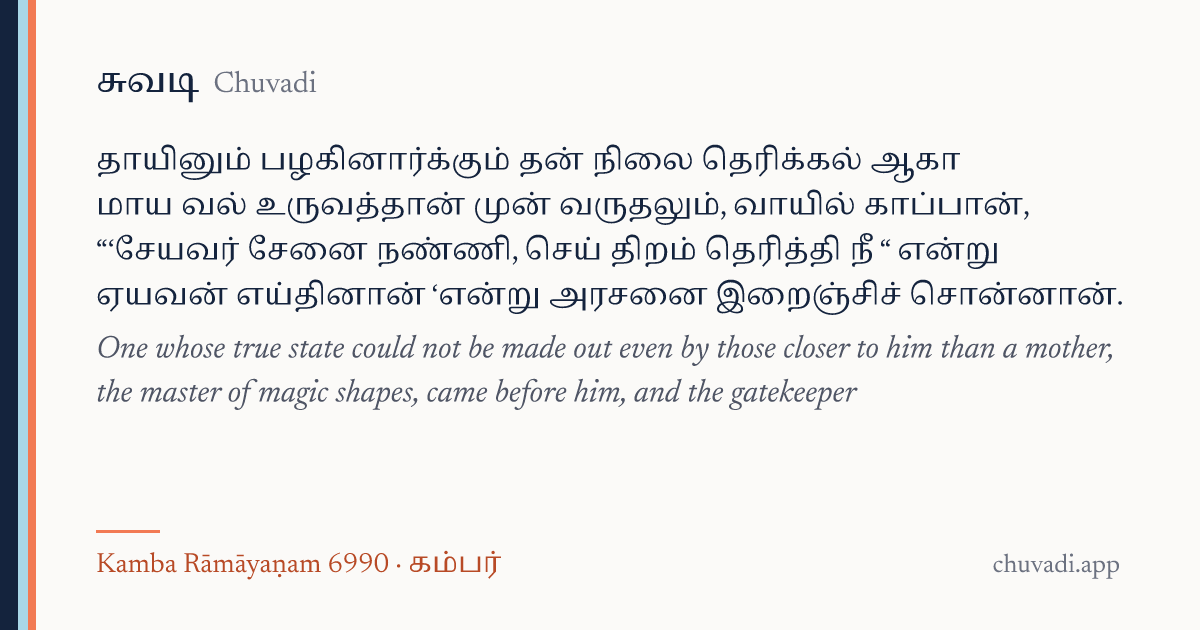
தாயினும் பழகினார்க்கும் - தாயைக்காட்டிலும் நெருங்கிப் பழகினார்க்கும்; தன் நிலை தெரிக்கல் ஆகா - தன்னுடைய (உண்மை) நிலைமையைத் தெரிந்து கூற முடியாத; மாயவல் உருவத்தான் - மாயையில் வல்ல உருவத்தினையுடைய சார்த்தூலன்; முன்வருதலும் - (இராவணனைக்காண அவன் அரண்மனையின்) முன் வந்தான்; வாயில் காப்பான் - அரண்மனை வாயிலைக் காத்து நிற்பான்; சேயவர் சேனை நண்ணி - அந்நியரான பகைவர் படையினை அணுகி; செய்திறம் நீ தெரித்தியென்று - அவர்கள் புரியும் செயல்களை நீ அறிந்து வந்து தெரிவிப்பாய் என்று; ஏயவன் எய்தினான் என்று - (உன்னால்) ஏவப்பட்டவன் வந்துள்ளான் என்று; அரசனை இறைஞ்சிச் சொன்னான் - இராவணனைப் பணிந்து கூறினான்.
"துறந்தார் படிவத்தார் ஆகி இறந்து ஆராய்ந்து என் செயினும் சோர்விலது ஒற்று" (திருக். 586) ஆதலின், தாயினை விடவும் பழகினார்க்கும் தன் நிலை தெரிவிக்காத ஒற்றனாயிருந்தான் சார்த்தூலன் என்க. ஒற்றர் வடிவமாற்றம் செய்யும் கலையில் வல்லவராயிருத்தல் வேண்டும். அந்த வடிவமாற்றிக்கலையில், இயல்பாகவே அரக்கர் வல்லார் ஆதலின், "தெரிக்கல் ஆகா மாயவல் உருவத்தான்" சார்த்தூலன் என்றார்.
ஆங்கிலம் · English translationAI
Translation
- One whose true state could not be made out even by those closer to him than a mother,
- the master of magic shapes, came before him, and the gatekeeper
- bowed to the king and said, "He to whom you said, 'Go near the enemy's army
- and find out what they are doing,' the one you sent, has come."
What the poem says
Cārttūlaṉ, a spy Irāvaṇaṉ had sent to watch Irāmaṉ's army, arrives at the palace. The gatekeeper bows and announces him.
A good spy, the Tirukkuṟaḷ says, keeps his cover whatever happens and whatever disguise he wears. Cārttūlaṉ is such a spy: even people closer to him than his own mother cannot tell who he really is. Demons are natural shape-shifters, which makes them especially good at disguise.