



கம்பராமாயணம் 7004 · யுத்த 12.17
பாடல் · The poem
Tap a word to see its gloss in the commentary and where else it occurs.
பொருள் · Meaning in Tamil
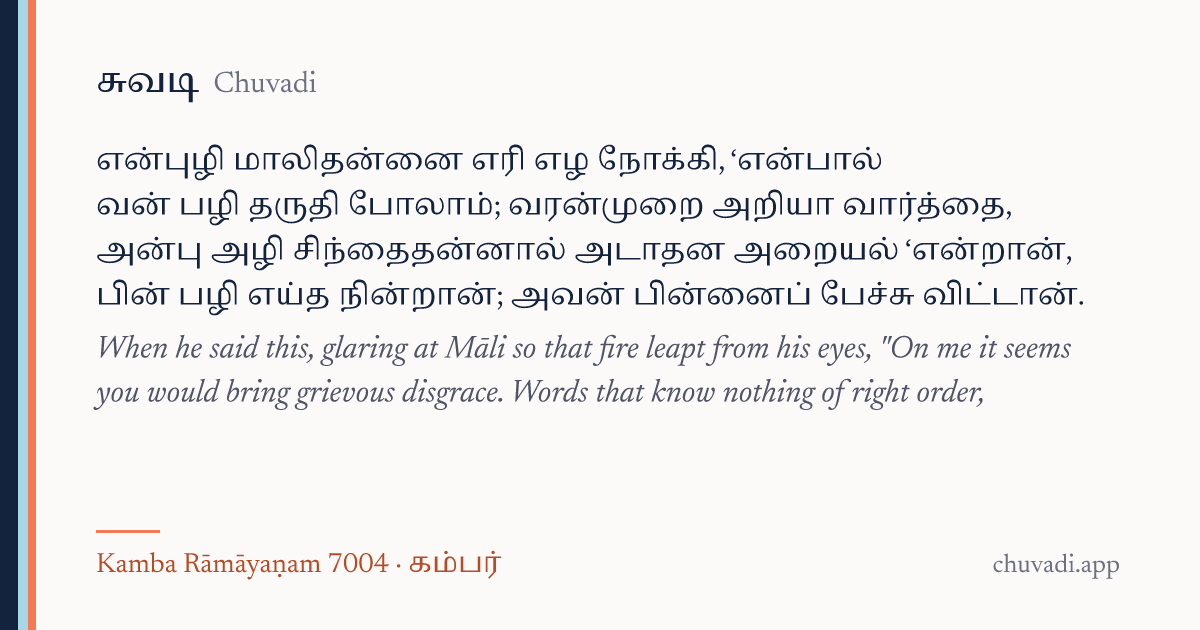
என்புழி - என்று (மாலியவான்) சொன்னபோது; மாலி தன்னை எரி எழ நோக்கி - அவனை (விழிகளில்) தீ எழுமாறு பார்த்து; பின்பழி எய்த நின்றான் - பின்னால் (பெரும்) பழியடைய உள்ளவனான இராவணன்; என்பால் வன்பழி தருதி போலாம் - 'எனக்குக்கொடிய வசையை விளைவிப்பது (உன் கருத்துப்) போலும்; அன்பு அழி சிந்தை தன்னால் - என்பால் அன்பற்ற உன் மனத்தினால்; வரன் முறை அறியா அடாதன வார்த்தை - மரபு முறையறியாது கூறத்தகாத வார்த்தைகளைப்; அறையல் என்றான் - பேசாதே! என்று கூறினான்; அவன் - அது கேட்ட மாலியவான்; பின்னைப் பேச்சுவிட்டான் - அதன் பிறகு தன் பேச்சை நிறுத்திக் கொண்டான்.
சீதையை விடுத்து, இராமசேனையிடம் சரணடைவது கொடிய பழி என்பான் "வன்பழி" என்றான். "இடிப்பாரையில்லாத ஏமரா மன்னன் கெடுப்பார் இலானும் கெடும்" (திருக். 448) என்பது உறுதியாதலின், "பின்பழியடைய நின்றான்" என்று இராவணனைக் குறித்தார். "செவி கைப்பச் சொற்பொறுக்கும் பண்பு" (திருக். 389) அற்ற இராவணனுக்கு, மாலியவான் உரைத்த ஞானமொழிகள் "வரன் முறையறியா வார்த்தைகளாகவும் அடாதன அறைதல் ஆகவும்" தோன்றின.
ஆங்கிலம் · English translationAI
Translation
- When he said this, glaring at Māli so that fire leapt from his eyes, "On me
- it seems you would bring grievous disgrace. Words that know nothing of right order,
- unfitting things, from a mind with its love gone, do not utter!" said
- the one who stood to earn disgrace hereafter; and the other spoke no more.
What the poem says
Irāvaṇaṉ turns on Māliyavāṉ with blazing eyes. To him, giving up Cītai and surrendering would be a terrible disgrace, and he accuses his uncle of speaking out of disloyalty. The old man falls silent.
The poet calls Irāvaṇaṉ "the one who stood to earn disgrace hereafter." As the Tirukkuṟaḷ says, a king with no one to rebuke him is ruined even without enemies, and Irāvaṇaṉ cannot bear to hear unwelcome truths.