



கம்பராமாயணம் 7009 · யுத்த 12.22
பாடல் · The poem
Tap a word to see its gloss in the commentary and where else it occurs.
பொருள் · Meaning in Tamil
கமலத்தோன் உலகுக்கு - பிரம லோகத்துக்கு; இப்பால் உள புடை - இப்புறமுள்ள இடங்களில் (எல்லாம்); பொருது கொண்டு - போரிட்டு (அவ்விடங்களை வெற்றி) கொண்டு; போர்பெறாப் பொங்குகின்ற - மேலும் போர் போதாமல் பொங்கியெழுந்தவாறு உள்ள; கடகரி புரவி ஆள் தேர் - மதப் பெருக்குடைய யானை, குதிரை, வாள், தேர்ப்படையும் ஆங்காங்கு நெருங்கியுள்ள சேனை; இருநூறு வெள்ளம் கொண்டு - இருநூறு வெள்ளங்களையும் கொண்டு; யானே வடதிசை காப்பேன் - நானே வடக்குக் கோட்டை வாயிலில் காக்கும் பொறுப்பை மேற்கொள்வேன்; என வகுத்துவிட்டான் - என்று கூறி (இவ்வாறு) ஆயிரம் வெள்ளம் (அரக்க) சேனையையும் பிரித்து விட்டான் (இராவணன்).
இராமனும் இலக்குவனும் வடதிசைக் கோட்டை வாயிலின் முன் உள்ளமையால் வடதிசைப் பொறுப்பைத் தானே ஏற்றான் இராவணன். பெரிய பொறுப்பினைப் பிறர்க்குத் தள்ளாமல், தாமே ஏற்கும் அக்காலத் தலைமைப் பண்புகளுள் ஒன்றைக் கவிஞர் சுட்டிச் செல்வது காண்க.
ஆங்கிலம் · English translationAI
Translation
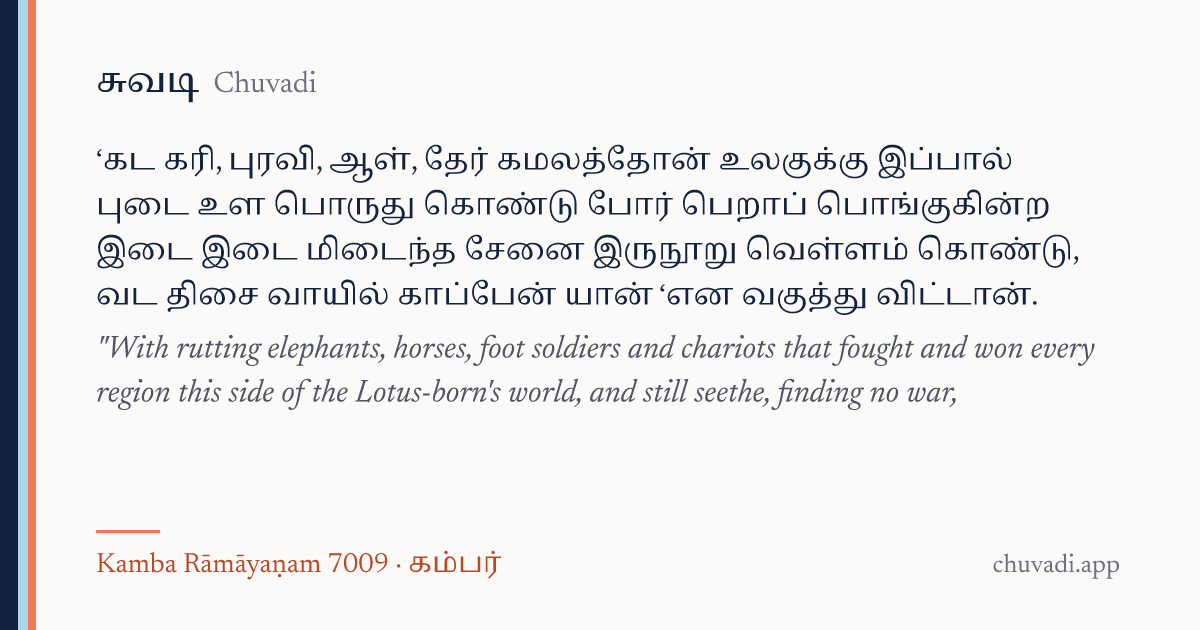
- "With rutting elephants, horses, foot soldiers and chariots that fought and won
- every region this side of the Lotus-born's world, and still seethe, finding no war,
- an army packed close at every point, two hundred veḷḷam,
- I myself will guard the northern gate." So he divided his forces.
What the poem says
Irāvaṇaṉ keeps the northern gate for himself, since Irāmaṉ and Ilakkuvaṉ stand before it. He takes two hundred veḷḷam of elephants, horses, foot soldiers and chariots. They have conquered every world below Piramaṉ's heaven and are restless because no war is left to fight.
With that, the thousand veḷḷam of the demon army are fully assigned. The commentary praises the old ideal of leadership: a leader does not push the heaviest task onto others but takes it himself.