



கம்பராமாயணம் 702 · பால 10.150
பாடல் · The poem
Tap a word to see its gloss in the commentary and where else it occurs.
பாட வேறுபாடு · Project Madurai reads
பொருள் · Meaning in Tamil
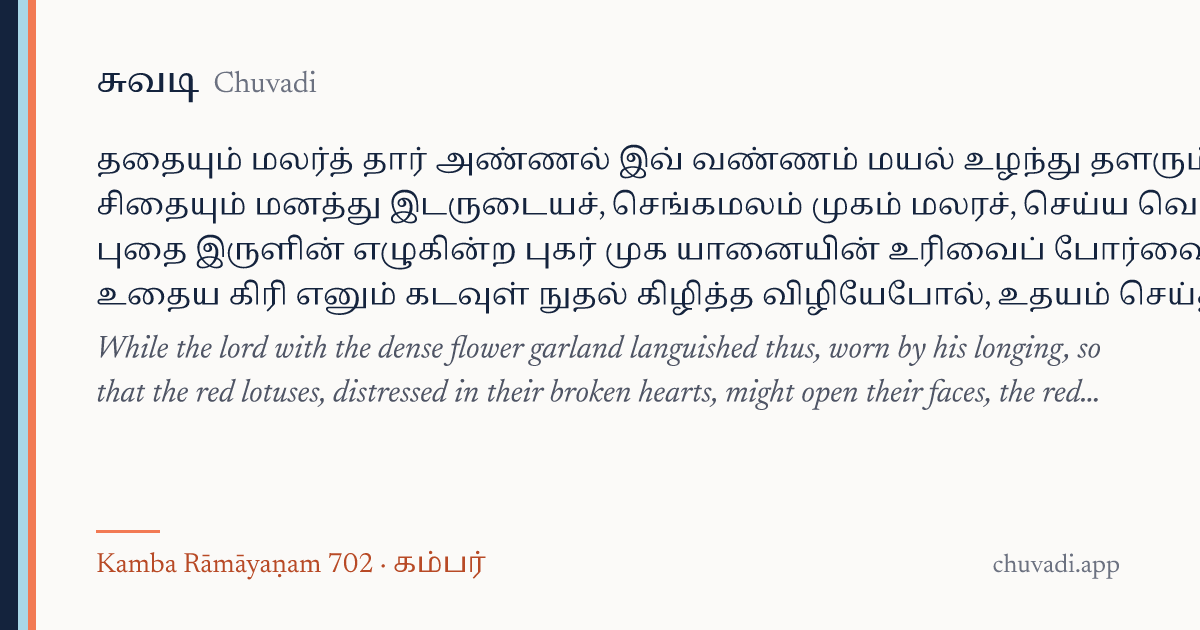
ததையும் மலர்த்தார் - நெருங்கிய மலர்மாலையணிந்த; அண்ணல் - இராமன்; இவ் வண்ணம் - இவ்வாறு; மயல் உழந்து - காதல் மயக்கத்தால் வருந்தித்; தளரும் ஏல்வை - தளர்ச்சி அடைகிற காலத்தில்; செய்ய வெய்யோன் - செங்கதிர்களையுடையவனான சூரியன்; சிதையும் மனத்து - நிலை குலைகின்ற தம் நெஞ்சிலே; இடர் உடைய - சோகத்தையுடைய; செங்கமலம் - செந்தாமரைகளாகிய தன் மனைவியரின்; முகம் மலர - முகங்கள் (வந்து தான் கூடுவதால்) மலர்ச்சி பெறும்படி; புதை இருளின் - ஆழ்ந்த இருளாகிய; எழுகின்ற புகர் முகம் - உயர்ந்து தோன்றுகின்ற செம்புள்ளிகளைக் கொண்ட முகத் தோடு கூடிய; யானையின் உரிவை - யானையினது தோலாகிய; போர்வை - போர்வையை; போர்த்த - (தன்மேல்) தரித்துள்ள; உதயகிரி எனும் கடவுள் - உதயமலையாகிய உருத்திர மூர்த்தியின்; நுதல் கிழித்த - நெற்றியிலிருந்து திறந்து தோன்றின; விழியே போல் - நெருப்புக் கண்போல; உதயம் செய்தான் - உதித்தான்.
கதிரவனைக் கண்ட அளவில் தாமரை மலர்தலும், அவனைப் பிரிந்த கணமே அது குவிந்ததுமாகிய இயல்புபற்றித் தாமரைகளாகிய பெண்களுக்குக் கதிரவனைத் தலைவனாகக் கூறுதல் கவி மரபு. சுருங்கச் சொல்லல் அணிக்கு அங்கமாக உருவக அணியும் உவமையணியும் வந்துள்ளன. கரிய இருளிலே மறைந்துள்ள உதயமலைக்குக் கரிய நிறமுள்ள யானையின் தோலைப் போர்த்த சிவனும், அம் மலையின் உச்சியிலே உதித்து விளங்கும் கதிரவனுக்கு அச்சிவனது நெற்றியில் விளங்கும் நெருப்புக் கண்ணும் உவமை. யானையின் முகப் புள்ளிகளுக்கு உதயத்துத் தோன்றும் விண்மீன்களை உவமையாகக் கொள்ளலாம்.
ஆங்கிலம் · English translationAI
Translation
- While the lord with the dense flower garland languished thus, worn by his longing,
- so that the red lotuses, distressed in their broken hearts, might open their faces, the red hot one
- rose like the eye that split open the brow of the god that is the Eastern Mountain,
- who wears as his cloak the hide of the spot-faced elephant that is the deep darkness rising.
What the poem says
Dawn ends Irāmaṉ's sleepless night. The sun rises so that the red lotuses, his wives in poetic convention, who droop in his absence, may open their faces again.
The sunrise is drawn as an image of Śiva. The eastern mountain, still wrapped in darkness, is Śiva wearing the black hide of the elephant demon he flayed, with the fading stars as the spots on its face; the sun breaking over the peak is Śiva's fiery third eye opening in his forehead.