



கம்பராமாயணம் 7020 · யுத்த 13.5
பாடல் · The poem
Tap a word to see its gloss in the commentary and where else it occurs.
பாட வேறுபாடு · Project Madurai reads
பொருள் · Meaning in Tamil
வாழியாய்! - அழியா வாழ்வுடன் என்றும் வாழ்பவனே! அன்று - (இராவணன் சீதையைக் கவர்ந்த) அன்று; நின்னை வரம்பறு துயரின்வைக - எல்லையற்ற துன்பத்துள் நீ அழுந்துமாறு; சூழ்விலா மாயம் செய்து - (பிறரால்) எண்ணற்கும் இயலாத சூழ்ச்சியினைச் செய்து; உன் துணைவியைப் பிரிவு சூழ்ந்தான் - உன் வாழ்வின் துணைவியாகிய பிராட்டியைப் பிரித்தான்; ஏழை பால் - அந்தப் பேதையாகிய பிராட்டியினிடத்தே; இரக்கம் நோக்கி - (எழுந்த) சென்ற - தன்னந்தனியனாய் போர்க்குச் சென்ற; ஊழி காண்கிற்கும் வாழ்நாள் - பிரளயகாலத்தையும் காணவல்ல பேராயுள் (பெற்றிருந்த); உந்தையை - உன் தந்தையாகிய சடாயுவினுடைய; உயிர் பண்டு உண்டான் - உயிரையும் முன்பு கவர்ந்தான். (இவ்விராவணன்)
என்றும் அழியாதவன் ஆதலால், "வாழியாய்!" என்றார்.
ஆங்கிலம் · English translationAI
Translation
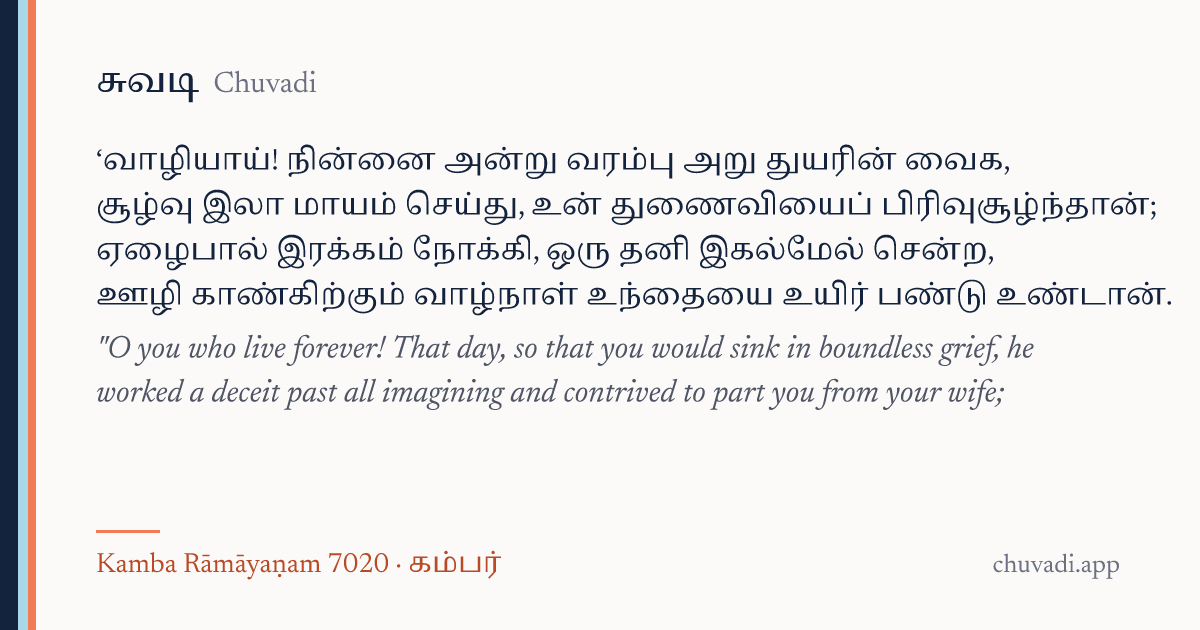
- "O you who live forever! That day, so that you would sink in boundless grief,
- he worked a deceit past all imagining and contrived to part you from your wife;
- and your father, who, moved by pity for the helpless lady, went alone to fight,
- whose life would have outlasted the aeon, long ago he took his life."
What the poem says
Ilakkuvaṉ goes on with Irāvaṇaṉ's crimes, this time those against Irāmaṉ himself. With an unimaginable trick he separated Irāmaṉ from Cītai and plunged him into endless sorrow. He also killed Caṭāyu, the vulture king whom Irāmaṉ honoured as a father. Caṭāyu could have lived until the end of the world, but out of pity for Cītai he fought Irāvaṇaṉ alone.
Ilakkuvaṉ calls Irāmaṉ "you who live forever" because he is the undying Lord.