



கம்பராமாயணம் 7021 · யுத்த 13.6
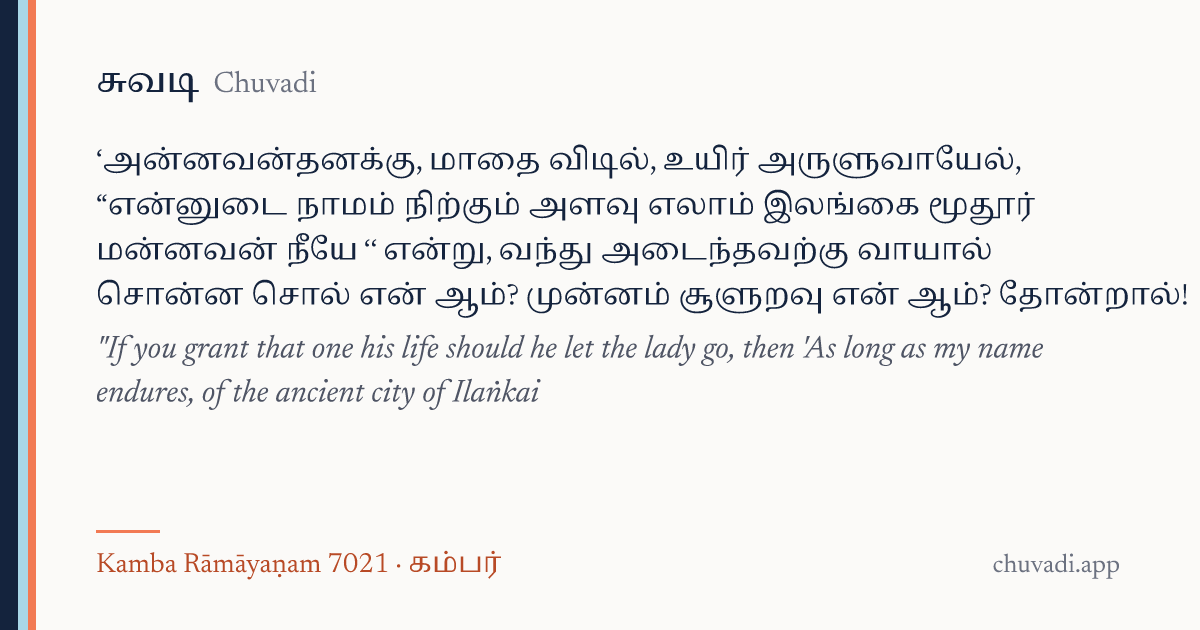
பாடல் · The poem
Tap a word to see its gloss in the commentary and where else it occurs.
பொருள் · Meaning in Tamil
தோன்றால் - புகழ் மிக்க தலைவனே! மாதை விடில் - சீதையை விட்டுவிடில்; அன்னவன் தனக்கு - அத்தகு கொடுமைகள் யாவும் புரிந்த இராவணனுக்கு; உயிர் அருளுவாயேல் - உயிர்ப் பிச்சை யளிப்பாய் ஆயின்; என்னுடை நாமம் நிற்கும் நாள் எலாம் - என்னுடைய பெயர் இவ்வுலகில் வழங்கும் காலம் எல்லாம்; இலங்கை மூதூர் மன்னவன் நீயே - இலங்கையென்னும் தொல் நகரின் அரசன் நீயே! என்று வந்து அடைந்தவற்கு - என்று உன்னைச் (சரணாக) வந்தடைந்த வீடணனுக்கு; வாயால் - (உன் சத்தியத்) திருவாயால்; சொன்ன சொல் என் ஆம்? - சொன்ன வாக்குறுதி என் ஆவது? சூளுறவு என் ஆம்? - முன், தண்டகாரண்யத்தில் முனிவர்கட்கு நீ அளித்த சபதம் (தான் என் ஆவது?
உடன்பிறவாத் தம்பியர் மூவருள் குகனும், சுக்கிரீவனும் இராமபிரான் சென்று அடைந்தவர்கள். வீடணன் மட்டும் இராமனிடம் வந்து அடைந்தவன் ஆதலின், அவ்வினைகளையே பெயர் ஆக்கினார். "எம்முழை அன்பின் வந்த அகன் அமர் காதல் ஐய" (கம்ப. 6507) இந்த வேற்றுமையை வீடணனை ஏற்கும் போதே உரைத்துள்ளது நினைவு கூர்க.
ஆங்கிலம் · English translationAI
Translation
- "If you grant that one his life should he let the lady go,
- then 'As long as my name endures, of the ancient city of Ilaṅkai
- you are the king': what becomes of that word you spoke with your own lips
- to him who came to you? And what of your oath of long ago, O glorious one?"
What the poem says
Ilakkuvaṉ gives a further reason. When Vīṭaṇaṉ came to them for refuge, Irāmaṉ promised him that he would be king of Ilaṅkai for as long as Irāmaṉ's name endured. If Irāvaṇaṉ is spared, that promise is broken. So is Irāmaṉ's older vow to the sages of the Taṇṭaka forest that he would rid them of the demons.
Of Irāmaṉ's three adopted brothers, Irāmaṉ went to Kukaṉ and Cukkirīvaṉ himself, but Vīṭaṇaṉ alone came to him, which is why Ilakkuvaṉ calls him "the one who came."