



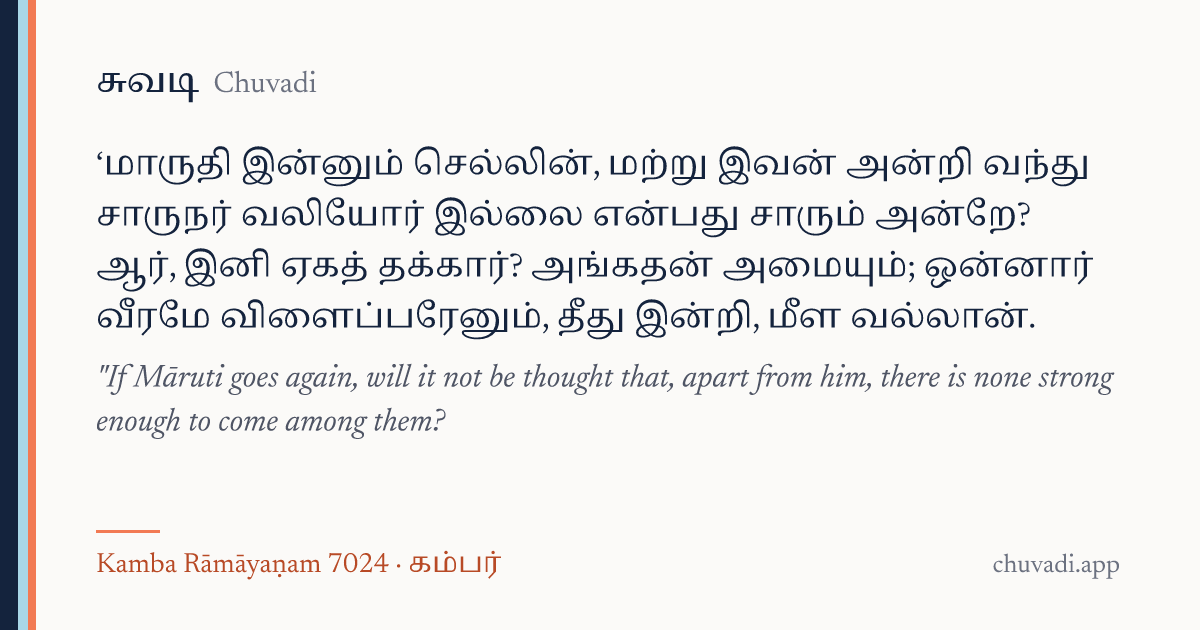
கம்பராமாயணம் 7024 · யுத்த 13.9
பாடல் · The poem
Tap a word to see its gloss in the commentary and where else it occurs.
பொருள் · Meaning in Tamil
மாருதி இன்னம் செல்லின் - முன்பு சென்று வந்த அனுமனே மீண்டும் சென்றால்; இவன் அன்றி மற்று - அநுமனாகிய இவனைத் தவிர வேறு (இங்கு); சாருநர் இல்லை என்பது சாரும் அன்றே? - வந்து போவார் (நம் படையில்) இல்லை என்ற கருத்து (நம் பகைவரிடத்தில்) எழும் அன்றோ? "யார் இனி ஏகத்தக்கார்?" - (இப்போது இராவணனிடம் தூதாகச் செல்ல வல்லவர் யார்? அங்கதன் அமையும் - (என்று இராமன் சிந்தித்து முடிவில்) அங்கதனே பொருத்தமானவன்; ஒன்னார் வீரமே விளைப்பரேனும் - பகைவர் வீரங்காட்ட அவனிடம் வந்தாரே யாயினும்; தீதின்றி மீள வல்லான் - ஒரு தீங்குமின்றி மீண்டுவர வல்லவன் (என்று இராமன் கூறினான்)
"தீதின்றி மீளவல்லன் அங்கதன் ஆதலின் அங்கதன் அமையும்" என முடிவுக்கு வந்தான். இதனால் தான். இப்பேறு கிட்டியதை எண்ணி மகிழ்ந்த அங்கதன், "மாருதி யல்லன் ஆகில் நீயெனும் மாற்றம் பெற்றேன்" (6987) என்று பூரித்தான். தத்திதாந்த நாமம்.
ஆங்கிலம் · English translationAI
Translation
- "If Māruti goes again, will it not be thought that, apart from him,
- there is none strong enough to come among them?
- Who then is fit to go? Aṅkataṉ will do; even if the enemy
- should show their valour against him, he can come back unharmed."
What the poem says
Irāmaṉ chooses the envoy. Aṉumaṉ has been to Ilaṅkai before, but sending him again would make the enemy think he is the only monkey able to make the journey.
Aṅkataṉ, Vālī's son, is the right choice, because even if the demons attack him he can get back safely. Aṅkataṉ will later recall this moment with pride: Irāmaṉ judged that, after Aṉumaṉ, he was the one.