



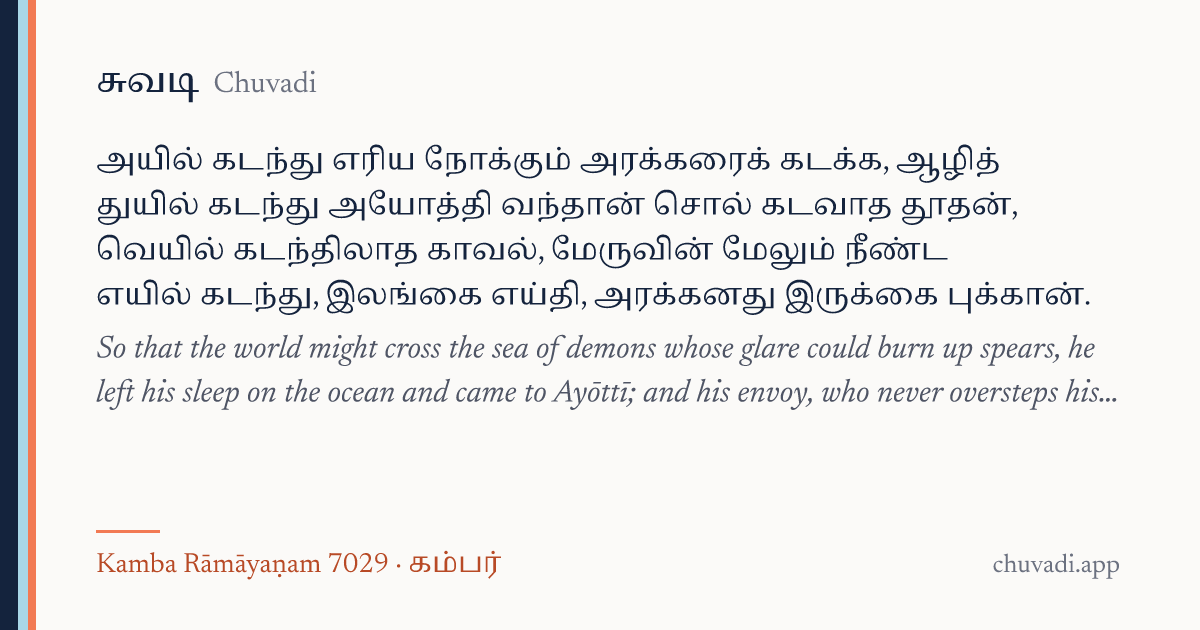
கம்பராமாயணம் 7029 · யுத்த 13.14
பாடல் · The poem
Tap a word to see its gloss in the commentary and where else it occurs.
பொருள் · Meaning in Tamil
அயில் கடந்து எரிய நோக்கும் - வேற்படையினையும் தம் விழி வெம்மையால் எரித்துவிட வல்ல கொடிய பார்வையினையுடைய; அரக்கரைக் கடக்க - அரக்கர்கள் என்னும் (பாவக்) கடலைக் கடந்து (உலகோர்) கரை சேர; ஆழித்துயில் கடந்து - பாற்கடற் பள்ளியின் தூக்கத்தைத் (துறந்து) அயோத்தி வந்தான் - அயோத்தியில் வந்து அவதரித்தவனாகிய இராமபிரானுடைய; சொற்கடவாத தூதன் - மொழிகளை (எந்நிலையிலும்) மீறாத தூதனாகிய அங்கதன்; வெயில் கடந்திலாத காவல் - சூரியன் தாண்டிச் செல்ல இயலாத கட்டுக்காவல் மிக்கதும்; மேருவின் மேலும் நீண்ட - மேரு மலையினும் உயர்வு கொண்டதும் ஆன; எயில் கடந்து - இலங்கையின் கோட்டை மதில்களைத் தாண்டி; இலங்கை எய்தி - இலங்கையை யடைந்து; அரக்கனது - இராவணனுடைய; இருக்கை புக்கான் - இருப்பிடத்தை சென்றடைந்தான்.
கடக்க என்னும் வினையால், அரக்கரைக் கடல் எனக் கொள்ள வைத்தார். ஏகதேச உருவகம். அரக்கக்கடலை உலகு கடக்க, தான் ஆழிக்கடலைக் கடந்து வந்தவன் என நயமுற உரைத்தார். கடத்தல் என்ற சொல்லுக்கு அஞ்சாது எதிர்நின்று போர் செய்து வெல்லுதல் என்பது பொருள். தூதர்கள், கூறியது கூறுவார்; தான் வகுத்துக் கூறுவார் என இருபகுப்பினர். இவருள் அங்கதன் கூறியது கூறுவான் எனும் பகுப்பினன் என்பதனையுணர்த்த, "சொற்கடவாத தூதன்" என்றார். கண்ணனும் அநுமனும் தான் வகுத்துக் கூறுவார் எனும் பகுப்புள் அடங்குவர். இங்கு, வள்ளுவனாரின் "தூது" எனும் அதிகாரமும், அதற்குப் பரிமேலழகர் உரையும் சிந்தை செய்யத்தக்கவை.
ஆங்கிலம் · English translationAI
Translation
- So that the world might cross the sea of demons whose glare could burn up spears, he left
- his sleep on the ocean and came to Ayōttī; and his envoy, who never oversteps his word,
- past a guard that not even sunlight could get through, past a wall rising higher than Mēru,
- crossed over, reached Ilaṅkai and entered the demon's hall.
What the poem says
The verse plays on the word "cross." Irāmaṉ is Tirumāl, who left his sleep on the ocean and was born in Ayōttī so that the world could cross the sea of demons. His envoy now crosses Ilaṅkai's walls, which are higher than Mount Mēru and so closely guarded that not even sunlight gets in, and walks into Irāvaṇaṉ's hall.
Classical theory has two kinds of envoy: one who repeats the message exactly, and one who frames it himself, like Aṉumaṉ or Kaṇṇaṉ (Krishna). "Who never oversteps his word" puts Aṅkataṉ in the first group.