



கம்பராமாயணம் 7031 · யுத்த 13.16
பாடல் · The poem
Tap a word to see its gloss in the commentary and where else it occurs.
பாட வேறுபாடு · Project Madurai reads
பொருள் · Meaning in Tamil
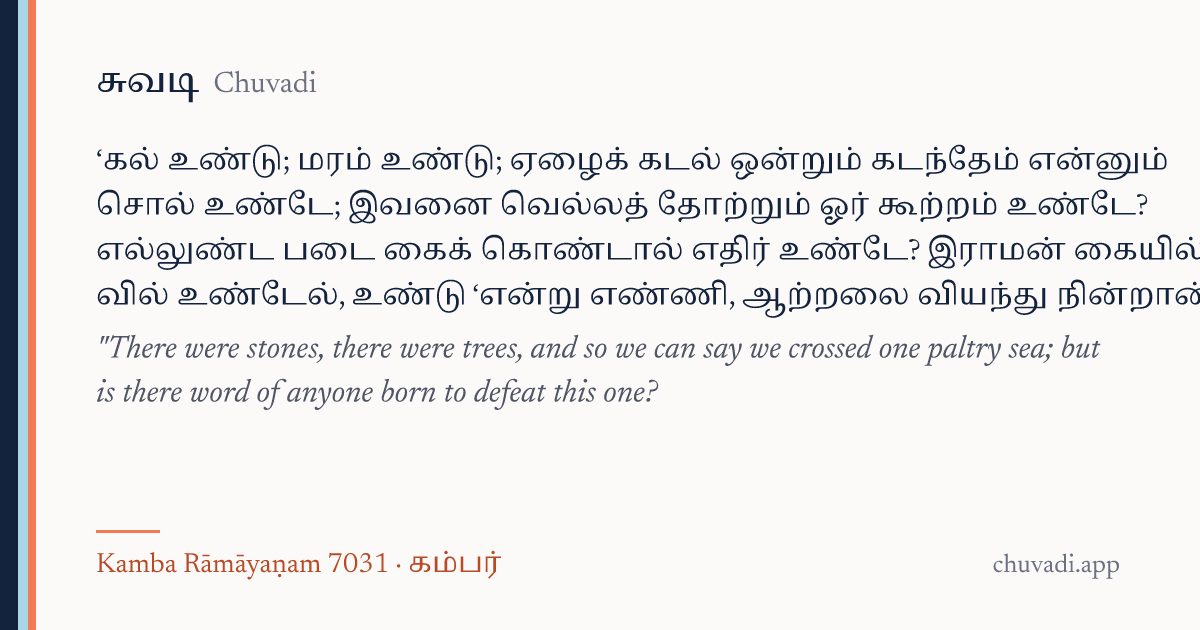
கல் உண்டு, மரம் உண்டு - (இராவணன் ஓலக்கத்தைக் கண்ட அங்கதன் தனக்குள்) கடலைத் தூர்த்து அணைகட்டக் கற்களும் உண்டு, மரங்களும் உண்டு; (ஆதலால்) ஏழைக்கடல் ஒன்று கடந்தோம் - சிறிய இந்தக் கடல் ஒன்றைத் தாண்டி கடந்து வந்து விட்டோம்; என்னும் சொல் உண்டே! - என்ற சொல்லும் (நமக்கு வாய்த்து) விட்டது; இவனை வெல்ல - ஆனால், இந்த இராவணனை வெல்வதற்கு (ஒருவன்) தோற்றும் ஓர் கூற்றம் உண்டே? - பிறந்துள்ளதாகக் கூறும் ஒரு சொல் எழுந்தது உண்டோ? (இல்லை); எல் உண்ட - ஒளியோடு கூடிய; படை கைக்கொண்டால் - போர்க்கருவிகளை இவன் கைகளில் ஏந்தி (களத்திற்கு வந்தால்); எதிர் உண்டே? - எதிர்த்து நிற்கும் படையும் (உலகில்) உண்டோ? இராமன் கையில் வில் உண்டேல் உண்டு! - (நம் தலைவனான) இராமபிரானின் கரங்களில் ஏந்திய (கோதண்டம் எனும்) வில் உண்டு என்றால் இவனை எதிர்த்து நிற்கும் வாய்ப்பு உண்டு! என்று எண்ணி - என்று எண்ணியவாறு; ஆற்றலை வியந்து நின்றான் - இராவணனது பேராற்றலை வியந்தபடி நின்றான்.
ஆங்கிலம் · English translationAI
Translation
- "There were stones, there were trees, and so we can say we crossed
- one paltry sea; but is there word of anyone born to defeat this one?
- If he takes up his shining weapons, is there any who can stand against him? If Irāmaṉ
- has his bow in hand, then there is," he thought, and stood marvelling at his might.
What the poem says
Aṅkataṉ is impressed by Irāvaṇaṉ's majesty. Crossing the sea was easy, he thinks, since there were rocks and trees to build the causeway. But has anyone ever been born who could defeat this king? Once Irāvaṇaṉ takes up his weapons, no one can face him. No one, that is, except Irāmaṉ with his bow.