



கம்பராமாயணம் 7035 · யுத்த 13.20
பாடல் · The poem
Tap a word to see its gloss in the commentary and where else it occurs.
பொருள் · Meaning in Tamil
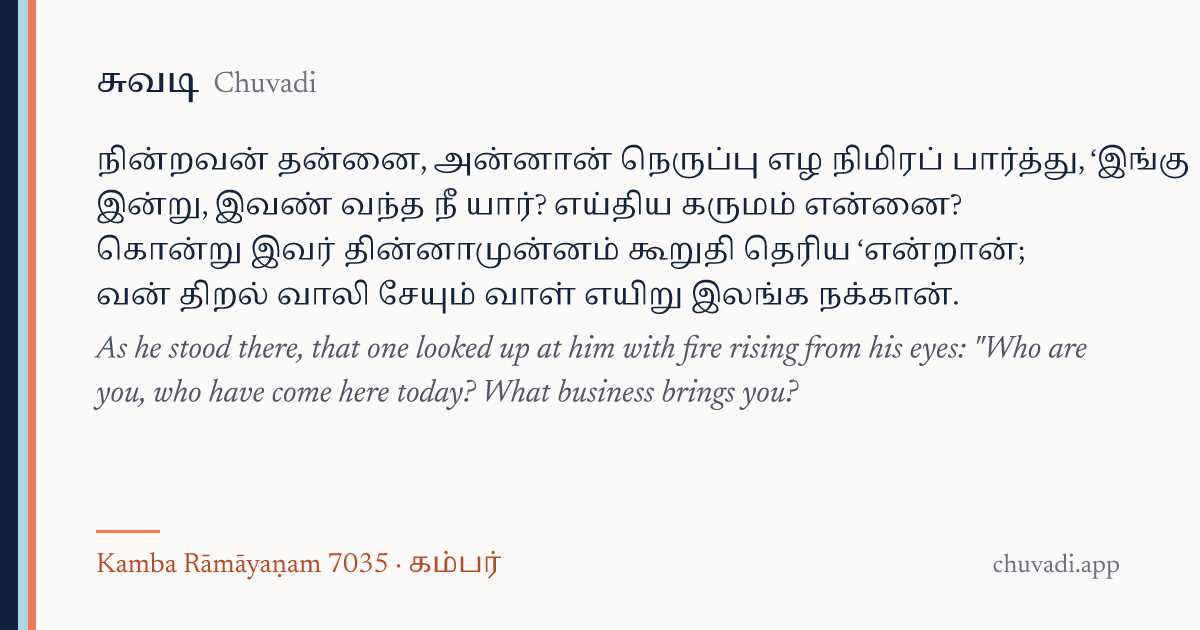
நின்றவன் தன்னை - (குறுக வந்து) தன் முன் நின்றவனான அங்கதனை; அன்னான் - இராவணன்; நெருப்பு எழ நிமிரப் பார்த்து - விழிகளில் தீப்பொறி சிந்த நிமிர்ந்து நோக்கி; இங்கு இன்று இவண் வந்த நீ யார்? - 'இன்று இவ்விடத்தில் என்முன் வந்துள்ள நீ யார்? எய்திய கருமம் என்னை? - நீ கருதி வந்த காரியம் என்ன? இவர் கொன்று தின்னா முன்னம் - இங்குள்ள பணியாளர்கள் உன்னைக் கொன்று தின்று விடுவதற்கு முன்பாக; தெரியக் கூறுதி என்றான் - விளக்கி உரைப்பாயாக என்று கேட்டான்; வன்திறல் வாலி சேயும் - வலிய ஆற்றல் மிக்க வாலியின் மகனான அங்கதனும்; வாள் எயிறு இலங்க - வெள்ளிய பற்கள் ஒளிருமாறு; நக்கான் - இராவணனைப் பார்த்துச் சிரித்தான்.
அழையாமல் அங்கதன் நுழைந்திருப்பதும், மிக அருகில் நெருங்கி நிற்பதும், முன் வந்து சென்ற அனுமனைப் போலக் குரங்குருவில் முன் நிற்பதும் இராவணன் நெருப்பெழ நிமிர்ந்து பார்த்தற்குக் காரணங்கள் ஆயின.
ஆங்கிலம் · English translationAI
Translation
- As he stood there, that one looked up at him with fire rising from his eyes:
- "Who are you, who have come here today? What business brings you?
- Before these kill and eat you, say it clearly," he said;
- and the son of mighty Vālī laughed, his bright teeth gleaming.
What the poem says
Irāvaṇaṉ looks up with fire in his eyes. This stranger has come in without being called, is standing too close, and is a monkey like Aṉumaṉ, who did so much damage before. He demands to know who Aṅkataṉ is and why he has come, before the courtiers kill and eat him. Aṅkataṉ only laughs, his teeth flashing.