



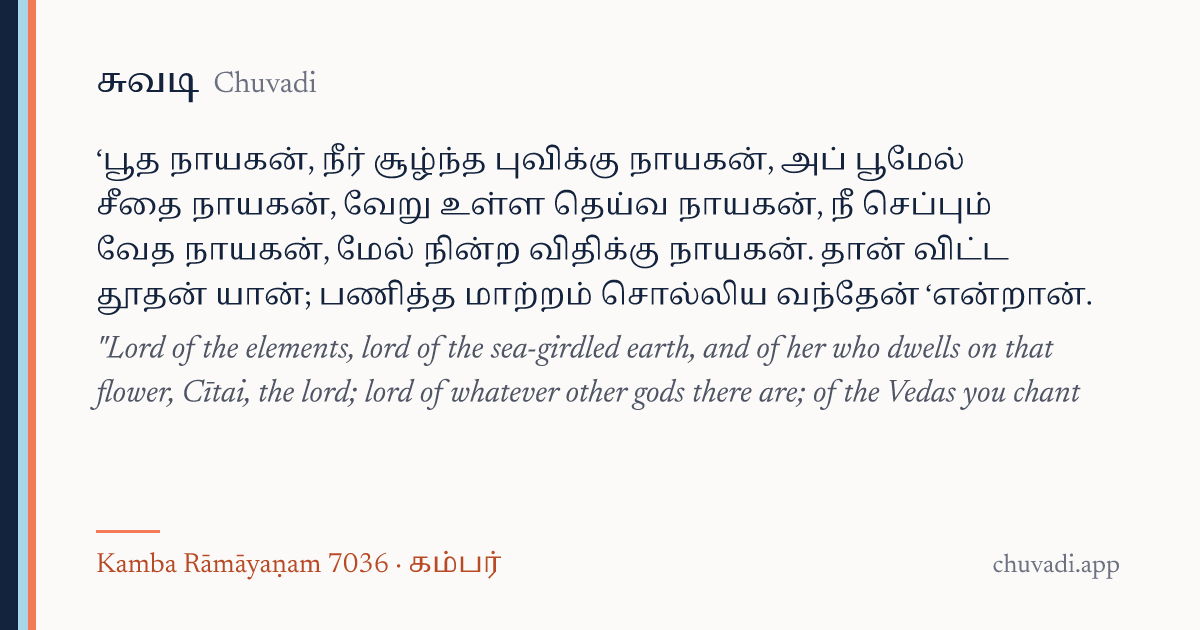
கம்பராமாயணம் 7036 · யுத்த 13.21
பாடல் · The poem
Tap a word to see its gloss in the commentary and where else it occurs.
பொருள் · Meaning in Tamil
பூத நாயகன் - (அங்கதன் இராவணனை நோக்கி) (என் தலைவனாகிய இராமபிரான்) ஐம்பூதங்கட்கும் தலைவன்; நீர் சூழ்ந்த புவிக்கு நாயகன் - (அந்த ஐம்பூதங்களுள்ளும்) (நீ வாழ்கிற) கடல் சூழ்ந்த இம் மண்ணுலகிற்கும் (அவன்) தலைவன்; அப்பூமேல் சீதை நாயகன் - (அதுமட்டுமின்றி) அழகிய தாமரை மலர்மேல் வாழும் சீதைக்கும் அவன் நாயகன்; வேறு உள்ள தெய்வ நாயகன் - (சீதையேயன்றி) வேறே உள்ள தெய்வங்கட்கும் அவன் நாயகன்; நீ செப்பும் வேதநாயகன் - நீ தெய்வங்களைப் போற்றப் பயன்படும் அந்த வேதங்கட்கும் அவனே தலைவன்; மேல் நின்ற விதிக்கு நாயகன் - இனிமேல் நீ பட உள்ள விதியின் விளைவுகட்கும் அவனே தலைவன்; தான் விட்ட தூதன் யான் - இத்தகைய நாயக மணியானவன் உனக்கு அனுப்பியுள்ள தூதன் நான்; பணித்த மாற்றம் - அந்நாயகன் உன்பால் உரைக்கச் சொன்ன சொற்களை; சொல்லிட வந்தேன் என்றான் - கூறிவிட்டுப் போக இங்கே (உன்முன்னே) வந்துள்ளேன் என்றுரைத்தான்.
இராவணன் வினாவிய வினாக்களுக்கு உரிய முழுவிடையும், அவன் கேளாத, கேட்கவிரும்பாத தன் தலைவனின் முழுப்புகழையும் ஒரே பாடலில் தொகுத்துச் சுட்டிய அங்கதனின் சொல் ஆற்றல் வியக்க வைப்பது. தன்னையே நாயகன் எனச் செருக்குற்ற இராவணனுக்கு மேல் ஓர் உண்மை நாயகன் இராமனே என்பதை அங்கதன் புலப்படுத்தினான். 'நாயகன்' என்ற சொல்லடுத்தடுத்து வந்தமை குறித்திடுக. என் தலைவன் ஐம்பூதங்கள் ஊறடையாது காக்கும் கடவுள் என்பான், "பூதநாயகன்" என்றான். பணித்த மாற்றம் சொல்லிட வந்தேன் என்பதில் அங்கதன் அடக்கமும் விநயமும் புலனாகின்றன.
ஆங்கிலம் · English translationAI
Translation
- "Lord of the elements, lord of the sea-girdled earth, and of her who dwells on that flower,
- Cītai, the lord; lord of whatever other gods there are; of the Vedas you chant
- the lord; lord of the destiny that stands above: the envoy he has sent
- am I; I have come to speak the words he bade me," he said.
What the poem says
Aṅkataṉ answers both questions, who he is and why he has come, in a single verse, and fills it with Irāmaṉ's glory, which Irāvaṇaṉ never asked to hear. His master is the lord of the five elements, of the earth, of Cītai, of all other gods, of the Vedas Irāvaṇaṉ chants, and of the fate now waiting for Irāvaṇaṉ.
The word "lord" comes again and again, a pointed answer to a king who thinks he is lord of all. Aṅkataṉ's modesty shows in the last line: he is only the messenger, here to deliver the words he was given.