



கம்பராமாயணம் 7039 · யுத்த 13.24
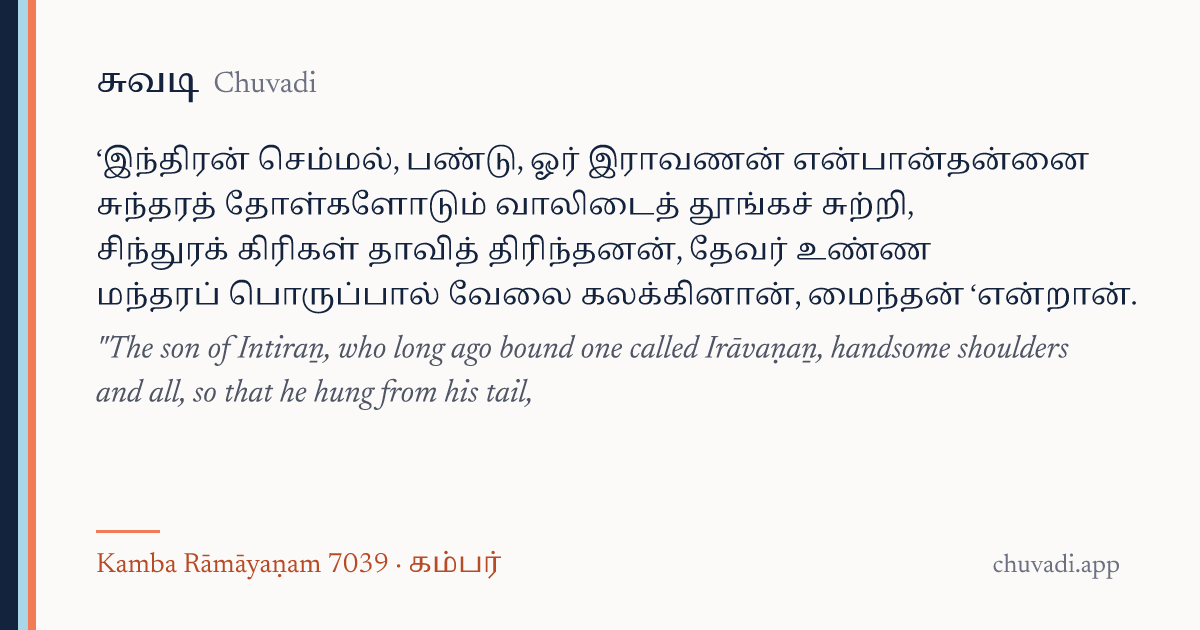
பாடல் · The poem
Tap a word to see its gloss in the commentary and where else it occurs.
பாட வேறுபாடு · Project Madurai reads
பொருள் · Meaning in Tamil
பண்டு ஓர் இராவணன் என்பான் - முன்பு இராவணன் என்று கூறப்படும் ஒருவனை; வாலிடைத் தூங்க - தன் வாலில் தொங்குமாறு; சுந்தரத் தோள்களோடும் சுற்றி - அழகிய தோள்களுடன் பிணித்து; சிந்துரக்கிரிகள் தாவி - யானைகள் வாழ்கின்ற மலைகள் தோறும் தாவிப்பாய்ந்து; திரிந்தனன் - திரிந்தவனும்; தேவர் உண்ண - தேவர்கள் உண்டு மகிழுமாறு; மந்தரம் பொருப்பால் - மந்தர மலையினால்; வேலை கலக்கினான் - கடலைக் கடைந்தவனும்; இந்திரன் செம்மல் - இந்திரனின் புதல்வனும் ஆகிய வாலியின் மகன் (நான்); என்றான் - என்று விடையிறுத்தான் அங்கதன்.
தன்னை அதட்டிய இராவணனைப் புறக்கணித்துப் படர்க்கையில் ஓர் இராவணன் என்பான் தன்னை எனக்கூறியது அங்கதனின் அங்கதச் சுவை. வாலில் கட்டப்பட்டுள்ளவன் மலைத்தோளனாகிய இராவணன் அவன் அவ்வாறு கட்டப்பட்டுள்ள நினைவேதுமின்றி வாலி மலைகள் மேல் தாவித் திரிந்தான் என்க. தேவர் உண்ணுமாறு கடலைக் கடைந்து அமுது தந்தவன் வாலி என்பதனை, "கைத்தலத்து உவரி நீரைக் கலக்கினான்" (கம்ப. 4080) எனவும் "அலைகடல் கடைய வேண்டின் ஆர் இனிக்கடைவர்" (4170) எனவும் முன்பு கூறியுள்ளமையால் அறிக. "இந்திரன் செம்மல்" என்பதனால் வாலியின் குலப்பெருமையும், வாலால் இராவணன் தோள் பிணித்தவன் என்பதனால், வாலியின் உடற்பெருமையும், தேவர் அமுதுண்ணக் கடைந்தவன் என்பதனால் வாலியின் உளப் பெருமையும் ஒருசேர உணர வைத்த திறம் காண்க. அவன் மகன் என்னும் பெருமையே தனக்குப் போதும் என்பானாய் வேலை கலக்கினான் மைந்தன் எனக் கூறினான் அங்கதன்.
ஆங்கிலம் · English translationAI
Translation
- "The son of Intiraṉ, who long ago bound one called Irāvaṇaṉ,
- handsome shoulders and all, so that he hung from his tail,
- and roamed leaping over the elephant-haunted mountains; who, so that the gods might feast,
- churned the ocean with Mount Mantaram: his son am I," he said.
What the poem says
Aṅkataṉ answers by naming his father, and the answer is a jibe. He talks about "one called Irāvaṇaṉ" as if that were somebody else: Vālī once tied him up in his tail, shoulders and all, and went leaping across the mountains with him dangling, hardly noticing the load.
Vālī was the son of Intiraṉ, and he helped churn the ocean with Mount Mantaram so that the gods could drink nectar. The lines show Vālī's noble birth, his physical strength and his generosity, and Aṅkataṉ needs no other title than "his son."