



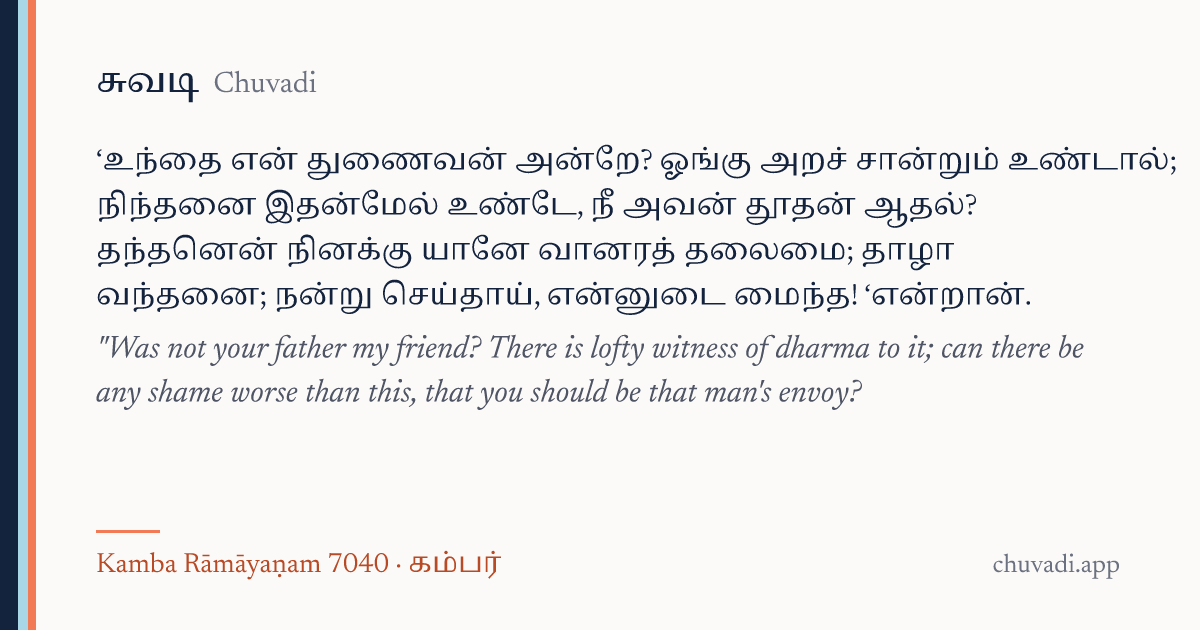
கம்பராமாயணம் 7040 · யுத்த 13.25
பாடல் · The poem
Tap a word to see its gloss in the commentary and where else it occurs.
பொருள் · Meaning in Tamil
உந்தை - உன்னுடைய தந்தை; என் துணைவன் அன்றே? - எனக்கு நண்பன் அல்லவா?; ஓங்கு அறச் சான்றும் உண்டு - (இதற்குச் சிறந்த) தரும சாட்சியும் உண்டு; நீ அவன் தூதன் ஆதல் - (இத்தகைய என் நண்பனின் மகனாகிய) நீ அந்த இராமனுக்குத் தூதனாகி வருதல் (வந்துள்ள); இதன்மேல் நிந்தனை உண்டோ? - இச்செயலைவிட பழிதரும் செயல் வேறு ஏதும் உண்டோ? (இல்லை); என்னுடை மைந்த! - என் அருமை மைந்தனே! நினக்கு - உனக்கு; யானே - நானே; வானரத்தலைமை தந்தனென் - வானரங்களின் தலைமைப் பதவியைத் (இப்போதே) தருகின்றேன்; தாழா வந்தனை - தாமதமின்றி வந்து சேர்ந்தாய்; நன்று செய்தாய் என்றான் - நல்லது செய்தாய்! என்றான்.
"என்று இலங்கேசன் இயம்பிட வாலி எழுந்த பேர் உவகையால் இறுகத் தன்திரள் தோளால் தழுவி...ஆ இன்று நாள் தொடங்கி என் பிராதா நீ என்று இலங்கேசனை விடுத்தான்" என உத்தர காண்ட வாலி வரலாற்றுப் படலத்துள் வருவது கொண்டு, வாலிக்கும் இராவணனுக்கும் உள்ள தொடர்பு புலப்படும்; வாலியைத் தன் உடன்பிறந்தான் ஆக்கிக்கொள்ளும் ஒப்பந்தம் பற்றி, அங்கதனை "மைந்த" என்றான் இராவணன். இதனால் இராவணனின் பிரித்தாளும் சூழ்ச்சித் திறன் தெளிவாம். "பிரித்தலும் பேணிக் கொளலும்" (குறள். 633) அரசியல் உத்திகளுள் சிலவாம். "உனக்கு யானே வானரத் தலைமை தந்தனன்" என்பதனால், உலகம் முழுவதும் தன் விருப்பத்தின் கீழ் உள்ளது எனும் "இராவணாகாரம்" தெளிவாம். "உனக்குரிய அரசை இராமன் உன் சிறிய தந்தைக்குப் பிடுங்கித் தந்துள்ள அரசினைப் பிடுங்கி நான் உனக்குத் தருகிறேன்" என்று அங்கதன் மனத்தைப் பேதலிக்க முயல்கிற இராவணன் திறம் காணலாம்.
ஆங்கிலம் · English translationAI
Translation
- "Was not your father my friend? There is lofty witness of dharma to it;
- can there be any shame worse than this, that you should be that man's envoy?
- I myself give you the lordship of the monkeys; without delay
- you have come; you have done well, my son!" he said.
What the poem says
Irāvaṇaṉ switches to flattery and tries to win Aṅkataṉ over. Vālī was his friend; after their contest the two swore brotherhood, which is why he calls Aṅkataṉ "my son." What could be more shameful than the son of his friend serving as messenger for Vālī's killer?
He then offers Aṅkataṉ the kingship of the monkeys. Irāmaṉ took that throne from Aṅkataṉ and gave it to his uncle Cukkirīvaṉ, and Irāvaṇaṉ says he will take it back and give it to its rightful heir. It is a classic divide-and-rule move, and it shows his arrogant belief that the whole world is his to give away.