



கம்பராமாயணம் 7041 · யுத்த 13.26
பாடல் · The poem
Tap a word to see its gloss in the commentary and where else it occurs.
பொருள் · Meaning in Tamil
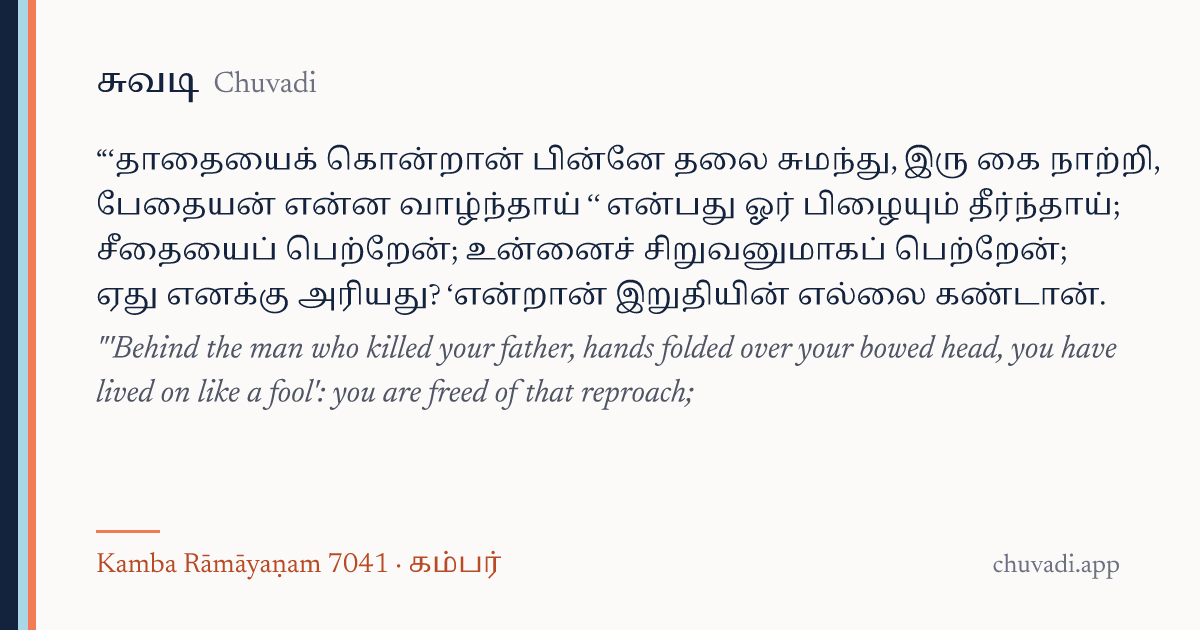
இறுதியின் எல்லை கண்டான் - வாழ்வின் இறுதி எல்லையைக் கண்டு கொண்டிருப்பவனாகிய இராவணன், (அங்கதனைப் பார்த்து); தாதையைக் கொன்றான் பின்னே - உன் தந்தை வாலியைக் கொன்ற இராமன் பின்னால்; இருகை தலைசுமந்து நாற்றி - இரு கரங்களையும் தலைமேல் குவித்துக்கொண்டு (தலை) கவிழ்ந்து; பேதையன் என்ன - (மானமற்ற) அறிவிலி என்று (கண்டோர் நகைக்குமாறு); வாழ்ந்தாய் என்பதோர் பிழையும் தீர்ந்தாய் - வாழ்கின்றாய் என்கின்ற உன் பழி (என்னிடம் வந்ததால்) தீரப் பெறுவாய்; சீதையைப் பெற்றேன் - (நீ என்னை அடைந்தால்) சீதையை நான் அடைந்துவிட்டவனும் ஆவேன்; உன்னைச் சிறுவனும் ஆகப் பெற்றேன் - உன்னை என் புதல்வனாகவும் பெற்றுக் கொண்டவன் ஆவேன்; ஏது எனக்கு அரியது? - எனக்கு இனி அரிய செயல்கள் என்று (உலகில் சில) உண்டோ? என்றான்.
ஆங்கிலம் · English translationAI
Translation
- "'Behind the man who killed your father, hands folded over your bowed head,
- you have lived on like a fool': you are freed of that reproach;
- I have won Cītai; I have won you too, as my son;
- what is beyond my reach now?" said he who had come to the very edge of his end.
What the poem says
Irāvaṇaṉ keeps pressing. By coming over to him, Aṅkataṉ will wipe out the shame of following his father's killer about with folded hands like a fool. With Aṅkataṉ as his son, he says, Cītai is as good as his, and nothing will be beyond him.
The poet calls him "the one who had reached the very edge of his end": his boasting comes when his doom is already close.