



கம்பராமாயணம் 7052 · யுத்த 13.37
பாடல் · The poem
Tap a word to see its gloss in the commentary and where else it occurs.
பாட வேறுபாடு · Project Madurai reads
பொருள் · Meaning in Tamil
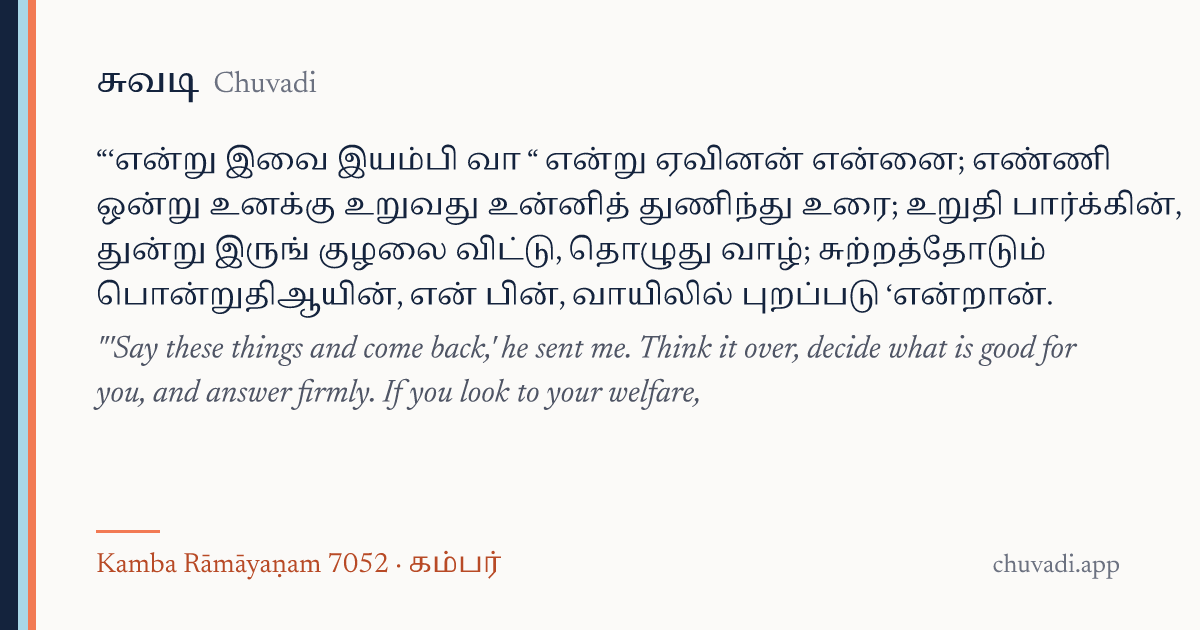
என்று இவை இயம்பி வா என்று - என்று மேலே கூறிய இந்தச் சொற்களை (உன்னிடம் கூறி (உன் உளக்கருத்தினை அறிந்து) வா என்று; என்னை ஏவினன் - எனக்கு ஆணையிட்டான். (என் தலைவன் இராமன்); எண்ணி - மேலே கூறியவற்றை எல்லாம் சிந்தித்து; உனக்கு உறுவது ஒன்று உன்னி - உனக்குத் தக்கது ஒன்றைக் கருதி; துணிந்து உரை - துணிந்து (எனக்கு) உரைப்பாயாக; உறுதி பார்க்கின் - உனக்கு உறுதி பயப்பது எனச் சிந்திப்பாயானால்; துன்று இருங்குழலை விட்டு - நெருங்கியுயர்ந்த கூந்தலைக் கொண்ட சீதா தேவியினைச் சிறையிலிருந்தும் விடுவித்து; தொழுது வாழ் - இராமபிரானை வணங்கி (நீ நீடு) வாழ்வாயாக; சுற்றத்தோடும் பொன்றுதியாகில் - உன் உறவினர் அனைவரோடும் (சேர்ந்து) மடிய விரும்பினாய் ஆகில்; என்பின் - என்னைப் பின் தொடர்ந்து; வாயிலில் புறப்படு - இலங்கையரண்மனை வாசலைவிட்டுப் (போர் புரியப்) புறப்படுவாயாக; என்றான்.
ஆங்கிலம் · English translationAI
Translation
- "'Say these things and come back,' he sent me. Think it over,
- decide what is good for you, and answer firmly. If you look to your welfare,
- let the lady of thick dark tresses go, bow down and live; if with all your kin
- you mean to perish, come out of your gates behind me," he said.
What the poem says
Aṅkataṉ closes the message and demands an answer. If Irāvaṇaṉ cares for his own good, he will release Cītai, bow to Irāmaṉ and live. If he would rather die with all his family, let him follow Aṅkataṉ out of the gates to the battlefield.