



கம்பராமாயணம் 7058 · யுத்த 13.43
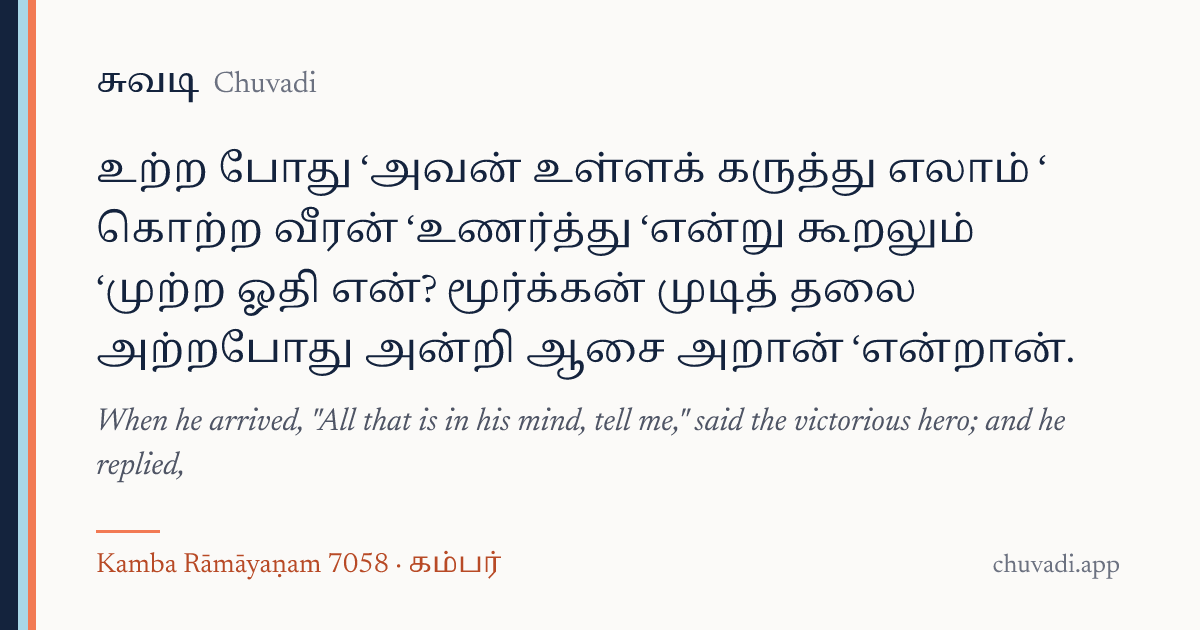
பாடல் · The poem
Tap a word to see its gloss in the commentary and where else it occurs.
பொருள் · Meaning in Tamil
உற்றபோது - (அங்கதன்) வந்தடைந்த பொழுதில்; கொற்ற வீரன் - வெற்றி வீரனாகிய இராமன்; அவன் உள்ளக் கருத்து எலாம் - அந்த இராவணனுடைய மனக்கருத்தையெல்லாம்; உணர்த்து என்று கூறலும் - (எனக்குத்) தெரிவிப்பாயாக என்று கூறியவுடன்; முற்ற ஓதி என் - (அங்கதன்) (அந்த அரக்கன் நிலையை) முழுவதும் விரித்துக் கூறி என்ன பயன்? மூர்க்கன் - அந்தக் கொடியோன்; முடித்தலை அற்ற போது அன்றி - அவனுடைய மகுடம் சூடிய (பத்துத்) தலைகளுள் அறுபட்டு (மண்ணில் வீழ்ந்தாலன்றி); ஆசையறான் - அவன் ஆசை நீங்கான் என்றான்.
சொற் சுருக்கமும் பொருட் பெருக்கமும் அமைய உரையாடுந் திறத்துக்கு, இங்கு இராமனும் அங்கதனும் உரையாடியுள்ள திறத்தைச் சான்றாகக் கொள்ளலாம். "மூர்க்கனும் முதலையும் கொண்டது விடா" ஆதலின், கொண்ட ஆசையைக் குலம் அழியினும் விடாத இராவணனை "மூர்க்கன்" என்றார்.
ஆங்கிலம் · English translationAI
Translation
- When he arrived, "All that is in his mind,
- tell me," said the victorious hero; and he replied,
- "What use in telling it all? Until that brute's crowned heads
- are cut off, he will not let go of his desire."
What the poem says
Irāmaṉ asks what Irāvaṇaṉ has in mind. Aṅkataṉ answers in a single line: there is no point in a long report, because the brute will not give up his desire until his crowned heads are cut off. The exchange is a model of saying much in few words.
The commentary quotes a proverb: a fool and a crocodile never let go of what they have seized. Irāvaṇaṉ will hold on to his lust even if his whole race is destroyed.