



கம்பராமாயணம் 7065 · யுத்த 14.7
பாடல் · The poem
Tap a word to see its gloss in the commentary and where else it occurs.
பாட வேறுபாடு · Project Madurai reads
பொருள் · Meaning in Tamil
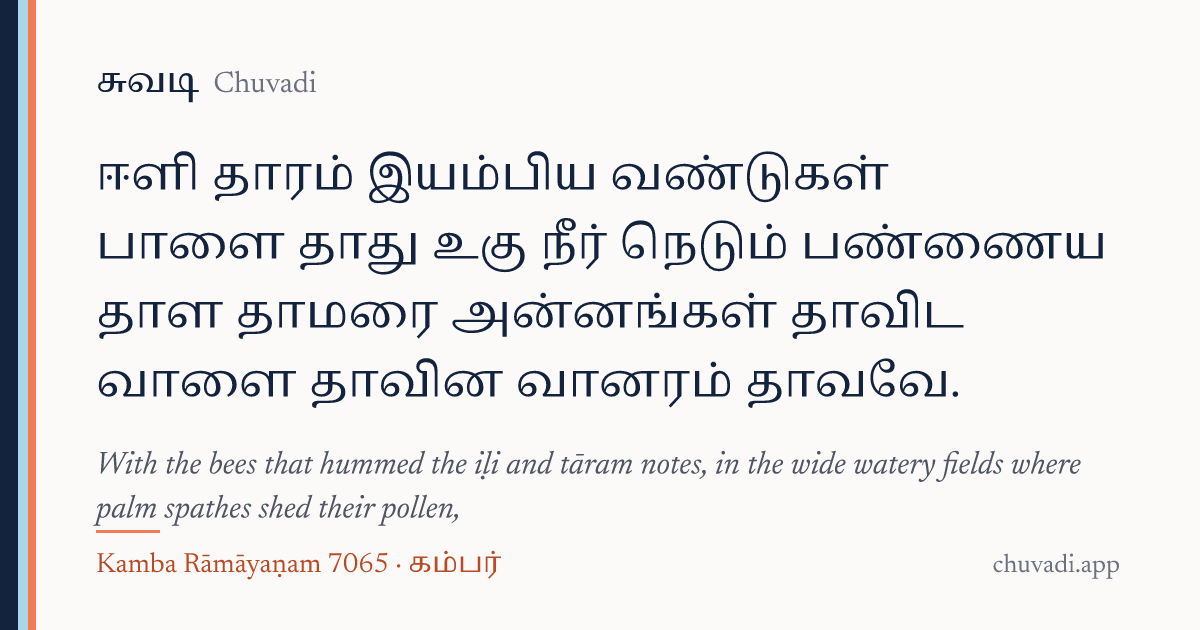
ஈளிதாரம் இயம்பிய வண்டுகள் - இளி, தாரம் எனும் பண் இசைகளை இசைக்கும் வண்டுகளுடன்; பாளை தாது உகு நெடுநீர்ப் பண்ணைய - (தென்னை, கமுகு முதலியவற்றின்) பாளையினுடைய மகரந்தங்கள் சிந்துகின்ற நீரினையுடைய பெரிய வயல்களில் உள்ள; தாள தாமரை அன்னங்கள் - தாள் உள்ள தாமரை மலர்களில் வாழ்கின்ற அன்னங்கள்; தாவிட - தாண்டிச் செல்லுமாறு; வானரம் தாவ வாளை தாவின - குரங்குகள் தாவுதலால் வாளை மீன்கள் தாவிக் குதித்தன.
இளி - ஈளி என நீண்டது - எதுகை நிறைக்க. இளி - மந்த ஓசையுடையது. தாரம் - எடுத்தல் ஓசை "மந்தரம் மத்திமம், தாரம் இவை மூன்றில்" (கல்லாடம். 21) எனுமிடத்து இவை இப்பொருளில் ஆளப்பட்டுள்ளமை காண்க. பூட்டுவிற் பொருள்கோள்.
ஆங்கிலம் · English translationAI
Translation
- With the bees that hummed the iḷi and tāram notes,
- in the wide watery fields where palm spathes shed their pollen,
- as the swans on the long-stemmed lotuses sprang away,
- the vāḷai fish leapt, because the monkeys leapt.
What the poem says
The monkeys plunge into the water, and the whole scene is thrown into motion: the swans on the lotuses take flight, the vāḷai fish leap, and the humming bees are disturbed. Iḷi and tāram are notes of the old Tamil scale, the low and the high, here pictured as the bees' music.