



கம்பராமாயணம் 7066 · யுத்த 14.8
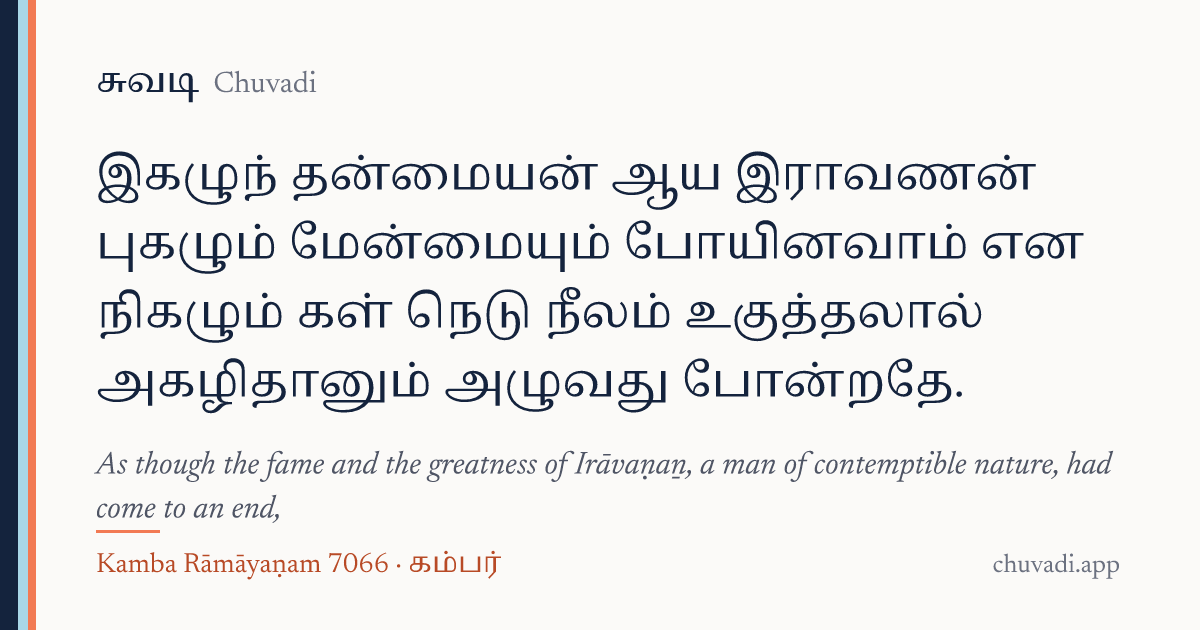
பாடல் · The poem
Tap a word to see its gloss in the commentary and where else it occurs.
பொருள் · Meaning in Tamil
நிகழும் கள் நெடுநீலம் உகுத்தலால் - பெருகுகின்ற தேனை நீண்ட கருவிளை மலர்கள் சிந்துவதால்; இகழும் தன்மையன் ஆய இராவணன் - பழிக்கத்தக்க பண்புடையவனாகிய இராவணனுடைய; புகழும் - (வலிமை மட்டுமின்றி) புகழும்; இன்றோடு போயினது ஆம் என - இன்றோடு போயிற்று என்று; அகழி தானும் - இலங்கையின் அகழியும்; அழுவது போன்றது - அழுவதைப் போல இருந்தது.
அகழியில் உள்ள நீலமலர்கள் அகழியின் கண்கள் போன்றன. அவற்றில் கள் நீர் (தேன்) வடிவது, இராவணன் வாழ்வு முடியப் போவதையறிந்து அவை கண்ணீர் விடுவது போன்றிருந்தது என்றார் தன்மைத் தற்குறிப்பேற்ற அணி. "தையலும் கணவனும் தனித்து உறுதுயரம், ஐயமின்றி அறிந்தனபோல, கருமிளையடுத்த அகழியில், கருநெடுங்குவளையும் ஆம்பலும் கமலமும், கண்ணீர் கொண்டு கால் உற நடுங்க" (சிலம்பு. 13. 181-88) எனும் அருமைக்கற்பனையை அடியொற்றினார்.
ஆங்கிலம் · English translationAI
Translation
- As though the fame and the greatness of Irāvaṇaṉ,
- a man of contemptible nature, had come to an end,
- the long blue lilies let fall the honey welling in them,
- and the moat itself seemed to be weeping.
What the poem says
The blue lilies in the moat are like its eyes, and the honey dripping from them looks like tears. The poet imagines the moat weeping because it knows Irāvaṇaṉ's glory and life are about to end.
The image follows a famous passage in the Cilappatikāram, where the flowers in Maturai's moat seem to weep, as if they knew of the suffering about to fall on Kōvalaṉ and Kaṇṇaki.