



கம்பராமாயணம் 71 · பால 2.51
பாடல் · The poem
Tap a word to see its gloss in the commentary and where else it occurs.
பொருள் · Meaning in Tamil
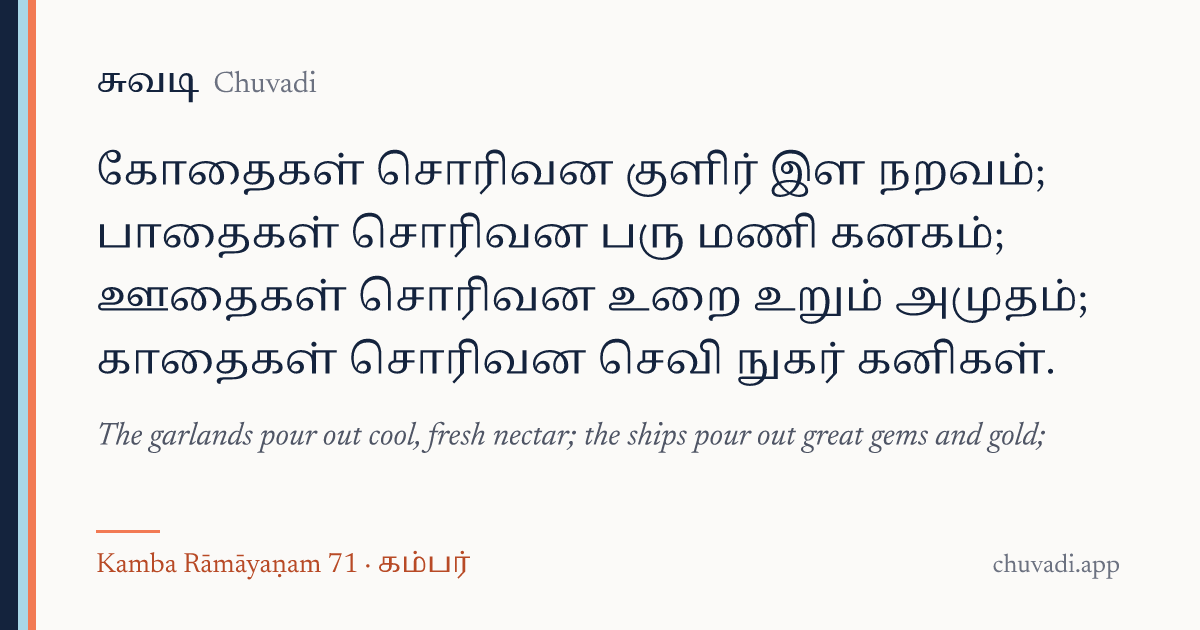
கோதைகள் குளிர் இள நறவம் சொரிவன - மலர் மாலைகள் இனிய தேனைப் பொழிவனவாம்; பாதைகள் கனகம் சொரிவன - வணிகத்துக்குரிய கப்பல்கள் பெரிய மணிகளையும், பொன்னையும் கொண்டு வந்து குவிப்பனவாம்; ஊதைகள் உறையுறும் அமுதம் சொரிவன - காற்று உயிர்காக்கும் அமுதத் துளிகளைச் சொரிவனவாம்; காதைகள் செவிநுகர் கனிகள் சொரிவன - கவிஞர்களின் காப்பியங்கள் செவிக்கினிய பாடல்களைத் தருவனவாம்.
மக்கள் அணியும் மலர் மாலைகள் தேனையும், கப்பல்கள், மணி, பொன் ஆகியவைகளையும், காற்று உயிர் காக்கும் அமுதத் திவலைகளையும் காப்பியங்கள் இனிய பாக்களையும் சொரிவனவாம் என்பது கருத்து. பாதைகள்: காலினும் கலத்தினும் உறை: துளி
கவியின்பம் செவியால் நுகரப்படுவதாதலின் 'செவி நுகர் கனி' என்றார். கோதை: பெண்கள் கூந்தல் என்பதால், கூந்தலின் அணிந்த மலர் மாலை தேன் சொரியும் என்றும் பொருள் கூறலாம். சத்துருக்கள் உரையில் மாண்பினை 'செவிப் புலம் நுகர்வதோர் தெய்வத் தேன்கொலாம்' (2266) என்று குறிப்பது இங்கு ஒப்பிடத்தக்கது.
ஆங்கிலம் · English translationAI
Translation
- The garlands pour out cool, fresh nectar;
- the ships pour out great gems and gold;
- the breezes pour out life-giving nectar in drops;
- the poems pour out fruit for the ear to taste.
What the poem says
Everything in Kōcalam overflows with good things. The garlands people wear drip honey. Trading ships unload gems and gold. The breezes carry drops of rain like life-giving nectar, and the epics and poems recited there pour out sweetness for the ears. Poetry is called "fruit enjoyed by the ear" because its delight is taken in through hearing.