



கம்பராமாயணம் 7129 · யுத்த 14.71
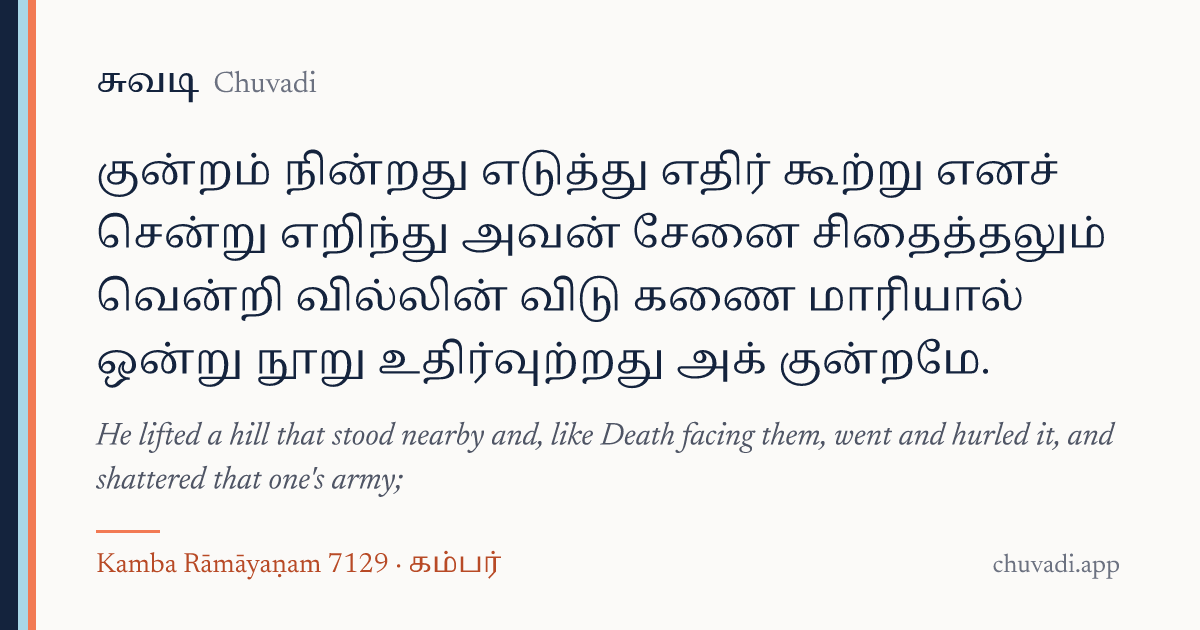
பாடல் · The poem
Tap a word to see its gloss in the commentary and where else it occurs.
பாட வேறுபாடு · Project Madurai reads
பொருள் · Meaning in Tamil
நின்றது குன்றம் எடுத்து - அருகிருந்த ஒரு மலையை எடுத்து; எதிர் கூற்று எனச் சென்று - எதிரே வருகிற கூற்றுவனைப் போலப் போய், எறிந்து அவன் சேனை சிதைத்தலும் - தாக்கி அந்தப் பிரகத்தனுடைய படையை அழித்த போது; வென்றி வில்லின் - அவ்வரக்கன் தனது வெற்றி ஏந்திய வில்லிலிருந்து; விடுகணை மாரியால் - விடுபட்ட அம்புகள் என்னும் மழையினால்; அக்குன்றம் - அந்த மலையும்; ஒன்று நூறு உதிர்வு உற்றது - ஒன்று நூறாக தூளாகப் (பொடிந்து) விழுந்தது.
குன்றம் நின்ற என்பதனை, நின்ற குன்றம் என மாற்றிப் பொருள் கொள்க. தன் சேனையை அம்பினால் சிதைத்த பிரகத்தன் சேனையை மலையால் நீலன் சிதைத்தான். விடுகணை மாரி - உருவகம்.
ஆங்கிலம் · English translationAI
Translation
- He lifted a hill that stood nearby and, like Death facing them,
- went and hurled it, and shattered that one's army;
- but by the rain of arrows loosed from the victorious bow
- that hill fell apart, one into a hundred.
What the poem says
Nīlaṉ answers like for like. Pirakattaṉ broke the monkey army with arrows, so Nīlaṉ tears up a hill and flings it into the demon's ranks, coming on like Death himself.
Pirakattaṉ's answering storm of arrows smashes the hill to powder in mid-air. The “rain of arrows” is a metaphor the poem uses throughout this battle.