



கம்பராமாயணம் 7137 · யுத்த 14.79
பாடல் · The poem
Tap a word to see its gloss in the commentary and where else it occurs.
பாட வேறுபாடு · Project Madurai reads
பொருள் · Meaning in Tamil
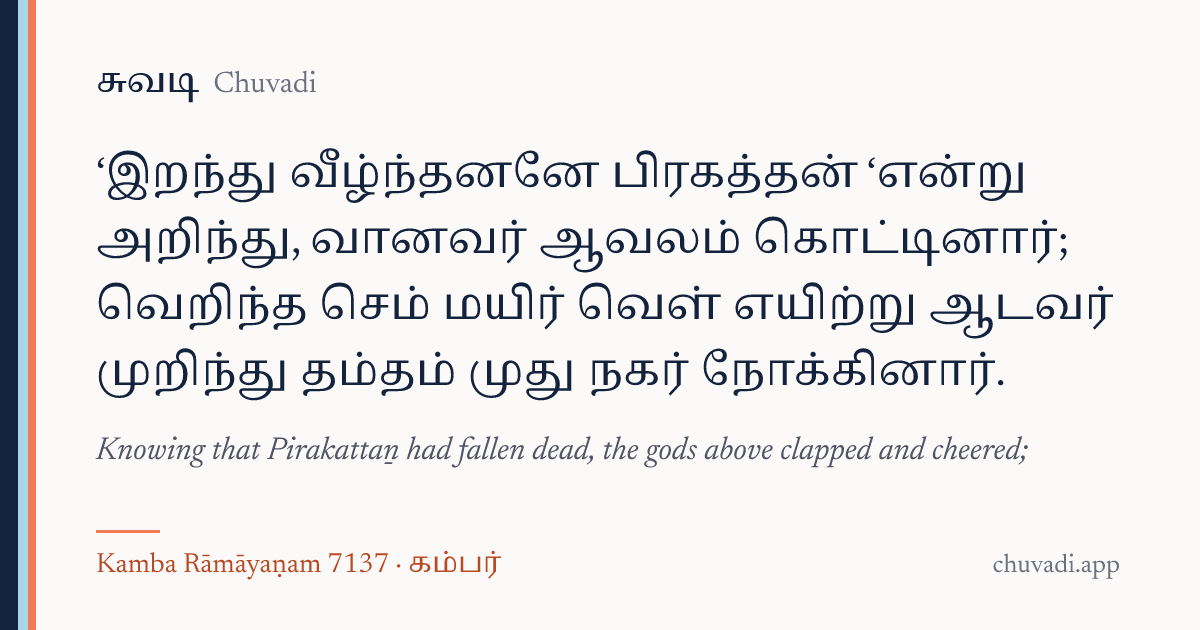
பிரகத்தன் இறந்து வீழ்ந்தனன் என்று - பிரகத்தனும் மடிந்து விழுந்தானே என்று; அறிந்து வானவர் - (வியப்புடன்) அறிந்து தேவர்கள்; ஆவலம் கொட்டினர் - (மகிழ்ச்சியால்) ஆரவாரம் செய்தார்கள்; வெறிந்த செம்மயிர் வெள் எயிற்று ஆடவர் - செறிந்த சிவந்த முடியையும் வெள்ளிய பற்களையுமுடைய அரக்க வீரர்கள்; முறிந்து - மனம் உடைந்து; தத்தம் முதுநகர் நோக்கினர் - தங்கள் தங்களுக்குரிய தொன்மை வாய்ந்த நகர்ப் பகுதிகளை நோக்கிச் சென்றனர்; நீலனைப் பிரகத்தன் கதையால் அடித்தபோது “உம்பர் தத்தமது உள்ளம் நடுங்கினர்” (7091) இப்போது அவன் மடிவு, தேவர்களின் ஆரவாரத்திற்கு காரணமாயிற்று. புறமுதுகிட்டு ஓடத்துவங்கினர் என்னாது, “முதுநகர் நோக்கினர்” என நயம்பட மொழிந்த நேர்த்தியை உணர்க.
ஆங்கிலம் · English translationAI
Translation
- Knowing that Pirakattaṉ had fallen dead,
- the gods above clapped and cheered;
- the warriors with thick red hair and white fangs
- broke and headed each for his own old city.
What the poem says
Pirakattaṉ is dead. The gods, who trembled a moment ago when he struck Nīlaṉ, now shout for joy.
The demon warriors, red-haired and white-fanged, lose heart and retreat. Rather than saying bluntly that they turned tail, the poet says politely that they “headed for the old city”.