



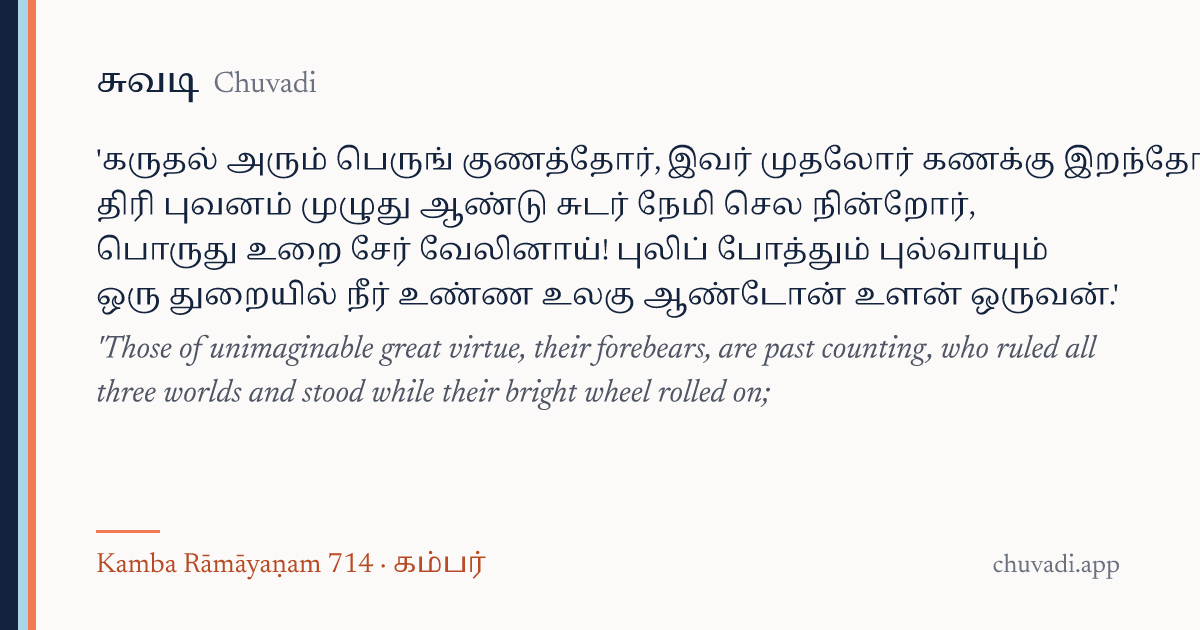
கம்பராமாயணம் 714 · பால 11.5
பாடல் · The poem
Tap a word to see its gloss in the commentary and where else it occurs.
பொருள் · Meaning in Tamil
பொருது உறை - போர்புரிந்த பின் உறையில்; சேர் வேலினாய் - செருகிய வேற்படையை உடைய சனகனே!; சுடர்நேமி செல - ஒளியுடைய தமது ஆணைச் சக்கரம் (எங்கும் தடையில்லாமல்) செல்லுமாறு; திரிபுவனம் - மூன்று உலகங்களையும்; முழுது ஆண்டு நின்றோர் - முழுவதும் ஆட்சி புரிந்தவர்களும், கருதல் அரும்பெரும் - நினைக்கவும் முடியாத (இரக்கம் முதலிய) சிறந்த; குணத்தோர் - குணங்களையுடையவர்களும் ஆகிய; இவர் முதலோர் - இக் குமாரர்களின் குலத்திலே தோன்றிய முந்தைய அரசர்கள்; கணக்கு இறந்தோர் - எண்ணற்றவர்கள்; (இவர் குலத்துள்) ஒருவன்; புலிப்போத்தும் - (இயல்பாகவே பகைமையுடைய) ஆண்புலிகளும்; புல்வாயும் - மான்களும்; ஒருதுறையில் - (அப் பகையுணர்ச்சியின்றி) ஒரே நீர்த்துறையிலே; நீர் உண்ண - (இறங்கித்) தண்ணீர் குடிக்கும்படி; உலகு ஆண்டோன் - உலகத்தை அரசாண்டவன்; ஒருவன் உளன் - (மாந்தாதா) இருந்தான்.
அரசனது ஆணையிடத்துத் தமக்குள்ள அச்சத்தால் எவையும் நலியத்தக்கனவும் நலியாமல் உள்ள நீதிமுறை கூறியது. இந்த அரசன் மாந்தாதா என்பவன். அவன் அரசாண்ட காலத்தில் நாடெங்கும் சத்துவ குணம் நிலவியிருந்ததால் மிருகங்கள் முதலியனவும் அன்பும் அருளும் பூண்டு வாழ்ந்தன. புல் வாய் - புல்லையுண்ணும் வாயையுடைய (மான்) - காரணப்பெயர் வேற்றுமைத் தொகையன்மொழி.
ஆங்கிலம் · English translationAI
Translation
- 'Those of unimaginable great virtue, their forebears, are past counting,
- who ruled all three worlds and stood while their bright wheel rolled on;
- O you whose spear rests in its sheath after battle! There was one
- who ruled the world so that the tiger and the deer drank water at the same ford.'
What the poem says
The ancestors of these princes are countless, each a ruler of the three worlds whose wheel of command rolled everywhere unopposed. One of them, Māndhātā, governed so justly that even natural enemies lived at peace: tigers and deer drank side by side at the same pool, all creatures being filled with gentleness during his reign.