



கம்பராமாயணம் 7154 · யுத்த 14.96
பாடல் · The poem
Tap a word to see its gloss in the commentary and where else it occurs.
பாட வேறுபாடு · Project Madurai reads
பொருள் · Meaning in Tamil
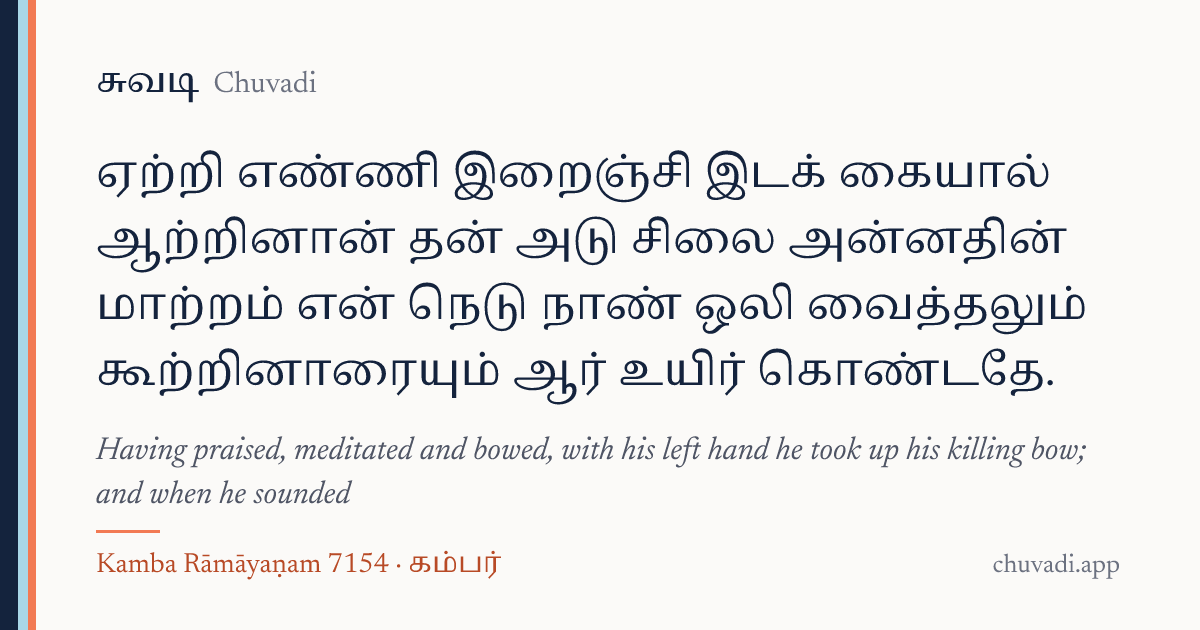
ஏற்றி எண்ணி இறைஞ்சி - (தன் வழிபடு கடவுளை) துதித்து மனங்கொண்டு தியானித்து வணங்கி; தன் அடுசிலை - (பின்பு) (பகைவரைக்) கொன்று குவிக்கும் தனது வில்லினை; இடக்கையால் ஆற்றினான் - இடக்கையால் பற்றினவனாக; அன்னதின் மாற்றம் என் நெடுநாண் ஒலி வைத்தலும் - அவ்வில்லுடைய சொல் என்று சொல்லத்தக்க நீண்டநாணின் ஒலியை எழுப்பியவுடன்; கூற்றினாரையும் ஆருயிர் கொண்டது - இயமனுடைய அரிய உயிரையும் கவர்ந்தது போன்றிருந்தது (அந்த ஒலி).
ஏத்தி என்பது எதுகை நோக்க, “ஏற்றி” என ஆயிற்று. மனத்தால் நினைத்து, வாயால் துதித்து, மெய்யால் வணங்கினான் என்பதனால், “ஏற்றி எண்ணி, இறைஞ்சி” என்றார் எண்ணி ஏற்றி இறைஞ்சி என்பது செய்யுளாதலின் பிறழ்ந்து வந்தது என்க. நாணின் ஒலி வில் பேசுவது போன்றதாதலின், “அன்னதின் மாற்றம் என் நெடுநாண் ஒலி” என்றார்.
ஆங்கிலம் · English translationAI
Translation
- Having praised, meditated and bowed, with his left hand
- he took up his killing bow; and when he sounded
- the long string's twang, which was that bow's own speech,
- it took the precious life even of Death.
What the poem says
Before battle Irāvaṇaṉ worships his chosen god in thought, word and bowed body, then takes his deadly bow in his left hand and twangs the string.
The twang is called the bow's own voice, and it sounds so terrible that it seems it could kill Death himself.