



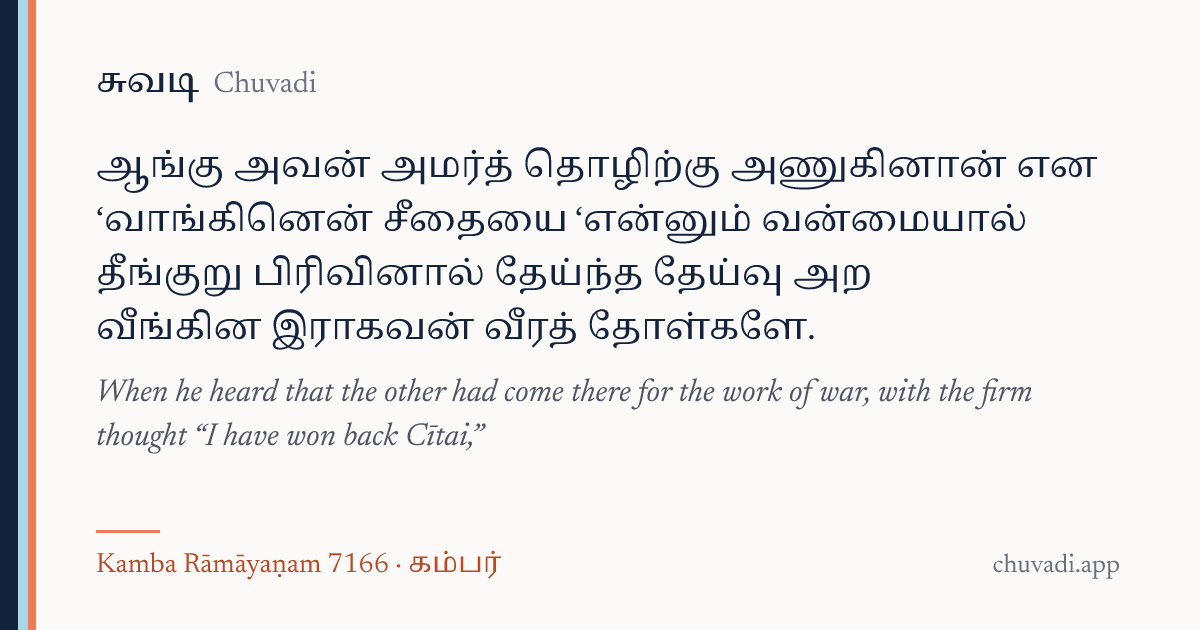
கம்பராமாயணம் 7166 · யுத்த 14.108
பாடல் · The poem
Tap a word to see its gloss in the commentary and where else it occurs.
பாட வேறுபாடு · Project Madurai reads
பொருள் · Meaning in Tamil
ஆங்கு - அப்பொழுது; அவன் - அந்த இராவணன்; அமர்த்தொழிற்கு அணுகினான் என - போர்ச் செயலுக்கு வந்துள்ளான் என்று சொல்லிய அளவில்; சீதையை வாங்கினென் - சீதையை (மீண்டும்) பெற்று விட்டேன்; என்னும் வன்மையால் - என்னும் உறுதியான நினைவால்; தீங்குறு பிரிவினால் - துயர்மிக்க பிரிவினால்; தேய்ந்த தேய்வு அற - மெலிந்த மெலிவு எல்லாம் நீங்குமாறு; இராகவன் வீரத் தோள்கள் வீங்க - மேலோன் ஆகிய இராமபிரானுடைய வீரம் மிக்க தோள்கள் பருத்தன.
போர்புரிய இராவணன் வந்து விட்டான் என்ற செய்தியே, தேய்ந்த தோளைப் பெருக்க வைத்துவிட்டது. இராவணனைக் கொல்வேன் என்பதனிலும் சீதையைப் பெறுவேன் என்பதே இராகவனுக்குப் பூரிப்பு என்பதனால், உகந்தாரைக் காப்பதற்கே உகவாதாரைப் பெருமானால் அழிக்க நேர்கிறது எனும் வைணவ நெறியின் கோட்பாட்டை இப்பாடலில் காணலாம். கொல்லவே மனமின்றி, வேறு வழியில்லாமையால் தான், பகைவர்களை வேதனையோடு பெருமான் அழிக்கின்றான் என்பது நம் பிள்ளை போன்ற சான்றோர் கருத்தாகும்.
ஆங்கிலம் · English translationAI
Translation
- When he heard that the other had come there for the work of war,
- with the firm thought “I have won back Cītai,”
- all the wasting they had suffered through the cruel separation gone,
- Irākavaṉ's heroic shoulders swelled.
What the poem says
When Irāmaṉ hears that Irāvaṇaṉ has come out to fight, his shoulders, thinned by grief at being parted from Cītai, swell with strength again. His first thought is not “I will kill Irāvaṇaṉ” but “I have got Cītai back.”
The commentary reads this in the light of Vaiṣṇava teaching: the Lord destroys his enemies only to protect those who love him, and does it reluctantly, because there is no other way.