



கம்பராமாயணம் 717 · பால 11.8
பாடல் · The poem
Tap a word to see its gloss in the commentary and where else it occurs.
பாட வேறுபாடு · Project Madurai reads
பொருள் · Meaning in Tamil
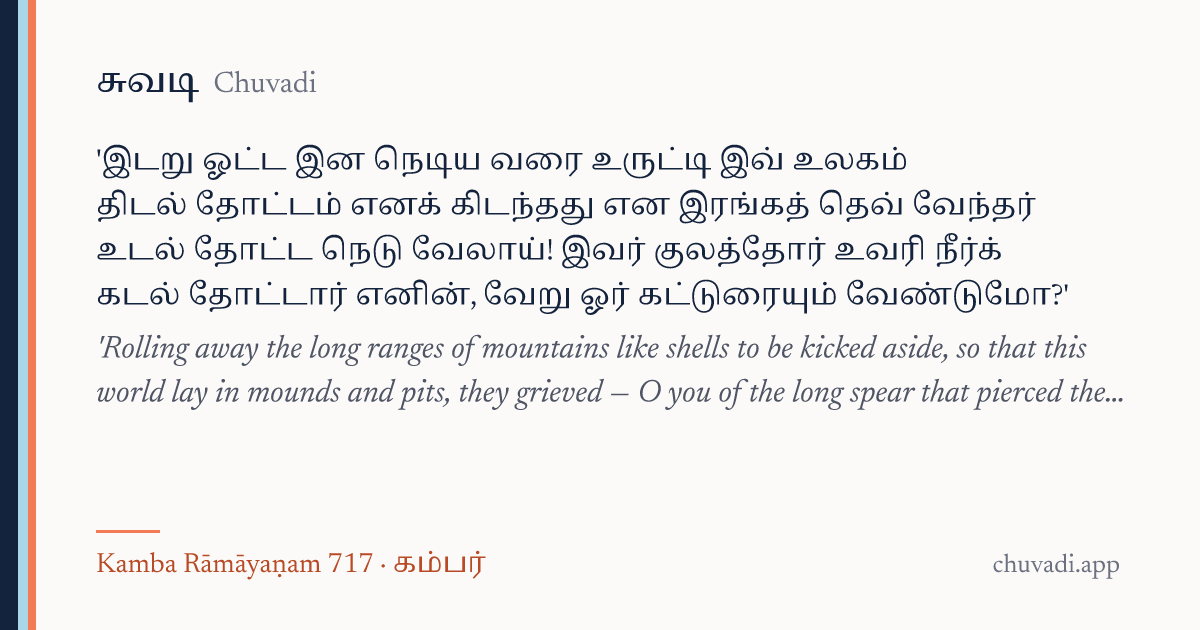
தெவ் வேந்தர் - பகை அரசர்களது; உடல் தோட்ட - உடல்களைத் துளைத்த, நெடுவேலாய் - நீண்ட வேலினை உடைய மன்னனே!; இவர் குலத்தோர் - இம் மைந்தர்களின் குலத்து அரசர்கள்; இரங்கி - (தங்கள் தந்தையின் அசுவமேதக் குதிரை காணாமல் போக) வருந்தி; நெடிய வரை - பெரிய மலைகளை; இடறு ஓட்டம் இனம் - காலால் இடறத் தக்க தேங்காய் ஓடுகளைப் போல; உருட்டி - (வெளியே) புரட்டித் தள்ளி; இவ் உலகம் - இந்த நிலவுலகம்; திடல் தோட்டம் என - திட்டாகவும் மேடாகவும்; கிடக்கும் வகை - இருக்கும்படி; உவரிநீர் - உப்புச் சுவை மிக்க நீரைக் கொண்ட; கடல் தோட்டார் - கடலை (தத்தம் வலிமையால்) தோண்டினார்கள்; எனின் - என்றால்; வேறு ஓர் கட்டுரையும் - (இக் குலத்தின் பெருமைக்கு வேறு நிகழ்ச்சியாக எடுத்துச் சொல்ல) ஓர் உறுதி மொழியும்; வேண்டுமோ - வேண்டுமா? (வேண்டா).
இதில் சொல்லப்பட்டவர் சகர குமாரர். இவர்கள் தோண்டின பள்ளமே கடலாயிற்று. திடல் தோட்டம் - ஒரு பொருட் பன்மொழி.
ஆங்கிலம் · English translationAI
Translation
- 'Rolling away the long ranges of mountains like shells to be kicked aside, so that this world
- lay in mounds and pits, they grieved — O you of the long spear that pierced the bodies
- of enemy kings! If men of this line dug out the sea
- of salt water, is any further proof needed?'
What the poem says
The sons of King Sagara, of this line, searched for their father's lost sacrificial horse by digging down through the earth, kicking whole mountain ranges aside like coconut shells and leaving the world a landscape of mounds and pits. The hollow they dug became the ocean. If they could do that, the sage asks, what more need be said about this family?