



கம்பராமாயணம் 7174 · யுத்த 14.116
பாடல் · The poem
Tap a word to see its gloss in the commentary and where else it occurs.
பாட வேறுபாடு · Project Madurai reads
பொருள் · Meaning in Tamil
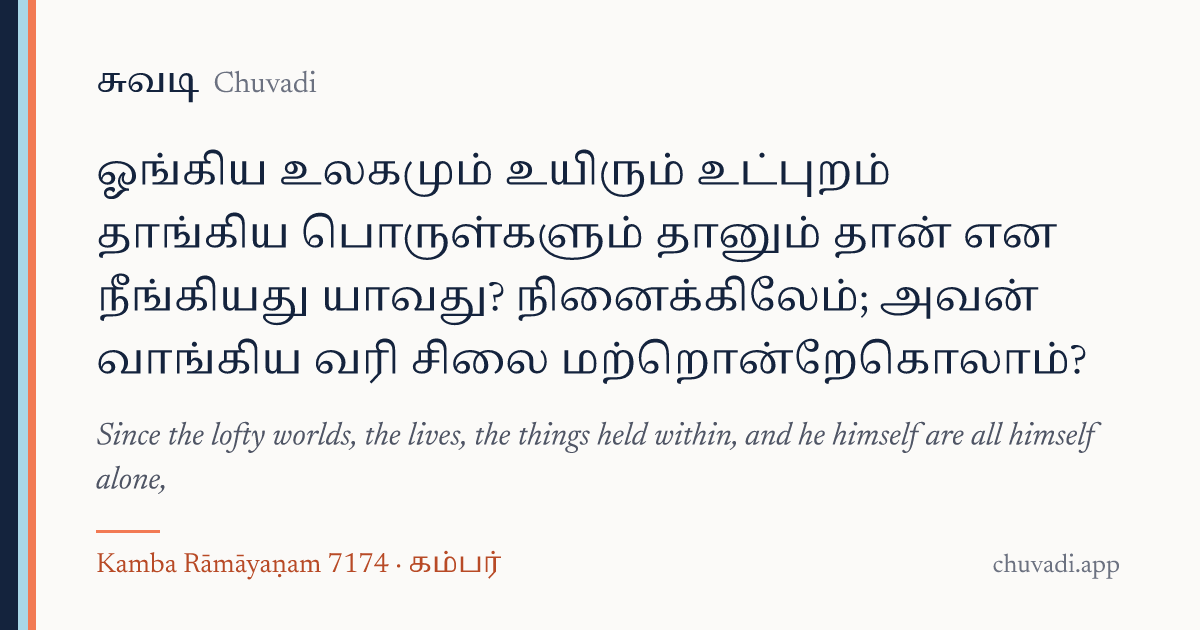
ஓங்கிய உலகமும் - புகழ் உயர்ந்த உலகங்களும்; உயிரும் - (அவ்வுலகில் உள்ள) உயிர்களும்; உட்புறம் தாங்கிய பொருள்களும் - அவ்வுலகிற்கு உள்ளடங்கிய நிலைத்திணைப் பொருள்களும்; தானும் - அப்பரம்பொருளும்; தான் என - இராமனாக வடிவெடுத்துள்ள தானே என்று (முடிவாகி யிருக்க); நீங்கியது - இவனிலிருந்து விலகியுள்ளது; யாவது? - எந்தப் பொருள்? நினைக்கிலேம் - (அப்படி ஒரு பொருள் உள்ளதாக) நாம் நினைக்கவில்லை; (அப்படியிருக்க) அவன், (இராவணனைக் கொல்லத் தன்னைவிட வலியது எனக்கருதி) வாங்கிய வரிசிலை மற்றொன்றே கொலோ? - அவன் கைக்கொண்ட அழகிய அவ்வில் தன்னிலும் வலியது ஒன்றாகுமோ? (ஆகாது)
இராமபிரானது பரத்துவத்தையும் சௌலப்பியத்தையும் ஒரு சேர நினைந்து வியந்தவாறு... சத்திரிய அவதாரத்திற்கேற்ப வில் ஏந்தினானேயன்றி, வில் தன்னிலும் வலிமை வாய்ந்தது என்று ஏந்தவில்லை என்பது கருத்துப் பொருள். “மேல் ஒரு பொருளும் இல்லா மெய்ப்பொருள் வில்லும் ஏந்தி, கால் தலை தோய நின்று கட்புலக்கு உற்றதம்மா” (கம்ப. 4089) என்னும் வாலி கூற்று ஈண்டு நினைத்தற்பாலது. “மாபூதத்தின் வைப்பு எங்கும் ஊனும் உயிரும் உணர்வும் போல் உள்ளும் புறனும் உளன் என்பார்” (கம்ப. 1313) “தானே தனக்கு உவமன் தன்னுருவே எவ்வுருவும்” (மூன். திருவந். 38) “திடவிசும்பு, எரி, வளி, நீர் நிலம் இவைமிசைப் படர்பொருள் முழுதும் ஆய் அவை அவைதொறும் உடல்மிசை உயிர் எனக் கரந்து எங்கும் நிறைந்துளன்” (திருவாய். 1:1:7) என்பனவும் இங்கு நினையத்தகும்.
ஆங்கிலம் · English translationAI
Translation
- Since the lofty worlds, the lives, the things held within,
- and he himself are all himself alone,
- what is there apart from him? We can think of nothing;
- is the banded bow he took up, then, something other than him?
What the poem says
The poet pauses in wonder. Irāmaṉ is the Supreme Being: the worlds, every living thing and every object in them are all himself, and nothing exists apart from him. So why does he need a bow? Surely the bow is not something stronger than he is.
The answer implied is that he carries a bow only because he has come down as a warrior prince, not because he needs it. The commentary sets this beside Vālī's earlier words and verses of the Āḻvārs on the Lord who pervades everything.