



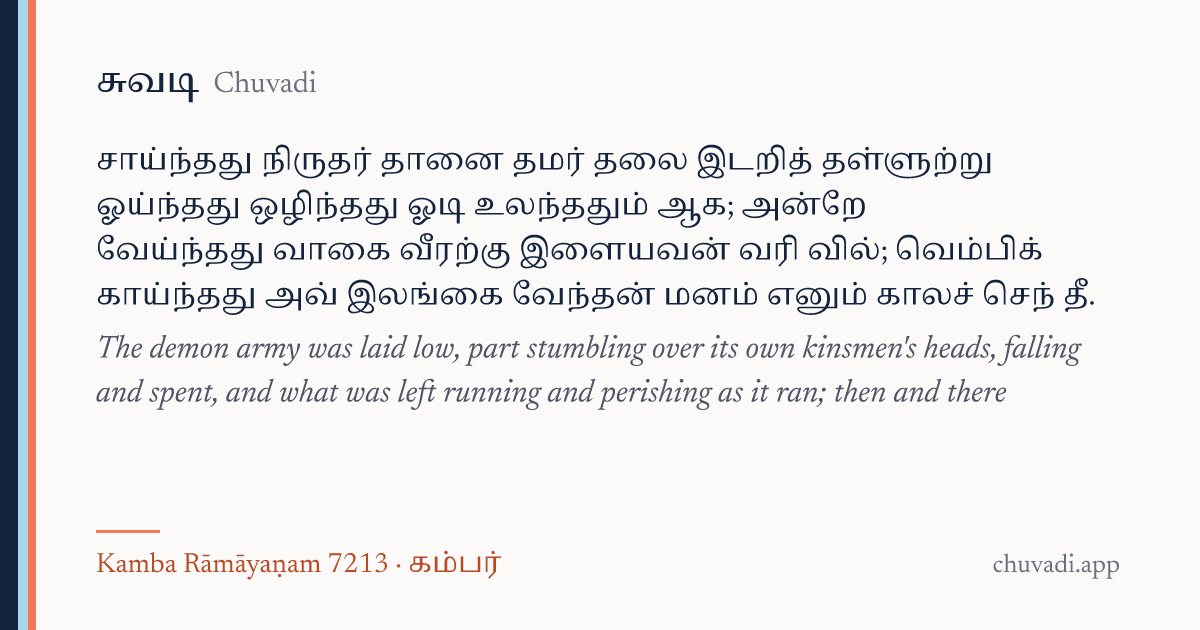
கம்பராமாயணம் 7213 · யுத்த 14.155
பாடல் · The poem
Tap a word to see its gloss in the commentary and where else it occurs.
பாட வேறுபாடு · Project Madurai reads
பொருள் · Meaning in Tamil
நிருதர் தானை - (பின்னிட்டு ஓடும்போது) அரக்கர் சேனையானது; தமர்தலை இடறித் தள்ளுற்று ஓய்ந்தது - தம் உறவினரின் தலைகளை இடறிக்கொண்டு வீழ்ந்து வலிமை குறைந்ததும்; ஒழிந்தது ஓடி உலந்ததும் ஆக - ஒழிந்து மிஞ்சிய சேனைப்பகுதி ஓடிச்சென்று (ஓடஓட) உயிர் இழந்ததும் ஆக; சாய்ந்தது - (அடியோடு) சாய்ந்தது; வீரற்கு இளையவன் வரிவில் அன்றே வாகை வேய்ந்தது - வீரனாகிய இராமனின் தம்பி இலக்குவனின் கட்டமைந்த வில் அப்போதே வெற்றி வாகை சூடியது; அவ்விலங்கை வேந்தன் - அந்த இலங்கை வேந்தனாகிய இராவணனின்; மனமெனும் காலச் செந்தீ - உள்ளம் என்னும் ஊழிக்காலத்துச் செந்நெருப்பானது; வெம்பிக் காய்ந்தது - வெம்பிக் கொதித்தது.
இராவணன் மனம் முழுவதும் கனல் பிழம்பாகி விட்டமையால், “மனமெனும் செந்தீ” என உருவகத்தால் கூறினார். ஊழிக்காலச் செந்தீ - உலகை அழிப்பது போல, இவன் சினமும் உலகை அழிக்கவே எழும் என்பது குறிப்பு. உருவக அணி.
ஆங்கிலம் · English translationAI
Translation
- The demon army was laid low, part stumbling over its own kinsmen's heads,
- falling and spent, and what was left running and perishing as it ran; then and there
- the banded bow of the hero's younger brother put on the garland of victory;
- and the doomsday fire that was the mind of that king of Ilaṅkai seethed and blazed.
What the poem says
The demon army collapses. Some trip over the heads of their own dead kin and fall exhausted; the rest flee and die as they run. Ilakkuvaṉ's bow has won the victory garland.
Irāvaṇaṉ's mind is now a mass of fire, compared to the fire that burns up the world at the end of an age, and his anger threatens the same.