



கம்பராமாயணம் 7218 · யுத்த 14.160
பாடல் · The poem
Tap a word to see its gloss in the commentary and where else it occurs.
பொருள் · Meaning in Tamil
அப்போதையின் - அந்தப் பொழுதில்; அயர்வு ஆறிய அனுமான் - இளைப்பாறிய அனுமான்; அழல் விழியா - தீ எழுமாறு விழித்து; இனிப்பொய்ப் போர் சில புரியேல் - இனி நீ சில பொய்யான போர்களைப் புரிய வேண்டா; என - என்று சொல்லிக்கொண்டு; இடை வந்து புகுந்தான் - அந்தப் போரின் இடையே புகுந்தவனாய்; கைப்போதகம் என - கையினைக் கொண்ட யானையைப் போல; முந்து - முற்பட வந்து; அவன் - அந்த இராவணனுடைய; கடுந்தேர் எதிர் நடந்தான் - விரைந்து செல்கின்ற தேரினுக்கு எதிராகச் சென்று; “இப்போர் ஒழி - (இப்போர் செய்யும்) இந்தச் சண்டையைத் தவிர்; பின்போர் உள - பின் செய்ய (இன்னும்) போர்கள் உள்ளன; இவை கேள்” என இசைத்தான் - (நான் சொல்லும்) இவற்றைக் கேட்பாயாக என்று கூறலானான்.
முன்வந்த 138- ஆம் பாடலில், ஆறுபோல் குருதி சோர அலக்கண் உற்றவனான அனுமன் இப்போது அந்த அயர்ச்சி நீங்கி, மீண்டும் இராவணன் முன்வந்து உரையாடுகிறான் என்க. தன் ஆற்றல் முழுதும் காட்டிச் செய்யாத போர் “பொய்ப் போர்” ஆகும். உன் ஆற்றலும் என் ஆற்றலும் முழுதும் காட்ட வல்ல ஓர் உண்மைப் போர் புரிக வருக என அழைத்தவாறாம்.
ஆங்கிலம் · English translationAI
Translation
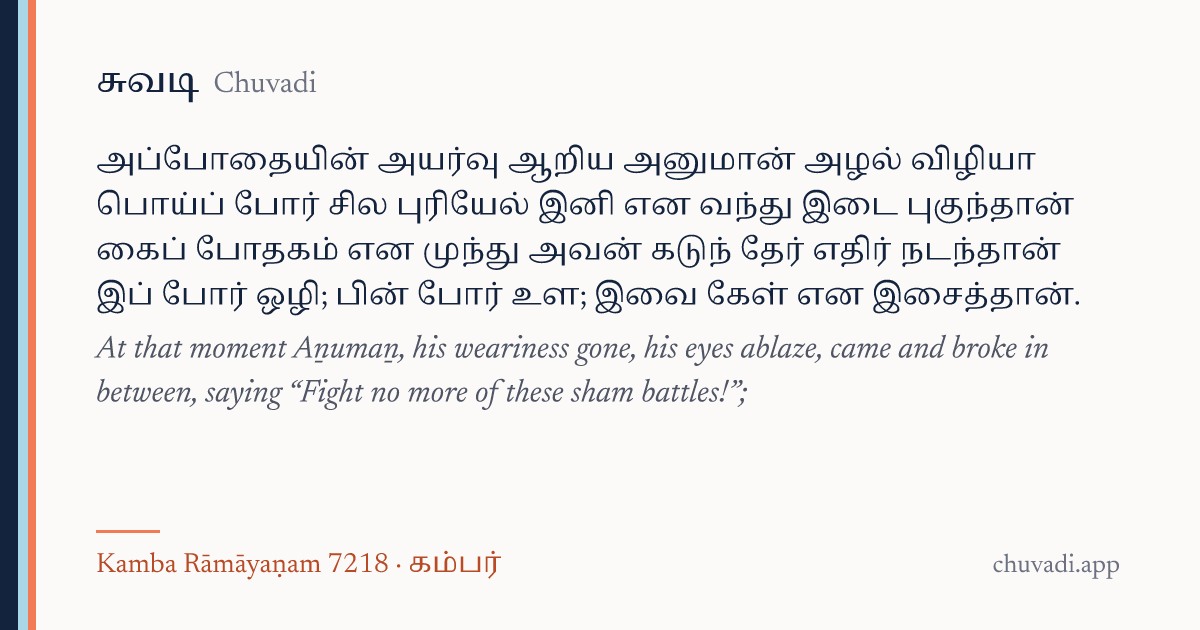
- At that moment Aṉumaṉ, his weariness gone, his eyes ablaze,
- came and broke in between, saying “Fight no more of these sham battles!”;
- like an elephant with its trunk he strode out in front, against that one's fierce chariot,
- and declared, “Leave this fight; other fights remain. Hear these words.”
What the poem says
Aṉumaṉ, recovered from the hundred arrows that had left him bleeding, steps between Irāvaṇaṉ and Ilakkuvaṉ and plants himself in front of the demon's chariot like an elephant. He tells Irāvaṇaṉ to stop this “sham fight”, meaning one in which neither side shows its full strength, and to listen: a real contest awaits.