



கம்பராமாயணம் 7229 · யுத்த 14.171
பாடல் · The poem
Tap a word to see its gloss in the commentary and where else it occurs.
பொருள் · Meaning in Tamil
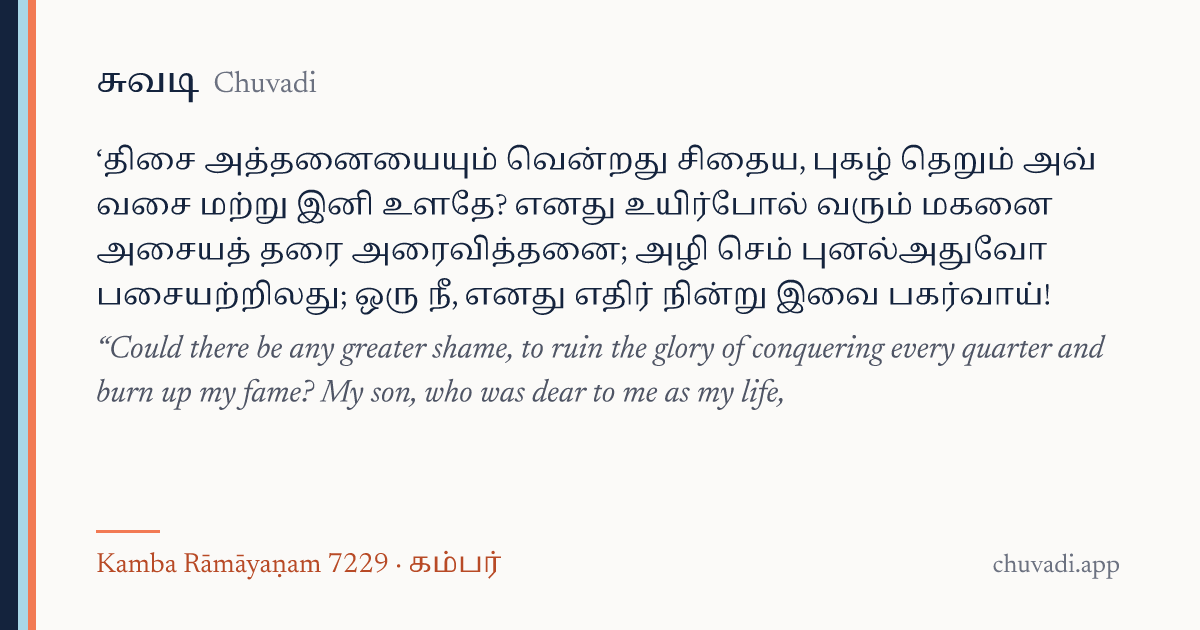
அத்தனை திசையையும் வென்றது - எல்லாத்திக்குகளையும் வெற்றி கொண்ட பெருமை; சிதைய - அழிந்து சிதற, புகழ் தெறும் அவ்வசை - புகழை அழிக்கவல்ல அப்பழியை விட; இனி மற்று உளதே? - இனி வேறு பழி ஒன்று உள்ளதோ? (அப்படியாதெனில்) எனது உயிர் போல் வரு மகனை - எனது உயிரைப் போல் வளர்ந்து வந்த அக்க குமாரனை; அசைய - நிலை கலங்குமாறு; தரை அரைவித்தனை - தரையில் தேய்த்து அரைத்தாய்; அழி செம்புனல் அதுவோ - அப்படி அரைத்ததனால் பெருகி ஓடிய குருதியானதோ; பசை அற்றிலது - இன்னும் ஈரம் உலரவில்லை; ஒரு நீ - ஒப்பற்ற நீ; எனது எதிரே நின்று இவை பகர்வாய் - நீ என் நேர் நின்று (இப்போது) இத்தகைய வார்த்தைகளைக் கூறியவாறு உள்ளாய்!
புகழ் நீங்கிப் பழி ஏற்பட தன் மகனைத் தேய்த்தழித்த அனுமன் தன்னுடன் உரையாடும் காலம். “வாய்த்த அக்கனை வரிசிலை மலையொடும் வாங்கித் தேய்த்த அக்குழம்பு உலர்ந்தில இலங்கையின் தெருவில்” (கம்ப. 6579) என்பார் முன்னும்.
ஆங்கிலம் · English translationAI
Translation
- “Could there be any greater shame, to ruin the glory of conquering every quarter
- and burn up my fame? My son, who was dear to me as my life,
- you ground into the earth till he was crushed; the red stream that ran from him
- has not yet dried; and you, alone, stand before me and say these things!”
What the poem says
Irāvaṇaṉ's tone turns bitter. Aṉumaṉ, on his earlier visit to Ilaṅkai, killed Irāvaṇaṉ's son Akkaṉ, who was as dear to him as his own life, by grinding him into the ground. The blood is not yet dry on the streets.
No disgrace could be worse for the conqueror of every direction than to have his son's killer standing in front of him, talking like this.