



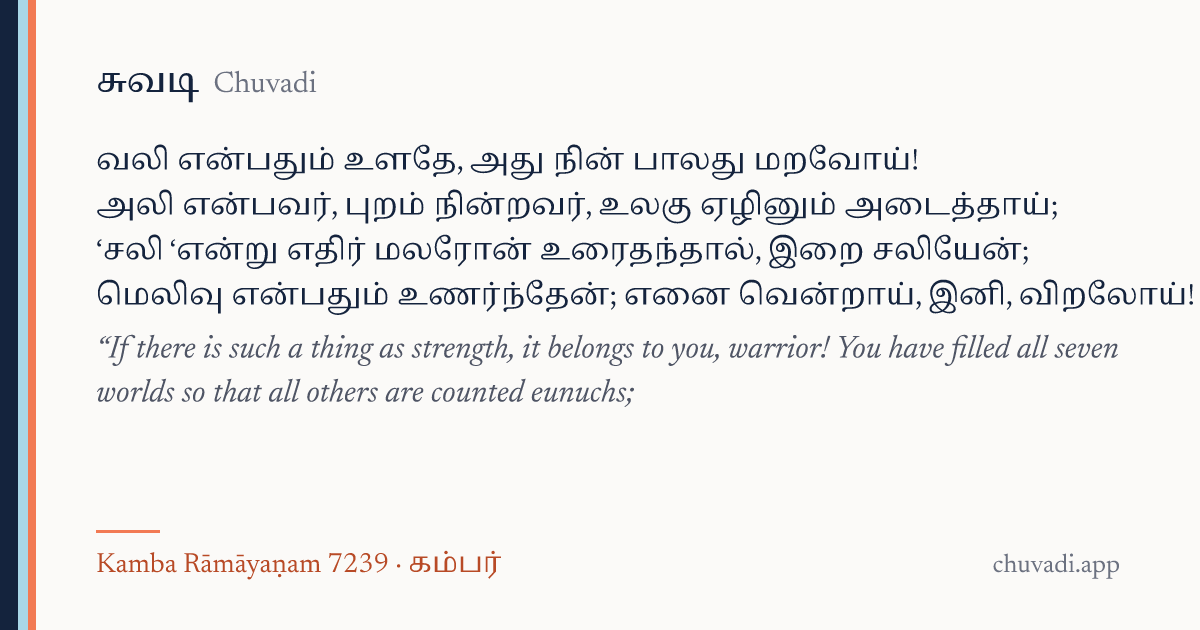
கம்பராமாயணம் 7239 · யுத்த 14.181
பாடல் · The poem
Tap a word to see its gloss in the commentary and where else it occurs.
பொருள் · Meaning in Tamil
மறவோய் - வீரனே! வலி என்பதும் உளதே - வல்லமை ஒன்று உண்டே, அது நின் பாலது - அது உன்னிடம் அடக்கம்; புறம் நின்றவர் அலி என்பவர் - (உன்னைத்தவிர) வெளியே உள்ள வீரர்கள் யாவரும் அலி என்று சொல்லத்தக்கவாறு; உலகு ஏழினும் அடைத்தாய் - ஏழுலகையும் நின் புகழால் நிறைத்து விட்டாய்; மலரோன் - பிரம்ம தேவன்; சலி என்று எதிர் உரை தந்தால் - (என் எதிரே வந்து நீ) மனம் தளர்வாயாக என்று உரைத்தாலும்; இறை சலியேன் - சிறிது கூட மனம் தளராதவன் நான்; மெலிவு என்பதும் உணர்ந்தேன் - (என் வாழ்வில்) மெலிவு என்பதனையும் (உன்னால்) உணர்ந்தேன்; விறலோய்! - ஆற்றல் சான்றவனே!; இனி என்னை வென்றாய் - இனி, என்னை வென்றவனே ஆனாய்.
“உலகு ஏழினும் அடைத்தாய் எனை வென்றாய்” என்றதால் பிறர் வீரம் பாராட்டும் இராவணனின் பெரும்பண்பு புலனாகிறது. அலி என்பவர் அலி எனப்படுபவர் செயப்பாட்டுவினை, செய்வினை உருவில் வந்தது.
ஆங்கிலம் · English translationAI
Translation
- “If there is such a thing as strength, it belongs to you, warrior!
- You have filled all seven worlds so that all others are counted eunuchs;
- if the Lotus-born himself came and told me ‘Give way,’ I would not give way a whit;
- yet I have learned what weakness is; you have beaten me now, mighty one!”
What the poem says
Irāvaṇaṉ is generous in defeat. If strength exists anywhere, he says, it lives in Aṉumaṉ; beside him every other warrior in the seven worlds looks unmanly. Irāvaṇaṉ would not budge even if Piramaṉ, the Creator himself, ordered him to, yet Aṉumaṉ has made him feel weakness for the first time. Aṉumaṉ has beaten him.
The commentary admires Irāvaṇaṉ's greatness in praising an enemy's valour.